How Tight Are Climbing Shoes Supposed to Be?
Your climbing shoes should fit snugly like a second skin—tight enough to prevent heel and toe slippage but not so tight they cause pain or numbness. Getting the fit right is crucial for both comfort and performance on the wall.
You want to feel secure, with full toe curling without cramping or discomfort.
If your shoes pinch or your heels slip, they’re either too tight or too loose. Finding that balance boosts your performance and keeps you safe.
Keep exploring to discover tips on how to recognize the perfect fit.
Finding the Perfect Balance Between Comfort and Performance
While climbing shoes need to fit snugly to prevent your heel and toes from slipping, they shouldn’t cause pain or numbness. Achieving the perfect balance between comfort and performance means choosing a fit that feels like a second skin.
It should allow full toe curling without cramping the toe box. Your foot shape plays a big role here—tight shoes should provide firm support, especially around the heel, to minimize heel movement.
Keep in mind that leather shoes will stretch with wear. So, starting with a slightly tighter fit can improve comfort over time without sacrificing performance.
Avoid shoes that cause persistent discomfort. A proper fit combines snugness with enough comfort to climb effectively and safely.
Shoe stretch and support work together to optimize your climbing experience. It’s all about finding that sweet spot to climb your best!
Recognizing the Signs of Proper and Improper Fit
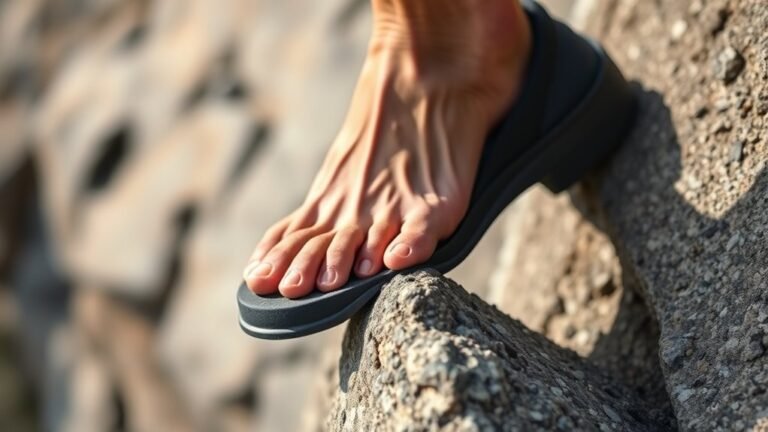
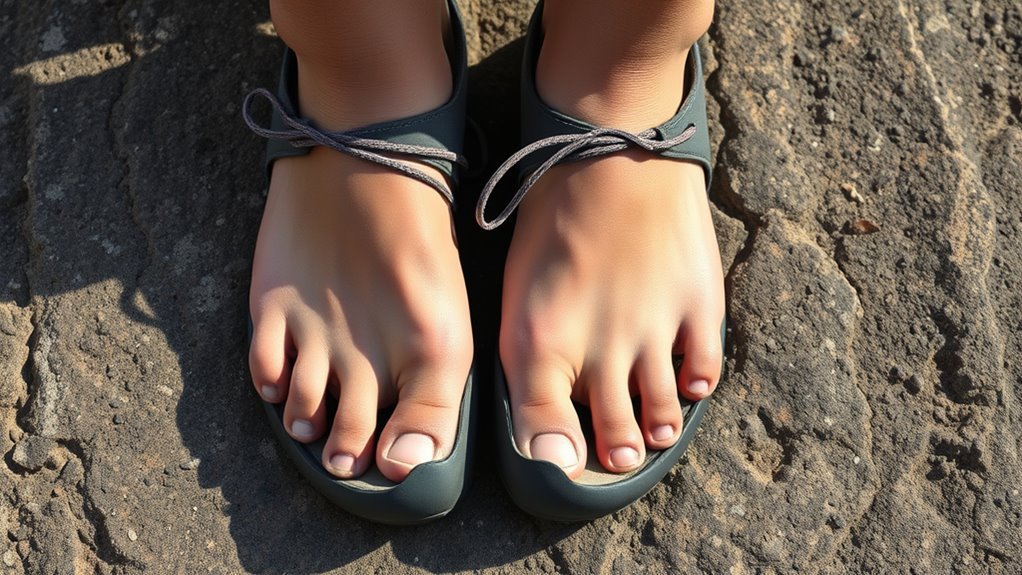
When you try on climbing shoes, pay close attention to how they feel all around your foot—snugness without pain or numbness signals a proper fit. You want a snug fit that holds your foot firmly without heel slippage or dead space.
Avoid toe cramming, which causes discomfort and pain, indicating the shoe size or shoe tightness is off. Watch for these fit signs to know if your shoes fit well or need adjustment:
- Heel slippage or excessive dead space reduces grip and sensitivity, showing the shoes are too loose.
- Pain, numbness, or restricted circulation means the shoes are too tight and could harm your feet.
- Toes should be near the end but not crammed, ensuring comfort and performance.
Conclusion
So, you don’t want your climbing shoes squeezing your feet like a boa constrictor on caffeine, but they shouldn’t feel like fluffy slippers either—unless you’re aiming for a new definition of “performance.”
Remember, shoes that’re too tight can turn your toes into unhappy little prisoners, while too loose ones make you slip like a newbie on ice.
Find that sweet spot where your feet feel snug, not tortured, and you’ll climb like the rock god you were born to be.
In the end, the key to perfect climbing shoes is balance. They should fit snugly enough to provide support and precision but not so tight that they cause pain or cut off circulation. Properly fitting climbing shoes enhance your ability to grip, edge, and smear on rock surfaces, all crucial for climbing performance. So, aim for a comfortable yet snug fit that lets your feet breathe and move naturally while giving you the control you need. That’s how tight climbing shoes should be—just right to boost your climbing game without compromising comfort or foot health.