How Many People Have Died Climbing Everest: 3 Key Facts
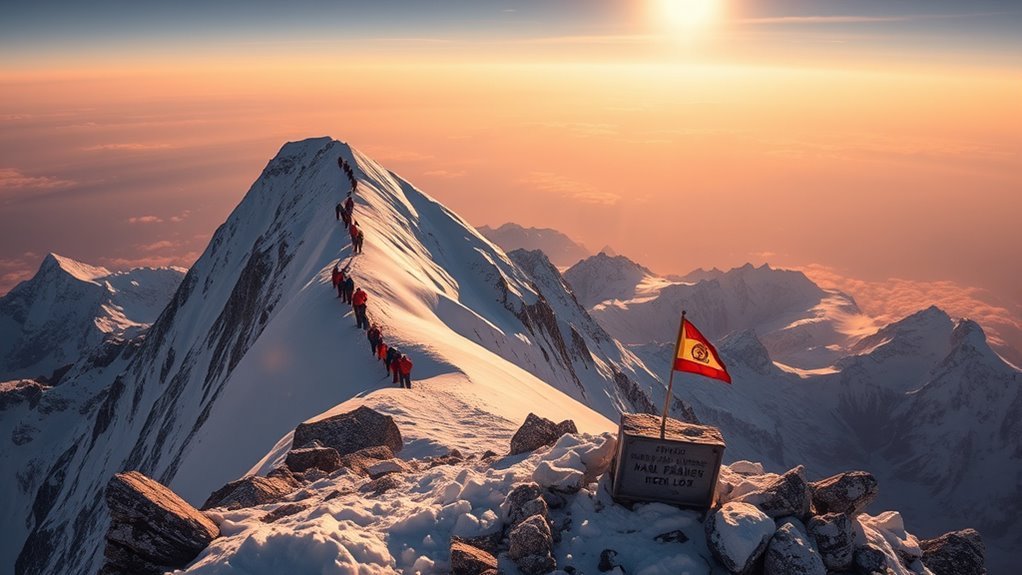
You should know that over 346 climbers have lost their lives on Everest since 1922, with a 4% fatality rate per ascent. Climbing Mount Everest is no joke — it’s one of the deadliest and most challenging climbs in the world.
Avalanches, falls, and altitude sickness are the main causes of death.
The death zone above 8,000 meters is especially deadly and treacherous, making body recovery almost impossible. Because of this, many bodies remain on the mountain as grim reminders of the risks involved.
If you want to understand the full dangers and why Everest demands such respect, there’s more to explore.
Total Fatalities and Fatality Rates on Everest
Although climbing Mount Everest has attracted thousands, over 346 people have died attempting the summit since 1922.
More than 346 climbers have lost their lives attempting to summit Mount Everest since 1922.
When you’re climbing Everest, you face a high death rate—about 4% per ascent and nearly 1% of all climbers lose their lives during their expedition.
The mountain’s extreme high altitude and the infamous death zone make oxygen scarce and conditions deadly.
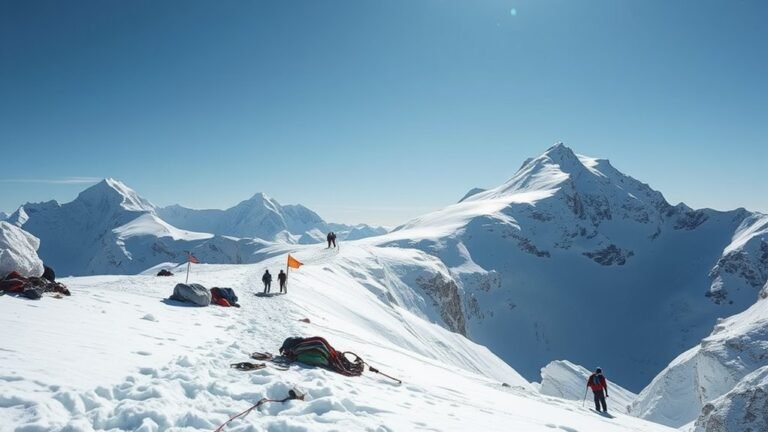
Many fatalities happen on the standard routes, especially the Southeast Ridge, where harsh weather and exhaustion take their toll.
Unfortunately, recovering bodies of climbers is often impossible, so some remain frozen on the mountain for years.
You’ll notice that the presence of these bodies serves as a grim reminder of Everest’s dangers and the risks involved in reaching the summit.
Primary Causes of Death Among Climbers
When you climb Everest, you face deadly threats like avalanches, falls, and serac collapses that cause many fatalities. These natural hazards pose immediate, often fatal risks during your ascent or descent.
Beyond physical dangers, altitude sickness—including high-altitude cerebral edema (HACE)—can quickly become life-threatening if untreated. You also confront extreme cold and frostbite, especially in the death zone, which can incapacitate you.
Exhaustion and dehydration add to the peril by weakening your body and judgment. The mountain’s harsh environment increases the risk of cardiac arrests and strokes, often triggered by overexertion or underlying conditions.
Understanding these primary causes—avalanches, altitude sickness, serac collapses, extreme cold, frostbite, exhaustion, dehydration, cardiac arrests, and strokes— helps you prepare better for Everest’s unforgiving challenges.
The Challenge of the Death Zone and Body Recovery
Facing deadly risks like avalanches and altitude sickness on Everest is only part of the challenge; the harsh conditions above 8,000 meters, known as the death zone, create another serious obstacle—recovering bodies.
In this extreme environment, low oxygen levels and severe environmental hazards make body recovery incredibly dangerous. Rescue efforts often stall because the risks of body retrieval outweigh the benefits, leaving approximately 200 body remains scattered across the Everest death zone.
As a climber, you must understand that high-altitude mountaineering involves accepting that many bodies become permanent fixtures on the mountain. These high-altitude hazards not only complicate rescue efforts but also contribute to Everest’s grim reputation as an open-air graveyard.
The death zone challenges every aspect of survival and recovery alike.
Conclusion
Climbing Everest isn’t just a physical challenge; it’s a dance with fate, much like Icarus flying too close to the sun. You’ll face the ruthless death zone, where every step tests your limits and the mountain keeps its secrets in the frozen silence of fallen climbers.
Remember, behind the glory lies real risk—each summit carries a heavy price. So, respect the mountain’s power, and climb with both courage and caution.
When you think about how many people have died climbing Everest, it’s clear that this isn’t just another adventure. The harsh conditions, unpredictable weather, and altitude sickness make Everest one of the deadliest mountains in the world. Every climber must weigh the thrill of reaching the top against the very real dangers that come with it. So, if you’re planning a climb, always prioritize safety and preparation—because the mountain demands respect and careful planning to survive its challenges.