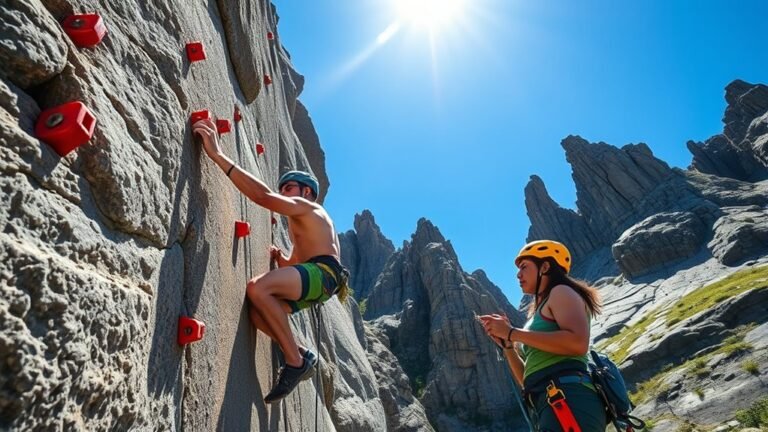

What Is Climbing on a Rope Called?
Climbing on a rope is called roped climbing, a popular way to ascend rock faces or artificial walls safely. This type of climbing involves using a climbing rope along with specialized gear like harnesses and carabiners to protect yourself.
A belayer plays a key role by managing the rope, catching you if you fall, and controlling slack as you climb. It’s a team effort that keeps things safe and fun.
You can start with top rope climbing, which is great for beginners because it feels secure and easy to handle. Or, if you’re up for a bigger challenge, lead climbing offers a more advanced experience.
Keep exploring these styles to understand their differences and learn how to climb safely. There’s a lot to discover, and every climb helps you get better!
Key Takeaways
- Climbing on a rope is called roped climbing. It involves ascending while being secured by a climbing rope.
- You usually have a belayer and a belay device to manage the rope slack and catch falls.
- Roped climbing includes different styles like top rope climbing and lead climbing.
- You’ll need specialized gear like harnesses, carabiners, and protection devices to stay safe.
- This method gives you fall protection and helps build confidence during rock or artificial wall climbs.
What Is Roped Climbing?
What exactly is roped climbing? It’s a method where you ascend a rock or artificial wall secured by a climbing rope, ensuring fall protection. You rely on a belayer who manages the rope’s slack and uses a belay device to catch you if you fall.
Whether you’re tackling a top rope or lead climbing route, roped climbing requires specialized climbing gear such as harnesses, carabiners, and protection devices. These help secure the rope to the rock, giving you confidence to push higher or try more challenging climbs.
The rope and belayer work together to keep you safe, allowing you to focus on your movements without fearing a dangerous fall. Roped climbing is essential for safely mastering advanced climbing routes.
Top Rope vs. Lead Climbing Styles
Roped climbing comes in different styles, each with its own approach to safety and technique. In top rope climbing, the climbing rope is anchored at the top, and your belayer manages slack from below, minimizing fall distance and boosting safety.
This style keeps you securely connected, making it ideal for beginners. It’s a great way to build confidence without worrying too much about long falls.
Lead climbing, on the other hand, has you clipping the rope into protection points like quickdraws as you ascend. This method allows for longer routes but demands advanced belaying skills and awareness, as fall distances can be much greater.
You’ll need to place protection carefully and manage dynamic falls. It’s definitely more challenging, but it also opens up a lot more possibilities on the wall.
Both top rope and lead climbing require solid belaying techniques, but lead climbing introduces additional risks. So, safety should always be your top priority when choosing your climbing style.
Frequently Asked Questions
What Are the Three Types of Climbing?
The three types of climbing are top rope, lead, and aid climbing. You’ll use different techniques and gear for each, with top rope being safest, lead involving clipping protection, and aid relying on gear for upward movement.
What Is Rope Climbing?
Rope climbing is like pulling yourself up a ladder made of fibers. You’ll use your hands and feet to ascend, relying on strength and technique, whether for sport, training, or fun, always prioritizing safety gear and control.
What Is Climbing Down a Rope Called?
Climbing down a rope is called rappelling or abseiling. You’ll use a harness and friction device to control your descent safely, managing speed and angle as you lower yourself down the rope, especially after reaching a summit.
Conclusion
Whether you’re gripping the rope tightly in top rope climbing or leading with confidence on a challenging route, roped climbing pushes you to trust, focus, and grow. You’ll face fears, build strength, and find joy in every ascent.
So, embrace the rope, challenge your limits, and celebrate each climb. Because climbing on a rope isn’t just a sport—it’s a journey that tests your courage, rewards your effort, and transforms your spirit.
Climbing on a rope, often called roped climbing, is more than just a physical activity. It’s about connection—to the rope, the rock, and yourself. Every climb teaches you patience, resilience, and determination. Whether you’re a beginner or an expert, roped climbing invites you to push boundaries and discover new heights, both literally and figuratively. So next time you hear “what is climbing on a rope called?” remember—it’s roped climbing, a thrilling adventure that shapes your mind and body with every move.