5 Facts About How Many People Die Each Year Climbing Mount Everest
You face about a 1% chance of dying on Mount Everest, with 5 to 7 climbers usually perishing each year, though 2023 saw as many as 18 deaths. Climbing Mount Everest is thrilling but comes with serious risks.
Most fatalities happen during the dangerous descent in the death zone, where oxygen is scarce and conditions are brutal. It’s the most challenging part of the climb, and many climbers struggle here.
Overcrowding worsens risks by causing delays and mistakes. Imagine waiting in line at extreme altitudes—it’s exhausting and dangerous. Many bodies remain on the mountain because recovery is often too risky.
Keep exploring to understand what makes Everest so deadly and why it demands such respect from climbers worldwide.
Key Takeaways
- Approximately 5 to 7 climbers die on Mount Everest annually under normal conditions.
- In 2023, fatalities spiked to 18 due to overcrowding and harsh weather.
- The average death rate is roughly 1% of all climbers attempting the summit.
- Most deaths occur during the descent, often from falls or altitude sickness.
- Overcrowding increases risks by causing delays and extended exposure in the death zone.
It’s one of the main reasons why climbing Everest can become so dangerous beyond just the weather.
How Many People Die on Mount Everest Each Year?
Each year, about 5 to 7 people lose their lives on Mount Everest. But some years, like 2023, have seen as many as 18 fatalities.
The death toll fluctuates because of factors like overcrowding and the harsh conditions in the death zone. Most fatalities actually happen during the descent. That’s when climbers face fatigue, unpredictable weather, and high-altitude health issues.
The average death rate per climber is roughly 1%, but the actual number of deaths each year can vary a lot. Disaster doesn’t just come from natural causes. Human factors like overcrowding also play a big role, since they can delay movement and increase risk.
Recovering bodies is often difficult or even impossible in the death zone, so many remain on the mountain. Understanding these realities helps you really grasp the true dangers climbers face on Everest.
How the Death Zone’s Harsh Conditions Endanger Climbers
Because oxygen levels drop to less than 30% of what you’d find at sea level, the death zone above 8,000 meters quickly drains your strength and impairs your judgment.
Above 8,000 meters, oxygen levels plummet, rapidly draining strength and clouding judgment.
In this harsh environment, hypoxia sets in rapidly, causing high-altitude sickness and altitude sickness symptoms that worsen with every passing hour.
Your body begins to shut down essential functions, increasing the risk of frostbite and exhaustion.
The extreme conditions make rescue efforts nearly impossible, so if you collapse, help might never arrive.
Many frozen bodies remain unretrieved, a grim reminder of the death toll.
Surviving even short periods in the death zone requires supplemental oxygen and careful planning.
Without it, the combination of low oxygen levels, physical weakness, and impaired decision-making can turn your climb into a fatal ordeal.
What Are the Main Causes of Death on Everest
Four main causes account for most deaths on Everest: altitude sickness, falls, avalanches, and exposure to extreme cold. When you climb, hypoxia and high-altitude cerebral edema due to poor acclimatization can be fatal above 8,000 meters.
Falls often happen on treacherous terrain, especially during descent, where exhaustion and disorientation increase risks. Avalanches and serac collapses cause sudden, large-scale fatalities, as seen in the 2014 tragedy.
Exposure to extreme cold leads to hypothermia and frostbite, further endangering climbers.
- Altitude sickness and hypoxia impair judgment and physical ability
- Falls occur frequently on icy, unstable slopes
- Avalanches and serac collapses strike without warning
- Exposure to extreme cold worsens with prolonged time above base camp
Understanding these risks helps you prepare and survive Everest’s deadly challenges.
How Overcrowding Increases Risks and Fatalities on Everest
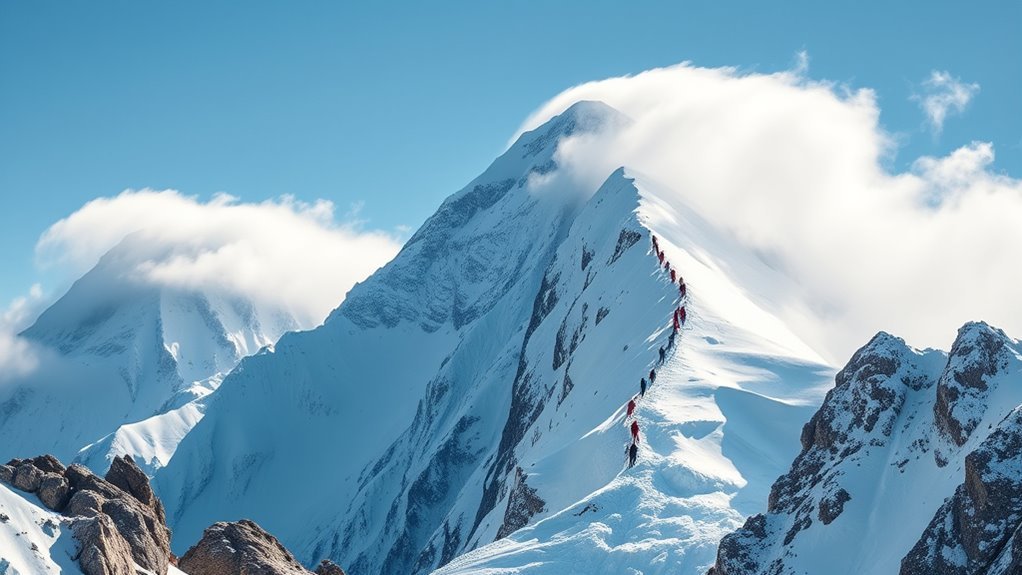
When climbers face overcrowding on Everest, the risks multiply markedly. Overcrowding causes long queues during summit attempts, forcing you to spend more time in the death zone where altitude sickness and exhaustion can set in.
Overcrowding on Everest leads to deadly delays, increasing time spent in the perilous death zone.
Congestion on common routes makes navigation tougher, increasing the chance of mistakes under extreme pressure. The delays mean you often face limited oxygen and worsening weather, raising the risk of fatal accidents.
This congestion also slows rescue efforts, making it harder to assist injured climbers quickly. Additionally, overcrowding complicates body recovery, leaving many fatalities unresolved and adding to the dangers for those who follow.
Ultimately, the surge in climbers creates a deadly bottleneck that substantially heightens the chances of injury and death on Everest. It’s a serious issue that’s not going away anytime soon.
Why So Many Bodies Are Still on Mount Everest
Although many climbers hope to bring their fallen comrades home, retrieving bodies from Mount Everest remains nearly impossible due to the extreme altitude and harsh conditions. The death zone above 8,000 meters exposes you to severe rescue risks and high-altitude dangers that make body recovery life-threatening.
The extreme cold preserves many frozen remains, which means bodies on Everest stay visible for decades. Mountaineering hazards and the mountain’s harsh environment further complicate efforts, leaving over 200 bodies behind.
- High-altitude dangers limit safe recovery operations
- Extreme cold causes remarkable body preservation
- Rescue risks outweigh attempts to remove frozen remains
- Bodies on Everest serve as grim markers of Everest fatalities
You quickly realize why so many bodies remain on the mountain despite the desire to recover them. It’s just not as simple as you might think.
Frequently Asked Questions
What Percentage of Climbers Die on Everest Each Year?
You’ll find that about 1% of Everest climbers die each year, though some seasons see higher rates due to weather or overcrowding. Always prepare well and respect the mountain’s dangers to increase your chances of success.
How Many Died on Everest Last Year?
Last year, 18 climbers lost their lives on Everest, a grim storm in the mountain’s history. You’d feel the weight of that tragedy, knowing the peak’s dangers still claim many despite modern gear and guides.
Why Can’t You Climb Mount Everest After 2pm?
You can’t climb Mount Everest after 2 pm because the weather worsens quickly, increasing risks of storms, strong winds, and cold. You’d face dangerous conditions, exhaustion, and a higher chance of accidents descending in fading daylight.
Who Was the Youngest Person to Die on Everest?
The youngest person to die on Everest was 16-year-old Tsewang Paljor. You should know he died during the 1996 South Col disaster, showing how dangerous the climb can be, especially for young climbers like him.
Conclusion
You’d think with all the risks on Everest, fewer people would try climbing it each year. Yet, you keep seeing more climbers heading into the death zone, where harsh conditions and overcrowding turn the dream into a nightmare.
Ironically, the mountain’s deadly allure means many never come back, and their bodies remain as silent reminders. So, if you’re drawn to Everest, just remember—it’s not just the summit that’s unforgettable.
Climbing Mount Everest is one of the most dangerous adventures out there. Each year, the number of fatalities highlights just how risky it is. The combination of extreme weather, altitude sickness, and sheer numbers makes it a deadly challenge.
Before you decide to take on Everest, think about the real dangers. The mountain doesn’t just test your strength; it tests your will to survive. Remember, every year, climbers face life-threatening conditions, and many pay the ultimate price.