How to Understand What Percent of People Die Climbing Everest
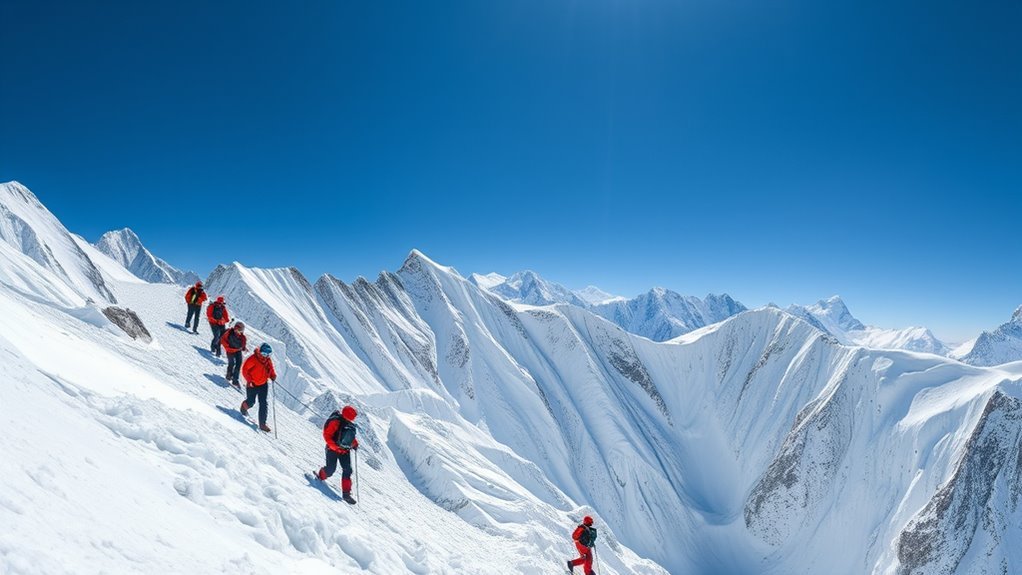
You face about a 1% chance of dying when climbing Everest, which might sound small but is still serious. Most fatalities happen during the descent in what climbers call the “death zone,” where oxygen levels are dangerously low. The risk gets even higher if you decide to climb without supplemental oxygen.
Other dangers like altitude sickness, falls, avalanches, and harsh weather all make surviving the climb tough. Experience and support from a good team can make a big difference.
Plus, improvements in gear have helped climbers stay safer over the years.
Still, Everest is an unforgiving mountain. It demands respect and preparation. So, keep exploring and learning to really understand what influences your survival odds on Everest.
Key Takeaways
- Calculate death rate by dividing total fatalities by successful ascents, typically around 1% historically and about 0.69% recently.
- Consider that most deaths occur during descent in the high-risk “death zone” due to altitude sickness, falls, or avalanches.
- Account for supplemental oxygen use, as climbers without it face significantly higher mortality rates.
- Recognize natural hazards and rapidly changing weather as major contributors to fatalities on Everest.
- Understand that improved gear, experience, and support systems have lowered death rates but risks remain high.
What Is the Death Rate for Climbers on Everest?
How deadly is climbing Everest? The overall death rate for climbers attempting Everest is about 1%, with roughly 339 fatalities out of over 15,000 successful ascents since 1922. That means most climbers who reach the summit survive.
Recent data shows a death rate closer to 0.69% from 2015 to 2025. Most fatalities happen in the death zone during descent, caused by altitude sickness, falls, or avalanches.
Climbing without supplemental oxygen dramatically raises your risk—about 180 of the total deaths involved oxygenless climbers. Many bodies remain on the mountain due to the high-altitude conditions, highlighting the dangers.
Despite these risks, improvements in gear and techniques have helped climbers survive Everest’s deadly environment more than ever before.
What Factors Influence Everest Climber Fatalities?
Because of the extreme conditions on Everest, several key factors influence climber fatalities. High-altitude hazards like oxygen deprivation play a major role, especially for those climbing without supplemental oxygen.
Weather conditions can change rapidly, increasing risks and complicating decision-making. Natural hazards such as avalanches, falls, and serac collapse considerably add to the danger, particularly in the notorious “death zone.”
Your experience level and support system, including Sherpa assistance, also impact your survival chances. Fatigue, especially during descent, impairs judgment and can lead to fatal mistakes.
Frequently Asked Questions
What Is the Probability of Dying on Everest?
The probability of dying on Everest is about 1-2%. If you climb without oxygen or experience, your risk goes up. Weather, route, and support also affect your chances, so prepare carefully before attempting.
What Is the 2pm Rule in Everest?
The 2pm rule on Everest means you must turn back if you haven’t reached the summit by 2:00 PM. This helps you avoid dangerous weather and exhaustion, increasing your chances of a safe descent.
Who Was the Youngest Person to Die on Everest?
You won’t believe it, but the youngest person to die on Everest was just 15-year-old Tsewang Paljor. He tragically lost his life during a 2019 expedition, showing how ruthless the mountain can be, even to teens.
Is K2 Deadlier Than Everest?
Yes, K2 is deadlier than Everest. You’ll face a much higher risk, with about 23% fatality on K2 compared to Everest’s 1-2%. Its technical difficulty and harsh weather make it far more dangerous.
Conclusion
Understanding Everest’s death rate helps you grasp the risks involved in the climb. For example, imagine you and a team planning your ascent—knowing about factors like altitude sickness, weather, and experience level lets you prepare better and make safer choices.
While the death rate hovers around 1-2%, each climber’s chance varies greatly. By staying informed and cautious, you can increase your odds of reaching the summit and returning safely.
In the end, understanding what percent of people die climbing Everest isn’t just about numbers. It’s about recognizing the real dangers and preparing for them properly. Being aware of the risks, such as altitude sickness or sudden weather changes, helps climbers make smarter decisions. So, if you’re thinking of climbing Everest, remember that knowledge and caution are your best tools to improve your chances of a safe journey and a successful summit.