How to Pick Climbing Shoes Step by Step
To pick climbing shoes step by step, you want to start by matching the shoe shape to your climbing style. For example, flat shoes work great for slabs, while downturned shoes are better for overhangs. Getting the shape right is key to comfort and performance.
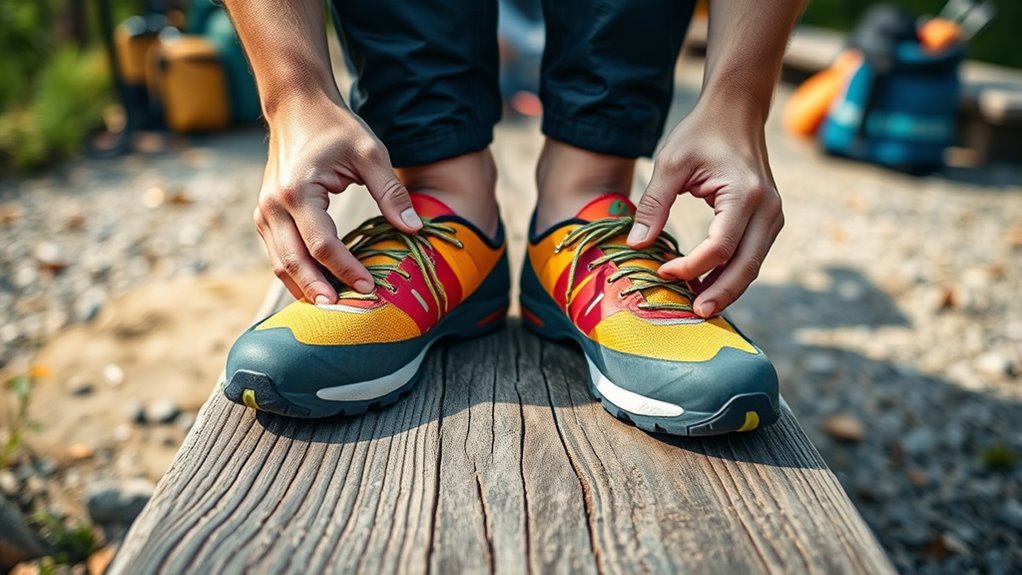
Next, make sure they fit snugly but don’t cause pain. Your toes should rest flat or be slightly curled—too tight can hurt, too loose won’t grip well. It’s all about finding that perfect balance.
Think about the material too. Leather shoes tend to stretch over time, while synthetic ones hold their shape better. This affects how quickly your shoes will break in and feel comfortable.
Then, decide on the closure type. Laces offer precise adjustments, Velcro is quick and easy, and slip-ons are super comfy.
If you’re new to climbing, start with beginner-friendly models that feel comfortable. As you get more experienced, you can explore options that fit your climbing goals and specific needs.
Key Takeaways
– Match shoe shape to climbing style: flat for slabs, moderate for versatility, downturned for overhangs.
This helps you perform better depending on the type of climbing you do most.
– Ensure a snug fit without pain, with toes flat or slightly curled and a secure heel fit.
It should feel tight but not unbearable—comfort matters here.
– Choose shoe material based on desired stretch and shape retention: leather stretches, synthetics hold shape.
Think about how the shoe will break in over time.
– Select closure type based on ease and fit needs: lace-up for precision, Velcro for convenience, slip-on for sensitivity.
Pick what works best for you and how quickly you want to put them on or take them off.
– Try recommended beginner models like Butora Endeavor (Velcro) or La Sportiva Tarantulace (lace-up) for comfort and fit.
Starting with these can make your climbing shoe journey a lot easier.
How to Choose the Right Climbing Shoe Shape and Fit
When choosing the right climbing shoe shape and fit, you should match the shoe to your climbing style and guarantee it feels snug without pain. Flat climbing shoe shapes work well for slab routes, moderate shapes suit versatile climbing, and downturned shoes excel on overhangs.
Focus on a snug fit where your toes rest flat or slightly curled, depending on your comfort and performance needs. Leather shoes stretch up to half a shoe size during break-in, so size accordingly, while synthetic shoes keep their shape longer.
The heel fit is essential—it should be secure without pinching your Achilles tendon. Try shoes later in the day when your feet are swollen, and test shoe comfort by walking or climbing to identify any hotspots or pressure points before finalizing your shoe size and shape.
Understanding Climbing Shoe Closures and Best Beginner Models
Although climbing shoe fit depends heavily on the shape, the closure system plays a crucial role in securing your foot and adjusting comfort. Climbing shoe closures include lace-up shoes, Velcro straps, and slip-on designs.
Lace-ups offer the best fit adjustment but take longer to put on. Velcro straps are easy to put on and great for quick changes, making them popular among beginner climbing shoes. Slip-ons provide comfort and sensitivity but may lack a secure fit for technical moves.
Popular beginner models like the Butora Endeavor (Velcro) and La Sportiva Tarantulace (lace-up) balance comfort, fit, and ease of use. So, it really comes down to what feels right for you and the kind of climbing you want to do.
| Closure Type | Key Benefit |
|---|---|
| Lace-up Shoes | Precise fit adjustment |
| Velcro Straps | Easy to put on |
| Slip-on Design | Maximum comfort |
| Lace-up Shoes | Secure fit |
| Velcro Straps | Quick removal |
Frequently Asked Questions
How Often Should Climbing Shoes Be Replaced?
You should replace your climbing shoes when they start losing grip, the rubber wears thin, or the fit feels loose. Typically, this happens every 6 to 12 months, depending on how often and intensely you climb.
Can Climbing Shoes Be Resoled?
Just like a trusty steed getting new horseshoes, you can absolutely resole climbing shoes. When the rubber’s worn, sending them to a skilled cobbler revives grip and performance, letting you tackle routes without breaking the bank.
How Do I Clean and Maintain My Climbing Shoes?
You clean your climbing shoes by wiping them with a damp cloth and air-drying them after each use. Avoid soaking them, and regularly check for wear. Store them in a cool, dry place to maintain shape and durability.
Are There Climbing Shoes Specifically for Women?
Yes, there are climbing shoes specifically for women, designed to fit narrower heels and arches better. You’ll find styles that balance comfort and performance, so you can choose shoes that suit your foot shape and climbing style perfectly.
What Are the Differences Between Aggressive and Neutral Shoe Profiles?
Oh, you’re not into foot torture? Neutral shoes offer comfort and all-day wear, while aggressive ones cram your toes for precision on tiny edges. Pick your pain level wisely—you’re either a relaxed climber or a masochist!
Conclusion
Choosing the right climbing shoe is like finding the perfect dance partner—it needs to fit snugly and move with you effortlessly. Remember, comfort and support go hand in hand, so don’t rush the process.
Try different shapes and closures until you find your match, especially if you’re just starting out. This step is key to making sure your feet feel good and perform well on the rock.
With the right climbing shoes, you’ll climb confidently, turning every challenge into a step closer to your peak. The best climbing shoes provide the support and grip you need for all kinds of routes.
Keep exploring different options and styles to find what works best for you. Happy climbing, and enjoy every step on your journey to becoming a better climber!