Why Is Climbing Mount Everest So Dangerous?
Climbing Mount Everest is so dangerous because you face deadly altitude sickness, which can cause life-threatening conditions like HAPE and HACE.
This is especially true above 8,000 meters where oxygen is scarce. This lack of oxygen makes every breath a struggle and puts a huge strain on your body.
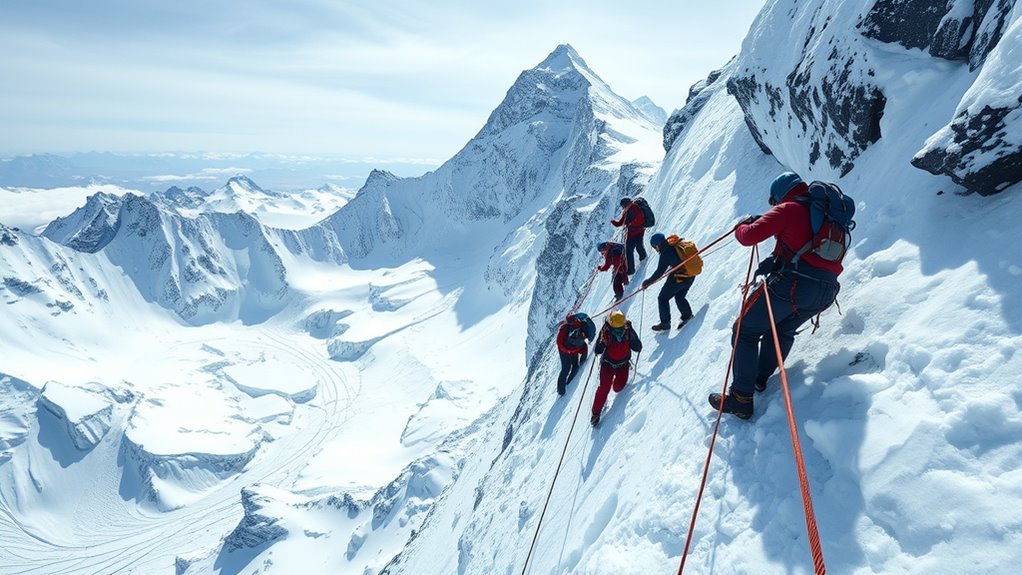
You also risk avalanches and unstable terrain like the Khumbu Icefall, which can be treacherous to navigate.
On top of that, sudden severe weather can hit without warning, turning the climb even more perilous.
These factors make every step risky, especially during the exhausting descent.
Knowing about these dangers beforehand helps you prepare better for the mountain’s many hazards that test even the strongest climbers.
It’s not just a climb—it’s a battle against nature itself.
Key Takeaways
- Extreme altitude causes oxygen deprivation and altitude sickness. This can lead to serious and even fatal conditions like HAPE and HACE.
- The descent phase is especially tough. Exhaustion sets in, and altitude sickness symptoms can get worse, making climbers more vulnerable.
- Avalanches are a real danger too. They happen when unstable snow and ice give way, which can suddenly bury climbers.
- Weather changes on Everest are rapid and unpredictable. This reduces visibility and raises the risks of avalanches and exposure to the elements.
- The terrain is no walk in the park either. Shifting icefalls and seracs demand constant attention and make accidents more likely.
Why Altitude Sickness Is Everest’s Deadliest Threat?
Although many hazards threaten climbers on Everest, altitude sickness stands out as the deadliest. At high altitude, oxygen levels drop drastically, especially in the “death zone” above 8,000 meters. This makes acclimatization nearly impossible.
Altitude sickness is Everest’s deadliest hazard, worsened by plummeting oxygen above 8,000 meters.
When your body can’t adjust, symptoms like headaches, nausea, dizziness, and confusion appear quickly. If you ignore them, these can worsen into High Altitude Pulmonary Edema (HAPE) or High Altitude Cerebral Edema (HACE), both of which are life-threatening conditions.
You’re most vulnerable during descent, when exhaustion limits your body’s ability to recover from altitude sickness. To survive, you have to ascend slowly, monitor your symptoms closely, and prioritize proper acclimatization.
Understanding and respecting altitude sickness’s dangers is essential because it causes most fatalities on Everest. It really proves it’s the deadliest threat you’ll face on the mountain.
How Avalanches, Weather, and Terrain Make Everest So Dangerous?
When you tackle Everest, avalanches, unpredictable weather, and challenging terrain combine to create some of the deadliest risks on the mountain. Avalanches can be triggered by unstable snow, seracs, or even seismic activity, and they can bury you instantly.
The Khumbu Icefall is especially notorious for ice collapse and serac falls, so it demands constant vigilance. High-altitude winds and sudden weather shifts only make things worse by increasing avalanche risk.
These conditions reduce visibility and often force delays, which means you’re exposed to terrain hazards for longer periods.
| Hazard | Impact |
|---|---|
| Avalanches | Instant burial, triggered by unstable snow, seracs, seismic activity |
| Weather Conditions | Storms, heavy snowfall reduce visibility, increase risk |
| Terrain Hazards | Khumbu Icefall’s ice collapse, seracs, and shifting ice |
Understanding these dangers really helps you get ready for Everest’s lethal challenges.
Frequently Asked Questions
How Many Climbers Have Died on Everest?
You should know that at least 322 climbers have died on Everest since 1922. On average, about 4.4 people die each year, with some years seeing more fatalities due to accidents or natural disasters.
Why Does It Cost $40,000 to Climb Mount Everest?
Climbing Everest costs $40,000 because you’re buying a lifeline in a deadly game—permits, expert guides, Sherpa support, oxygen tanks, and safety gear all add up, ensuring you survive the mountain’s fierce challenges.
What Is the 2pm Rule on Everest?
The 2pm rule on Everest means you’ve got to start descending by 2:00 PM to avoid dangerous weather and fatigue. It helps you stay safe and reach lower camps before nightfall, reducing accident risks.
Why Do Planes Not Fly Over Everest?
You won’t find planes flying over Everest because it’s a high-wire act in the sky—extreme altitude, turbulent weather, and signal interference make it too risky. Pilots choose safer, lower routes to keep you secure.
Conclusion
Climbing Mount Everest isn’t a walk in the park—you’re battling thin air, unpredictable weather, and deadly avalanches. If you underestimate altitude sickness or the harsh terrain, you could be playing with fire.
You’ve got to respect the mountain and prepare thoroughly because it can turn on you in a heartbeat. So, if you’re thinking about taking on Everest, remember: it’s not just a climb, it’s a fight for survival.
Mount Everest’s dangers come from extreme altitude, severe weather changes, and the risk of avalanches or falls. Altitude sickness can sneak up on climbers, making it even harder to breathe and think clearly. Plus, the mountain’s harsh terrain demands solid skills and careful planning.
In short, climbing Mount Everest is incredibly dangerous due to its thin air, unpredictable weather, and treacherous conditions. Proper preparation and respect for the mountain are essential. If you’re considering this challenge, know that it’s not just about reaching the summit—it’s about survival against one of the world’s most extreme environments.