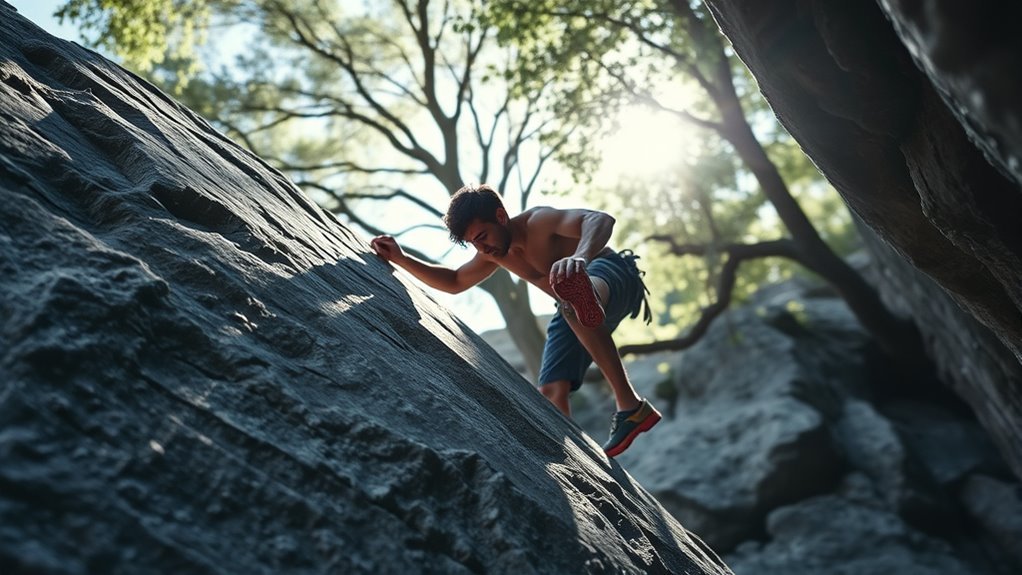
What Is Bouldering in Rock Climbing?
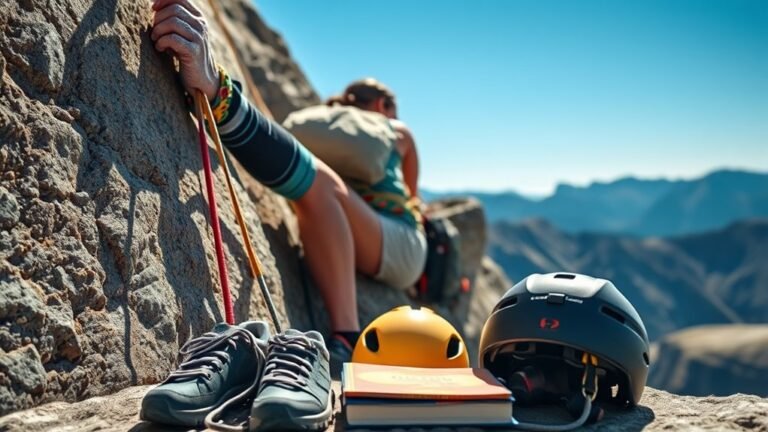
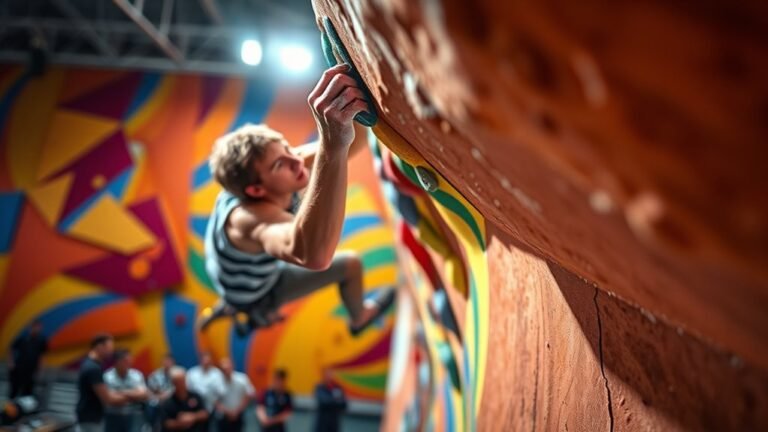
Bouldering lets you tackle short, powerful rock climbing routes without ropes or harnesses, usually just 13-15 feet high. It’s a style of rock climbing that focuses on strength, technique, and mental skills in a fun and intense way. You’ll rely on climbing shoes and crash pads for safety, making it accessible whether you’re indoors or outdoors.
Each climb challenges you with precise movements and problem-solving through dynamic sequences and body positioning. It’s a great way to push your limits and improve your climbing skills.
If you’re curious about why bouldering stands out or how it can test both your body and mind, keep exploring!
Key Takeaways
- Bouldering is rock climbing on short, challenging routes typically 13-15 feet high without ropes or harnesses.
- It uses minimal equipment, mainly climbing shoes and crash pads for safety.
- Climbers focus on powerful, precise movements and solving climbing “problems” or sequences.
- Bouldering emphasizes physical strength, technique, and mental problem-solving skills.
- It can be practiced both indoors and outdoors, promoting social interaction and accessibility.
Why Bouldering Stands Out From Other Climbing Styles
While other climbing styles often demand endurance and extensive gear, bouldering stands out by focusing on short, powerful climbs without ropes, usually no higher than 13-15 feet. In both outdoor and indoor bouldering, you’ll rely mainly on climbing shoes and crash pads for safety.
This style emphasizes precise human movement and problem-solving as you tackle climbing problems that require strength and technique over stamina. Because there are no ropes or harnesses, you can move freely and experiment with dynamic moves and intricate body positioning.
Bouldering’s social nature means you often work alongside others on the same short climbs, sharing tips and encouragement. This minimal equipment, combined with constant variation, makes bouldering an accessible and uniquely engaging form of rock climbing.
How Bouldering Problems Test Your Body and Brain
Because bouldering problems act like physical puzzles, you need to engage both your body and mind to solve them. Each problem demands strategic body positioning and technical skill, forcing you to analyze holds and movement sequences carefully.
You’ll combine mental problem-solving with physical effort to find the most efficient way up. Along the way, you adapt techniques like toe hooks or precise foot placements to make your moves smoother.
As climbing difficulty increases, your body strength and technique refinement become essential. You’ll constantly adjust your approach, testing not only your muscles but also your ability to think critically under pressure.
This unique blend of puzzle-solving and physical challenge makes bouldering problems an intense workout for your entire body and brain. It really pushes you to improve with every climb.
Frequently Asked Questions
Is There a Difference Between Rock Climbing and Bouldering?
Yes, you’ll notice big differences: bouldering involves shorter climbs without ropes, focusing on power and technique, while rock climbing requires ropes, longer routes, and endurance. You’ll use less gear in bouldering compared to rock climbing.
Can Beginners Do Bouldering?
You can plunge into bouldering like a bird flying free—no heavy gear needed. Gyms offer easy routes and classes, so you’ll build confidence and skills quickly while having fun tackling each climbing puzzle safely.
Is Rock Climbing Good for Osteoporosis?
Yes, rock climbing can help you improve bone density and reduce osteoporosis risk by stimulating bone growth. Just make sure you use proper techniques and safety measures to avoid falls and fractures while climbing.
Is Rock Climbing Good for Dyspraxia?
Yes, rock climbing’s rhythm will build your strength, skill, and confidence. You’ll improve coordination, body control, and motor planning, turning challenges into triumphs. With practice, climbing can truly help you manage dyspraxia effectively.
Conclusion
Bouldering isn’t just climbing; it’s a full-body puzzle that challenges your strength, balance, and creativity all at once. When you tackle a bouldering problem, you’re pushing your limits in ways that feel like trying to move mountains with your bare hands.
Every move demands focus and grit, making each success incredibly rewarding. It’s not just about physical power but also about thinking through your next step carefully.
So, if you want a sport that sharpens both your body and mind, bouldering is your ultimate adventure. This form of rock climbing offers a unique blend of mental challenge and physical exercise, helping you build strength, improve balance, and boost problem-solving skills. Whether you climb indoors or outdoors, bouldering keeps you engaged and constantly learning. It’s a perfect way to stay fit while having fun and connecting with a vibrant climbing community.