How to Relieve Knee Pain When Climbing Stairs and Squatting
You can relieve knee pain when climbing stairs and squatting by strengthening your quadriceps, especially the VMO, and stretching your hamstrings, calves, and hip flexors. These muscles play a big role in supporting your knee joint and reducing discomfort.
It’s also important to focus on proper movement mechanics. This helps improve kneecap tracking and lowers the stress on your joints, making everyday activities easier and less painful.
Adding hip and core stability exercises is a great idea too. They help stabilize your pelvis, which eases soft tissue strain around the knee.
By following these steps, you support balanced muscle function and promote smoother knee motion. Keep going, and you’ll find effective exercises and techniques that can restore your knee comfort.
Key Takeaways
- Strengthen your quadriceps, especially the VMO, with exercises like mini squats and straight leg raises. This helps support proper knee alignment and can really make a difference.
- Don’t forget to stretch your hamstrings, calves, and hip flexors regularly. It reduces muscle tension around the knee and keeps things feeling more comfortable.
- Try to improve your movement mechanics and avoid improper kneecap tracking. Doing so decreases joint stress and soft tissue strain, which can ease the pain.
- Adding hip and core stability exercises is a great idea. They enhance pelvis support and help reduce the extra load on your knees.
- Always use proper technique during activities. This balances your muscles and promotes smoother, pain-free knee movement. You’ll notice it feels a lot better when you do.
Common Causes of Knee Pain When Climbing Stairs or Squatting
When you climb stairs or squat, your knees endure forces three to eight times your body weight. That puts a lot of stress on the cartilage and soft tissues.
This joint stress often leads to knee pain, especially patellofemoral pain caused by kneecap misalignment. Cartilage deterioration or early osteoarthritis can also make climbing stairs and squatting uncomfortable.
Overuse injuries, like patellar tendinitis or chondromalacia, frequently result from repeated bending motions. Muscle imbalances, particularly weak quadriceps or hamstrings, contribute to improper kneecap tracking.
That improper tracking just makes joint stress and pain worse. Plus, poor movement mechanics can increase strain on your soft tissues during these activities.
Understanding these common causes can help you figure out why your knees hurt when climbing stairs or squatting. It also points you toward effective relief strategies.
Strengthening and Stretching Exercises to Relieve Knee Pain
Although knee pain can feel limiting, you can reduce discomfort by strengthening and stretching key muscles around your knee. Knee strengthening exercises like mini squats, bridges, and straight leg raises enhance muscle support around the knee, which helps during stair climbing and squatting.
Focus on quadriceps activation, especially the VMO, to improve patellar tracking and reduce anterior knee pain. Don’t forget stretching hamstrings, calves, and hip flexors with flexibility exercises to ease tension on the joint.
Also, incorporate hip and core stability workouts to stabilize your pelvis. This improves joint biomechanics and decreases compensatory knee stress.
Regularly doing these targeted exercises with proper technique promotes knee pain relief by addressing muscle imbalances and supporting healthier movement patterns in daily activities. It’s all about keeping things balanced and moving smoothly!
Frequently Asked Questions
Why Do My Knees Hurt When I Squat and Climb Stairs?
Your knees hurt when you squat and climb stairs because the joint experiences high pressure, especially if your muscles are weak or tight, your form is off, or underlying issues like inflammation or cartilage damage increase strain during movement.
How to Instantly Fix Knee Pain When Going up and Down Stairs?
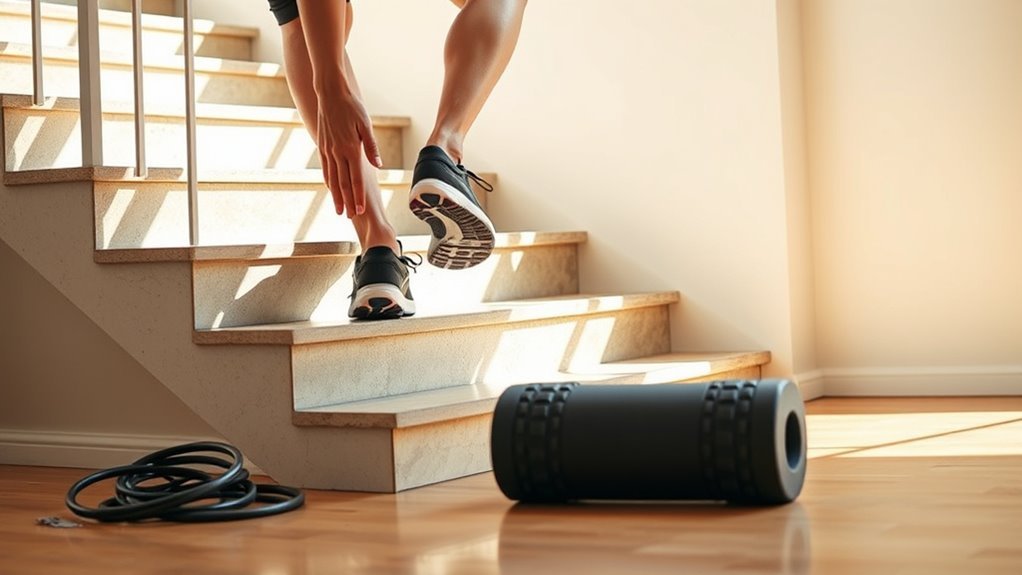
You can instantly ease knee pain by using handrails for support, keeping knees slightly bent, and pushing through your heels. Take breaks, apply ice afterward, and avoid locking your knees to reduce strain during stair movement.
What Is the #1 Mistake That Makes Bad Knees Worse?
The #1 mistake you make is performing deep squats or stair climbing with poor form, which hits your knees like a hammer. You’ll worsen joint stress and cartilage damage if you don’t fix your technique immediately.
How to Fix Squatter’s Knee?
To fix squatter’s knee, focus on strengthening your VMO and hips, correct your squat form, avoid deep squats initially, use knee support if needed, and gradually increase low-impact activities like cycling or swimming to promote healing.
Conclusion
If you’re struggling with knee pain while climbing stairs or squatting, don’t ignore it. Like Sarah, who eased her discomfort by strengthening her quads and stretching her hamstrings daily, you can find relief too.
Consistent exercises targeting those muscles support your knee, making movement easier and less painful. Remember, taking small, steady steps in your routine can help you regain strength and enjoy pain-free activity again.
To relieve knee pain when climbing stairs and squatting, focus on strengthening your quadriceps and improving flexibility in your hamstrings. These muscles play a big role in stabilizing your knee joint. Incorporate gentle stretches and exercises into your daily routine, and be patient with your progress. Over time, this approach helps reduce discomfort and makes climbing stairs and squatting less painful, so you can get back to your activities confidently.