How to Start a Rock Climbing Gym in 7 Easy Steps
To start a rock climbing gym in 7 easy steps, first develop a solid business plan. This will help you outline your market, costs, and operations clearly. A strong plan is the foundation for success.
Next, secure funding and pick a location with high traffic and enough space. Location is key to attracting climbers and growing your business.
Then, design safe climbing walls.
Obtain permits and insurance, and hire trained staff focused on safety. Safety should always be your top priority.
Finally, launch early marketing and membership sales to build buzz and attract your first customers.
Ready to explore each step in detail and get your gym climbing? Let’s dive in and make your rock climbing gym dream a reality!
Develop a Comprehensive Business Plan
Before you open the doors to your rock climbing gym, you need to develop a thorough business plan that covers every critical aspect of your venture. Start by conducting detailed market research to pinpoint your target demographics, analyze competitors, and identify ideal locations where demand exceeds supply.
Your business plan should include clear financial projections, outlining startup costs—which can reach millions—and ongoing expenses. Additionally, craft operational plans that address staffing, safety protocols, route setting, membership models, and programming to ensure smooth daily management.
Don’t forget to incorporate marketing strategies and contingency plans for delays like permits or construction. By covering these essentials in your business plan, you’ll set a solid foundation for a successful rock climbing gym that meets both market needs and financial goals.
Secure Funding and Financial Resources
With a solid business plan in hand, the next step is to secure the funding and financial resources needed to bring your rock climbing gym to life. Develop a detailed financial plan that outlines your startup costs, ongoing expenses, and revenue projections based on your business model.
Secure funding with a detailed financial plan covering startup costs, expenses, and revenue projections.
Typical startup costs can range from hundreds of thousands to several million dollars, so identifying reliable funding sources is vital. Consider personal savings, bank loans, investor capital, crowdfunding, or industry grants and sponsorships.
Present your all-encompassing business plan with clear financial forecasts and growth strategies to increase credibility with lenders and investors. Securing sufficient capital before construction starts ensures you can cover expenses like equipment, permits, and staffing without delays.
This way, you’ll set your gym up for a smooth launch and stable early operations.
Choose the Right Location and Space
You’ll want to pick a spot that’s easy to find and close to your target crowd, whether that’s outdoor lovers or urban adventurers.
Make sure the space can fit your climbing walls, reception, and safety areas comfortably, usually between 3,000 and 5,000 square feet.
Also, check local demand and accessibility factors like parking and public transit to keep your gym busy and thriving.
Accessibility and Visibility
Choosing the right location plays a crucial role in your rock climbing gym’s success, as it directly affects accessibility and visibility. Select a spot with high foot traffic near gyms, schools, or shopping centers to draw in spontaneous visitors.
Make sure your gym offers easy accessibility with ample parking and is close to public transportation. This encourages regular attendance from a diverse group of climbers.
High visibility from busy streets really boosts your gym’s presence and attracts more customers. Also, think about how accessible your location is to local communities, since this fosters loyalty.
Space Layout Considerations
After securing a location that offers great accessibility and visibility, it’s important to focus on how you utilize the space inside your gym. Aim for 4,000 to 8,000 square feet with high ceilings—16 to 20 feet—to support varied wall angles and route-setting.
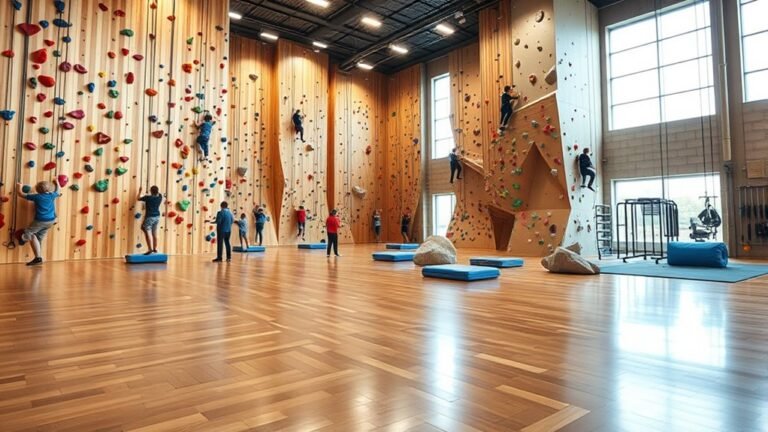
Design a layout that clearly separates climbing zones like bouldering, top roping, and lead climbing. This boosts safety and enhances the user experience.
Make sure there’s enough room for essential amenities such as reception, gear rental, rest areas, and a retail shop without sacrificing climbing surface area. Also, consider convenient access to parking and public transit to attract climbers consistently.
Thoughtful space planning ensures your gym runs smoothly and feels welcoming. It really sets the stage for a thriving climbing community.
Local Market Demand
Where should you open your rock climbing gym to attract the most enthusiastic climbers? Start by conducting a thorough location analysis to gauge market demand. Focus on areas with active climbing communities and minimal overlap with existing climbing gyms.
Use competitor analysis to identify gaps you can fill. This way, you’ll find the perfect spot where climbers are eager for a new place to train.
Consider these key factors:
- Demographics and competitor locations to maximize visibility and accessibility.
- Space requirements, including ceiling height (16-20 feet) and enough room for bouldering, top roping, and lead climbing.
- Zoning, parking, and proximity to complementary businesses like gyms or outdoor gear shops.
These elements will help ensure your gym is both accessible and appealing. So, take your time researching and choose wisely!
Design and Build Your Climbing Walls
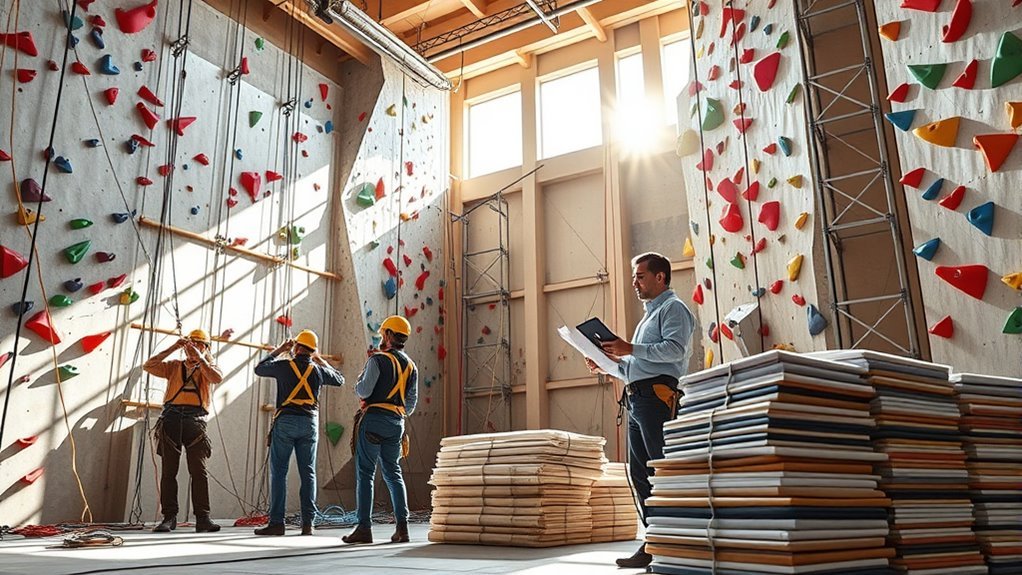
When you design and build your climbing walls, a detailed, signed wall plan becomes your essential blueprint. It helps coordinate vendors, engineers, and route setters before construction starts.
Make sure to confirm your terrain mix, hold packages, and pad layout early. This guarantees safety, flow, and accessibility for all skill levels.
Try to avoid making plan changes after permits are secured. Doing so can lead to costly delays and rework during construction.
Begin by testing beginner routes first. This allows you to make adjustments for safety and proper difficulty progression.
Also, strategically map supervision points and set routes to accommodate classes and day passes. This helps maintain safety and an efficient climbing experience.
Careful route setting combined with a solid wall plan ensures your climbing walls meet user needs. It creates a positive, safe environment from day one.
Obtain Permits, Insurance, and Safety Certifications
Before you open your gym, make certain you secure all required permits like zoning and occupancy to stay compliant with local laws. You’ll also need extensive insurance and safety certifications to protect your business and ensure your walls meet engineering standards.
Don’t forget to have your staff trained and certified in emergency procedures to keep everyone safe. It’s all about being prepared and making sure your gym runs smoothly from day one.
Licensing and Permits
Although starting construction might be exciting, you’ll need to secure all necessary permits—including building, zoning, occupancy, and fire safety approvals—before moving forward. These licenses ensure your gym meets building safety codes and complies with local regulations.
Here’s what you need to focus on:
- Obtain all required permits from local authorities to guarantee legal construction and operation.
- Secure fire safety approvals by passing inspections that confirm your facility meets emergency standards.
- Register for business licenses as mandated by your city or state to operate officially.
Following these steps prevents costly delays and ensures your rock climbing gym opens on time and safely. So, prioritize permits, building safety, fire safety approvals, and licenses to build a solid foundation for your business.
Insurance and Certifications
Since securing permits lays the groundwork for your gym, you’ll also need to obtain extensive insurance coverage and essential safety certifications to protect your business and patrons. Start by getting all necessary permits like occupancy, zoning, and fire safety approvals to comply with local laws.
Next, secure all-encompassing insurance, including general liability, property, and workers’ compensation, to shield against potential claims. Make sure your staff earn certifications in rescue, first aid, and CPR to handle emergencies on-site confidently.
Regularly inspect your facility and obtain certifications for wall engineering and impact zone safety. Keep detailed records of all permits, insurance policies, certifications, and safety protocols, updating them regularly to ensure ongoing compliance and smooth inspections.
This foundation safeguards both your gym and climbers effectively. It’s all about keeping everyone safe and your business running smoothly.
Hire and Train Your Staff
When you hire your staff early, you set the foundation for a smooth gym opening by filling key roles like general manager, route setters, instructors, and front desk personnel. Proper training is vital to guarantee your climbing gym runs safely and efficiently from day one.
Focus on these three priorities:
- Provide thorough training on safety protocols, belaying techniques, emergency procedures, and customer service to prepare your staff thoroughly.
- Teach your team to operate and troubleshoot systems like waivers, POS software, and booking platforms for smooth daily operations.
- Conduct mock shifts and role-playing exercises to simulate real customer interactions and emergency scenarios.
Regularly update your training program to keep your staff knowledgeable and your climbing gym running at its best. It really makes all the difference in creating a great experience for your customers.
Launch Marketing and Membership Sales
To build excitement and secure a loyal customer base before your gym opens, you should launch your marketing and membership sales early. Start by offering founding memberships and early access passes 30 to 90 days prior to opening.
Use targeted marketing campaigns on social media, local partnerships, and community events to attract climbers during pre-sales. It’s a great way to get the word out and build buzz.
Include introductory classes, group packages, and youth programs in your pre-launch promotions to boost engagement. These options make it easier for different groups to get involved right away.
Set up a waitlist or reservation system for soft openings. This will help you forecast demand and plan your staff accordingly.
Don’t forget to incentivize early commitments with early bird discounts and referral rewards. Those little perks really encourage people to spread the word.
This strategic approach ensures strong membership sales and a ready community enthusiastic to experience your gym from day one. You’ll be set up for a great launch!
Conclusion
Starting your rock climbing gym means planning thoroughly and securing funds confidently. Choosing locations wisely and designing walls creatively are also key steps.
You’ll need to obtain permits diligently and hire staff carefully. Then, market your gym aggressively to attract climbers.
By following these steps with focus and determination, you’ll build not just a gym, but a vibrant community. You’ll inspire climbers, foster safety, and grow a business that climbs higher every day.
Now, it’s your turn to take the lead and start climbing. With the right planning and passion, your rock climbing gym will become a go-to spot for adventurers and fitness enthusiasts alike. Get ready to create an exciting and safe space where everyone can challenge themselves and enjoy the thrill of climbing!