
How Does Stair Climbing Build Glutes?
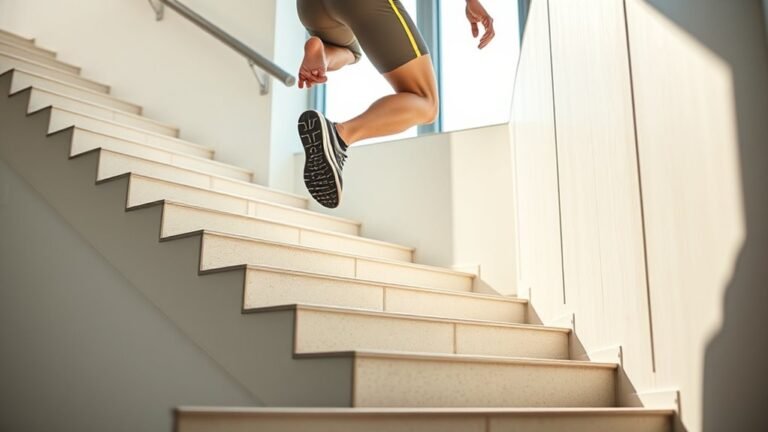
When you climb stairs, you engage your glutes effectively through hip extension with every step, especially by pushing through your heel. This action activates key muscles like the gluteus maximus, medius, and minimus, which are essential for building strong, toned glutes.
Stair climbing is a fantastic way to work your lower body because it combines resistance and movement in a simple, practical exercise.
The consistent resistance from repeated upward motions helps strengthen and tone your glute muscles over time. Mixing up your routine by changing step height and pace challenges your muscles even more.
This variation promotes muscle growth and endurance, making your glutes stronger, firmer, and better balanced. Stick with it, and you’ll notice real improvements.
There’s actually a lot more to discover about how this straightforward activity benefits your lower body.
Targeted Muscle Engagement During Stair Climbing
How exactly does stair climbing target your glute muscles? Each step you take involves hip extension, which activates the powerful gluteus maximus. This repetitive upward motion provides consistent resistance, encouraging muscle hypertrophy and boosting your overall glute development.
To enhance glute activation, focus on pushing through your heel rather than your toes during ascent. Incorporating step variations like side steps or kickbacks engages the smaller glute medius and glute minimus muscles, ensuring balanced strength and stability.
Increasing the step height or pace intensifies the load, demanding more from your glutes. By challenging these muscles through varied stair climbing techniques, you effectively stimulate all three key glute muscles, maximizing growth and functional strength in your lower body.
Benefits of Consistent Stair Climbing for Glute Development
When you climb stairs regularly, your glute muscles get consistent activation that promotes growth and strength. Stair climbing mimics natural hip extension, heavily engaging your gluteal muscles with every step.
This repeated motion stimulates muscle growth and toning, helping your glutes become firmer and more defined. By putting in consistent effort, you’ll improve muscle endurance, allowing your glutes to work longer and more efficiently.
Over time, this enhances your posture and athletic performance. Adding variations like side steps targets different parts of the glutes, boosting all-encompassing glute development.
Staying consistent with stair climbing ensures ongoing muscle hypertrophy and better muscle definition. Ultimately, this simple activity transforms your glutes through persistent, targeted exercise that supports both strength and toning.
Conclusion
When you climb stairs, your glutes light up like fireworks, firing with every step you take. Consistent stair climbing doesn’t just tone your muscles—it sculpts and strengthens them, turning your glutes into powerful engines of movement.
By making stair climbing a regular habit, you’re not just walking up steps; you’re stepping up your fitness game and building a stronger, more defined lower body. Keep climbing, and watch your glutes rise to the challenge!
Stair climbing is an effective way to build glutes because it targets these muscles through repetitive, weight-bearing motion. Each step engages your gluteus maximus, helping to increase muscle endurance and size over time.
So, if you want to build glutes that are both strong and shapely, incorporating stair climbing into your routine is a smart move. It’s a simple, accessible workout that delivers real results for your lower body strength and definition.