How Does Aid Climbing Work?
When you aid climb, you rely on specialized gear like aiders—these are adjustable ladders clipped to protection points. Along with pitons, hooks, and daisy chains, these tools help you move up a climbing route step by step.
You carefully place and test your gear to make sure each step is secure. Then, you clip your aiders in to stand on and pull yourself higher. This approach is perfect for tackling sections that are too tough to free climb because you’re depending on your equipment for support.
Keep exploring, and you’ll discover how each tool and technique plays a key role in helping you climb safely and efficiently. Aid climbing really opens up new possibilities on challenging routes!
Equipment and Gear
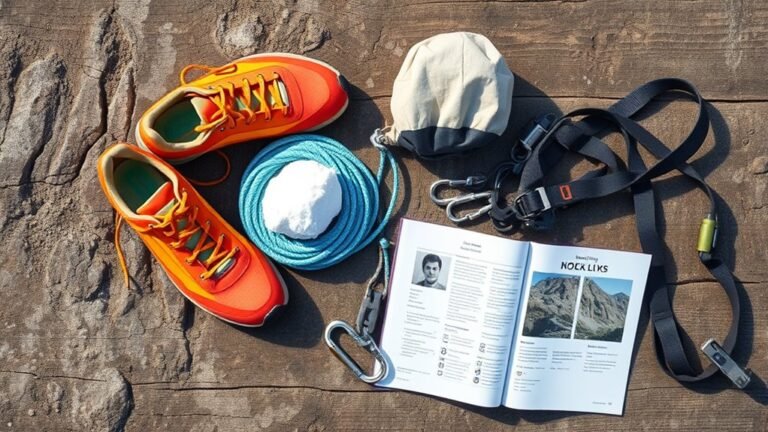
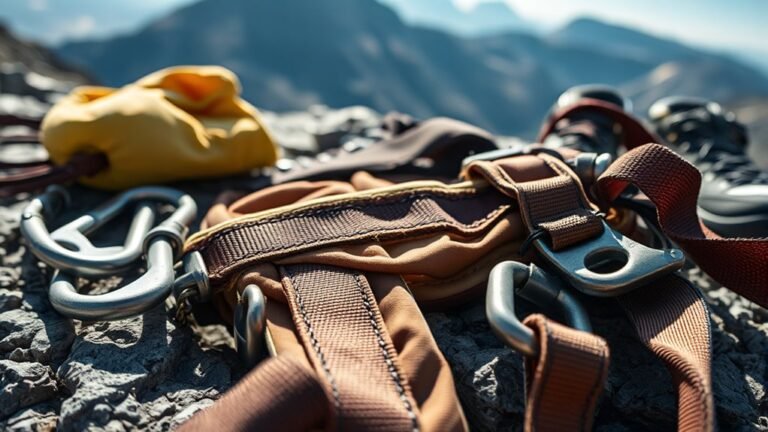
Although aid climbing relies heavily on technique, you can’t progress without the right equipment and gear. Your aid climbing gear includes aiders—adjustable nylon ladders clipped into protection points—that let you step up aid pitches smoothly.
You’ll also use daisy chains to connect yourself securely to aid placements. Fixed protection like pitons hammered into cracks provides reliable anchor points for your aiders.
Daisy chains secure you to aid placements, while pitons offer dependable anchor points for your aiders.
Hooks, such as skyhooks and copperheads, latch onto tiny rock features, helping you gain purchase where fixed protection isn’t possible. Your climbing gear also typically includes mechanical devices like jumars to ascend fixed ropes efficiently.
Understanding how to use these tools—aiders, daisy chains, pitons, hooks, and fixed protection—is essential for safe and steady progress on aid routes.
Techniques and Progression
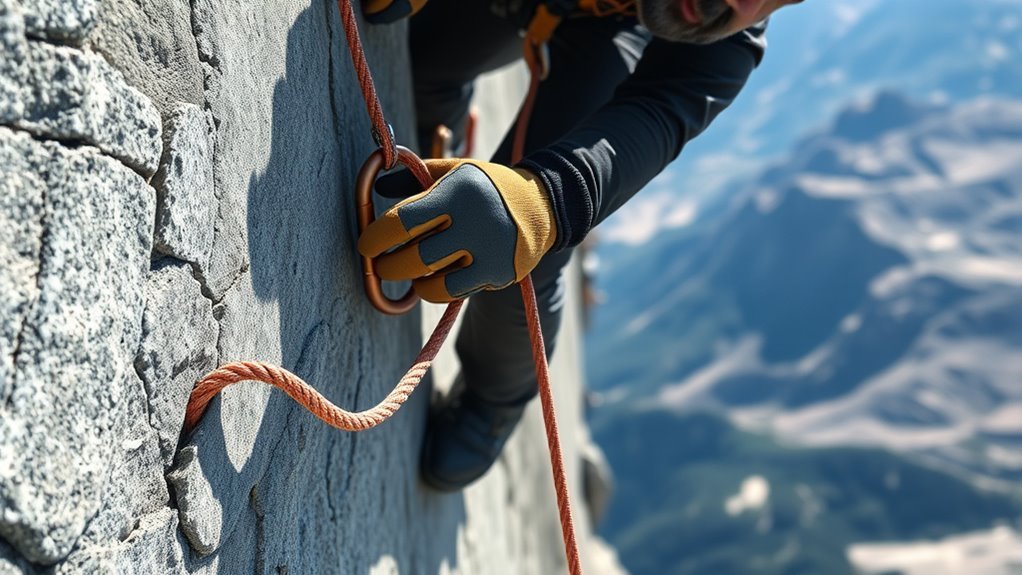
When you start aid climbing, you rely on placing protective gear like pitons, hooks, or cams into rock cracks to create secure points for upward movement. You clip aiders—nylon ladders—into these gear placements, stepping up carefully.
Bounce testing each placement ensures your protection holds before committing to the next move. As you advance on an aid pitch, you continuously make gear placements, use the aid ladder, and remove or adjust gear for efficient progress.
Transitioning between aid climbing and free climbing requires managing your gear to switch techniques smoothly.
| Technique | Purpose | Key Action |
|---|---|---|
| Gear Placements | Secure protection | Insert pitons/cams |
| Aiders | Step up the route | Clip ladders |
| Bounce Testing | Confirm gear strength | Jerking gear gently |
| Gear Removal | Clear route | Unclip old gear |
| Aid Ladder | Assist upward progress | Climb with aiders |
Conclusion
Now that you’ve got the basics of aid climbing down, remember it’s not just about gear or technique—it’s about trusting every tiny piece to hold your weight while you inch upward. You’ll feel like you’re defying gravity itself, clinging to rock as if your life depends on it—because it does.
With practice, patience, and respect for the climb, you’ll master this incredible dance between human determination and nature’s challenge. Aid climbing is all about using precise equipment and skillful moves to progress safely where free climbing isn’t possible.
Keep going; the summit’s waiting. Embrace the challenge of aid climbing, and you’ll discover a whole new level of connection to the rock and yourself as you conquer each pitch step by step.