10 Essential Tips on What to Wear for Indoor Rock Climbing
For indoor rock climbing, it’s super important to pick the right clothes that keep you comfy and flexible. Go for breathable, moisture-wicking fabrics like polyester or nylon — they help you stay dry and cool while you climb.
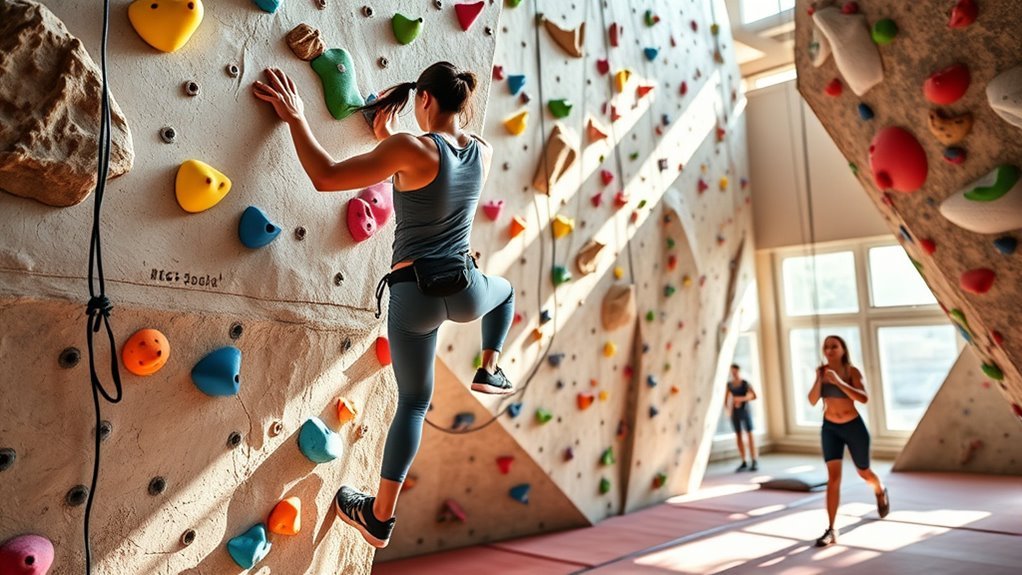
Choose snug leggings or shorts that let your legs move freely, and a close-fitting top that won’t snag or ride up when you stretch.
Don’t forget climbing shoes! Rent a pair that fits tight so you get the best grip on the wall.
Layer lightweight pieces too, so you can adjust if the gym feels chilly or warm.
Keep accessories to a minimum and tie back long hair for safety reasons.
Ready for these easy tips? They’ll help you climb safer and feel totally unstoppable every time you hit the wall!
Choose Flexible and Breathable Clothing
Although indoor climbing gyms often maintain a controlled climate, you’ll want to wear flexible, breathable clothing that keeps you comfortable and dry as you move.
When selecting your climbing gear, opt for stretchy pants, leggings, or athletic shorts that allow full range of motion without restriction. Avoid cotton, since it traps moisture and can lead to discomfort or chafing during your climb.
Instead, choose fitted tops like performance tees or tank tops made from lightweight, breathable fabrics that won’t snag on holds or equipment. Layering lightweight, flexible pieces lets you easily adjust to any temperature changes inside the gym.
Opt for Moisture-Wicking Fabrics
You’ll want to pick moisture-wicking fabrics to keep sweat off your skin during climbs. Materials like polyester, nylon, and merino wool work great for staying dry and comfortable.
These fabrics also help prevent chafing and improve your grip by reducing moisture buildup. So, not only do they keep you feeling fresh, but they also make your climb smoother.
Benefits of Moisture-Wicking
When you choose moisture-wicking fabrics for indoor rock climbing, you keep sweat away from your skin, staying dry even during intense climbs. Moisture-wicking climbing clothes pull sweat off your body, reducing chafing and skin irritation caused by damp fabric.
This means you stay comfortable, no matter how challenging your route gets. These fabrics also help regulate your body temperature, preventing overheating in warm indoor gyms.
Plus, moisture-wicking materials like polyester, nylon, and merino wool dry quickly, so your clothes feel fresh throughout your session. Wearing the right climbing clothes designed to wick moisture not only boosts comfort but also lets you focus fully on your climb without distractions from dampness or discomfort.
Fabric Choices for Climbing
Since climbing demands both comfort and performance, choosing moisture-wicking fabrics is essential for your indoor sessions. These technical fabrics pull sweat away from your skin, keeping you dry and comfortable throughout your climb.
Unlike cotton, moisture-wicking fabrics dry quickly, reducing irritation and chafing. Plus, they help regulate your body temperature by preventing moisture buildup that can lead to chills or overheating.
Many technical fabrics also feature antimicrobial treatments, which control odor during long sessions. Look for:
- Synthetic blends or lightweight merino wool that wick moisture effectively
- Apparel made from treated technical fabrics to minimize odor
- Clothing designed to enhance grip and movement without retaining sweat
Opting for moisture-wicking fabrics boosts your comfort and climbing performance every time you hit the wall. It’s a simple choice that makes a big difference!
Staying Dry and Comfortable
How do you stay dry and comfortable during an intense indoor climb? The key is choosing moisture-wicking fabrics like synthetic polyester or merino wool. These materials pull sweat away from your skin, keeping you dry and preventing discomfort.
Unlike cotton, which retains moisture and feels heavy, moisture-wicking clothing helps regulate your body temperature and reduces chafing. Wearing moisture-wicking shirts and leggings not only enhances comfort but also improves your grip on climbing holds.
Layering moisture-wicking base layers allows you to control temperature better, avoiding overheating and dampness. By opting for moisture-wicking fabrics, you ensure that your focus stays on the climb, not on feeling sticky or irritated.
Prioritizing comfort with the right fabric makes all the difference in your indoor climbing experience. Trust me, once you switch to moisture-wicking gear, you’ll wonder how you ever climbed without it!
Select Pants or Shorts That Allow Full Movement
You’ll want pants or shorts that stretch with every move, keeping you comfortable and unrestricted.
Look for lengths that protect your knees without getting in the way, like mid-thigh shorts or tapered pants.
Avoid anything too tight or stiff, so you can focus on climbing, not adjusting your clothes.
Flexibility and Comfort
When selecting pants or shorts for indoor rock climbing, prioritize flexibility and comfort to guarantee your movements aren’t restricted. Choose climbing pants or athletic shorts made from stretchy, moisture-wicking materials that let you move freely without overheating.
Avoid rigid fabrics like denim, which limit your hip and leg mobility, essential for reaching holds and high steps. Look for gear that fits snugly but doesn’t ride up or slip down, ensuring you can focus on your climb without distractions.
- Stretchy leggings or tapered climbing pants that move with your body
- Moisture-wicking fabrics to keep you dry and comfortable
- Athletic shorts designed for full range of motion during climbs
These choices help you wear indoor rock climbing gear that supports all your movements with ease. It’s all about feeling good so you can climb better!
Length and Fit
Building on the need for flexibility and comfort, paying attention to the length and fit of your climbing pants or shorts will help you move unhindered. Choose climbing pants made from stretchy fabrics like spandex or elastane to guarantee maximum flexibility.
Opt for a length that hits just above the ankle, allowing full leg extension without restriction. Avoid overly tight garments that could limit your range of motion during high steps or wide reaches.
A slim fit is ideal to prevent fabric from catching on holds, harnesses, or equipment, enhancing both safety and performance. If you prefer shorts, longer ones or tapered pants offer knee protection without sacrificing mobility.
Prioritizing the right length and fit ensures you climb efficiently and comfortably every time. It’s all about finding that perfect balance so you can focus on the climb, not your gear.
Wear Close-Fitting Tops That Stay in Place
Although comfort is key, wearing close-fitting tops that stay securely in place can make a big difference in your indoor climbing experience. When you wear rock climbing apparel, you want tops that won’t ride up or snag on holds, allowing you to focus fully on your movements.
Opt for fitted, moisture-wicking fabrics like performance T-shirts or tank tops that stretch with you. Avoid loose or baggy shirts that can catch on holds or restrict your range of motion.
Consider breathable long sleeves if you want arm protection without sacrificing mobility. Key features to look for when you wear rock climbing tops include:
- Lightweight, stretchy fabric for full arm extension
- Secure fit that stays put during dynamic moves
- Moisture-wicking material to keep you dry and comfortable
Rent Proper Climbing Shoes for Best Performance
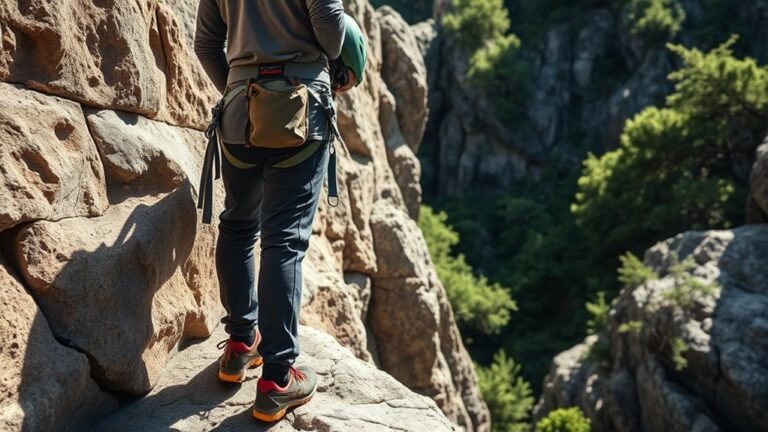
When you rent climbing shoes, make sure they fit snugly to give you the best grip and control on the wall. These shoes are designed to be worn without socks to enhance sensitivity, so try on several sizes to find the right balance between tightness and comfort.
Renting also helps keep shoes clean and well-maintained. This way, you can focus on your climb without worrying about hygiene or wear.
Importance of Snug Fit
If you want to climb effectively indoors, wearing climbing shoes that fit snugly is essential. A snug fit guarantees your feet stay secure without pain, giving you maximum grip and control on the wall.
Shoes that are too loose cause slipping, while overly tight ones lead to discomfort and poor circulation. Since climbing shoes are designed to be worn without socks, they should hold your feet firmly to prevent movement inside the shoe.
Here’s what a proper snug fit looks like: Your toes barely touch the shoe’s front, but aren’t crammed painfully. The shoe grips your heel tightly to avoid slipping.
You feel solid support without numbness or sharp pressure points. Choosing climbing shoes with a snug fit boosts your climbing precision and safety indoors.
Benefits of Rented Shoes
Because climbing shoes play a crucial role in your performance, renting a properly fitted pair can make a significant difference. Rental shoes offer a snug fit with excellent sole grip, enhancing your control and safety on the wall.
Plus, gyms maintain rental shoes regularly, ensuring hygiene and comfort during your climb. Trying different styles without a big investment helps you find what works best.
Here’s a quick look at what rental shoes provide:
| Feature | Benefit | Why It Matters |
|---|---|---|
| Snug Fit | Better grip | Prevents slipping |
| Variety | Try different styles | Find your ideal match |
| Regular Cleaning | Maintains hygiene | Keeps feet comfortable |
| Cost-effective | No upfront purchase | Saves money |
| Safety Focus | Secure fit | Enhances climbing control |
Hygiene and Shoe Care
Though you might be enthusiastic to jump on the wall, renting properly fitting climbing shoes is key to both your safety and performance. Climbing shoes should fit snugly to enhance grip and control, but remember hygiene is equally important.
These shoes are designed to be worn without socks, although thin, low socks can improve comfort and cleanliness. Avoid wearing climbing shoes in restrooms to prevent germ spread and protect the shoes’ lifespan.
After climbing, always clean and air out your rental shoes to keep odors and bacteria at bay. Keep these tips in mind:
- Rent shoes that fit snugly for better performance
- Skip restrooms in climbing shoes to maintain hygiene
- Clean and air shoes regularly to prevent odor and bacteria buildup
Avoid Restrictive or Excessively Loose Clothing
Wearing clothing that’s too tight or too loose can seriously affect your indoor climbing experience. Restrictive clothing limits your range of motion, making it hard to fully extend your arms and legs, which reduces your climbing efficiency.
On the other hand, loose clothing isn’t safe either. Excessively loose clothing can snag on holds or gear, increasing the risk of falls or injuries. Baggy garments might also block your view of essential footholds and handholds, making navigation trickier.
Plus, loose fabrics can get caught in your harness or climbing equipment, compromising your safety. To climb effectively and safely, choose clothing that fits comfortably—snug enough to move freely without restriction, but not so loose that it gets in your way or puts you at risk.
Layer Your Clothing to Manage Gym Temperature
Since indoor gym temperatures can fluctuate, layering your clothing helps you stay comfortable throughout your climbing session. By using layering, you can easily adjust to the gym’s heating or cooling, preventing overheating or chills.
Start with a moisture-wicking base layer to keep sweat away from your skin. Add a lightweight, breathable outer layer like a hoodie or jacket for warmth during warm-ups or breaks.
Begin with a moisture-wicking base layer and add a breathable hoodie for warmth during warm-ups or breaks.
When you feel too warm or cold, simply remove or add layers to maintain your ideal temperature. This approach keeps you adaptable and focused on climbing without distractions.
Consider these layering essentials:
- Moisture-wicking base layer to stay dry
- Lightweight hoodie or jacket for warmth
- Easy-to-remove layers for quick temperature adjustment
Keep Accessories Minimal and Practical
Adjusting your layers is just one way to stay comfortable, but keeping your accessories minimal and practical plays a big role in your safety and movement. Wearing minimal accessories like jewelry reduces the risk of snagging or injuries on holds and equipment.
Choose practical gear such as a lightweight chalk bag that won’t add bulk or interfere with your grip. Avoid hats or caps since they can fall off or distract you during climbs. Keep everything simple and functional to ensure you move freely and safely.
Secure Long Hair to Prevent Interference
If you have long hair, make sure you tie it back securely with a hair tie or braid before climbing. This keeps it out of your vision and off the holds. Securing your long hair prevents it from getting caught on climbing holds or equipment, which reduces the risk of accidents.
Tying back long hair keeps it clear of your face and climbing gear, enhancing safety and focus.
Loose hair can distract you or cause discomfort, so pinning it back helps you stay focused. You can also use a headband or hair clip to control flyaway strands. Keeping your hair neat really helps with your movement and safety.
- Use a sturdy hair tie or braid to securely fasten long hair
- Add a headband or hair clip for extra control of loose strands
- Make sure your hair stays away from your face and climbing holds throughout your session
Prioritize Comfort and Safety in Clothing Choices
Keeping your hair secured is just one part of preparing for indoor rock climbing. Next, you need to prioritize comfort and safety in your clothing choices.
Opt for flexible, moisture-wicking fabrics like athletic leggings and performance shirts to keep your body temperature regulated and allow unrestricted movement. Avoid bulky or non-stretchy clothes like jeans, which can limit mobility and interfere with your climbing harness.
Choose close-fitting tops and bottoms to prevent fabric from snagging on holds or gear, reducing injury risks. Layer your clothing so you can adjust to indoor temperature changes without sacrificing mobility.
Lastly, remove jewelry and accessories that might get caught or cause injury. These smart choices keep you comfortable and safe, letting you focus fully on your climb.
Conclusion
Think of your climbing outfit like a trusty sidekick—when you dress right, you’re unstoppable. Just like Sarah, who once struggled with bulky clothes that slowed her down, switching to flexible, moisture-wicking gear helped her climb harder and longer.
Remember, your clothes should move with you, not against you. By choosing comfort and practicality, you’ll not only boost your performance but also enjoy every grip and reach as if you’re soaring effortlessly up the wall.
So, when picking what to wear for indoor rock climbing, focus on breathable fabrics and flexible fits. These essentials keep you comfortable and agile. Ultimately, the right indoor climbing clothes make all the difference, helping you climb smarter and feel confident every time you hit the wall.