Which Muscles Does Climbing Work Most Effectively?
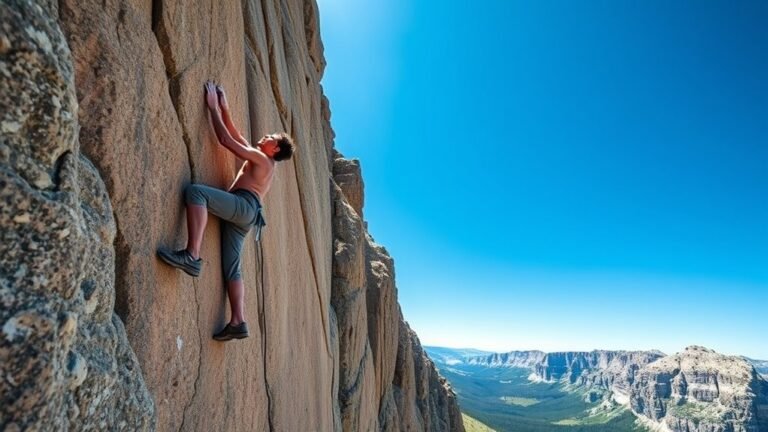
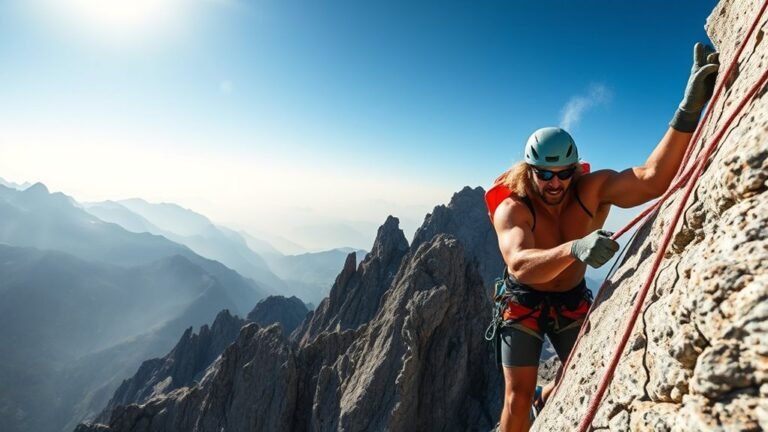
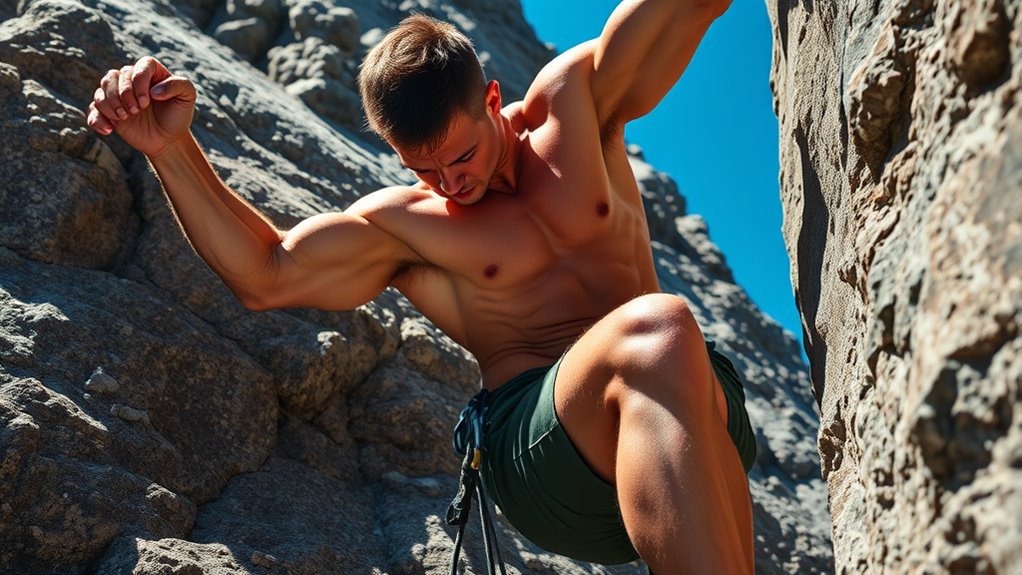
When you climb, you primarily work your back muscles like the latissimus dorsi and rhomboids, along with your biceps and forearm flexors for grip strength. These muscles are key to pulling yourself upward and holding on tight. Your shoulders, including the deltoids and rotator cuff, stay active to stabilize and position your arms.
At the same time, your core muscles maintain balance and tension, helping you stay steady on the wall. Meanwhile, your legs—especially the quads, glutes, and hip flexors—push and stabilize your body as you move. Keep following this path, and you’ll uncover how these muscles power every move.
Upper Body Muscles Engaged in Climbing
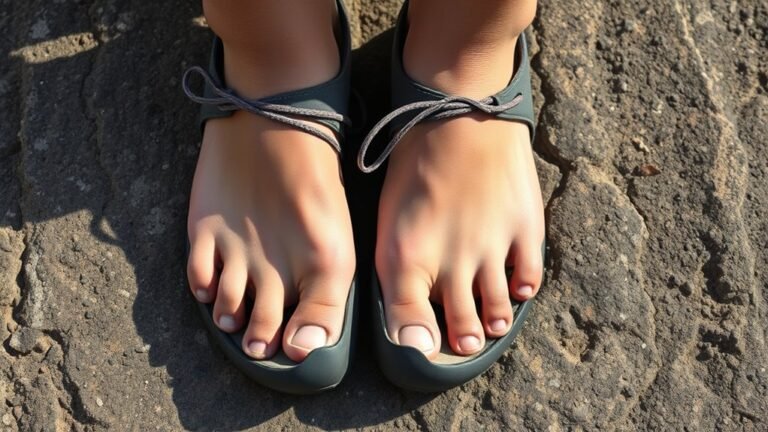
When you climb, your upper body muscles work hard to pull you upward and maintain your grip. The latissimus dorsi and biceps powerfully engage to lift and pull your body, while your forearm flexors boost grip strength to hold onto tiny holds.
Your upper back muscles, including the trapezius and rhomboids, stabilize and retract the shoulder blades, supporting strong, controlled movements. The deltoids, particularly the anterior and lateral heads, activate during reaching and dynamic positioning of your arms.
Meanwhile, the rotator cuff muscles, like the infraspinatus and teres minor, guarantee shoulder stabilization, preventing injury and maintaining control. This precise muscle engagement in your upper body allows you to climb efficiently and with strength, relying heavily on coordinated shoulder blade function and sustained grip strength.
Core and Lower Body Muscles Activated During Climbing
Although climbing demands strong upper body muscles, your core and lower body play equally essential roles in maintaining balance and generating power. Your core muscles, including the rectus abdominis and obliques, keep body tension and provide core stability, which is indispensable for smooth, controlled movements.
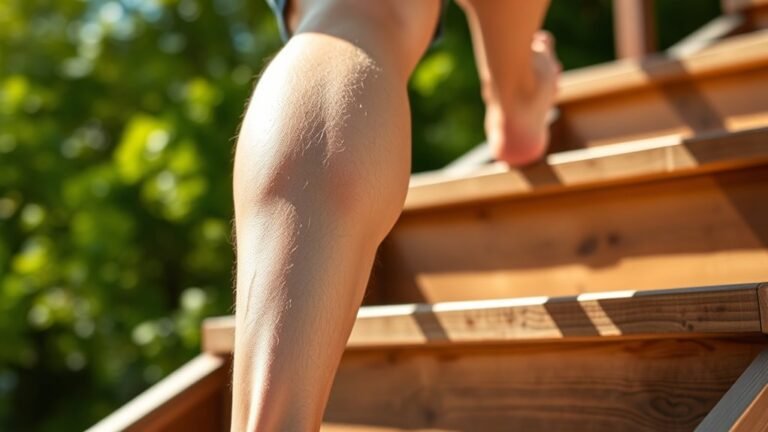
Meanwhile, your lower body muscles—quadriceps, hamstrings, glutes, and hip flexors—deliver the force needed for hip extension, high steps, and pushing upward. Enhancing hip mobility and strengthening leg muscles directly boosts climbing performance and reduces fatigue by efficiently transferring power from legs to arms.
- Core muscles maintain body tension and control rotational movements
- Hip flexors and hip extension enable powerful leg drive
- Leg muscles support pushing and stabilizing on overhangs
- Core stability improves climbing efficiency and reduces injury risk
Conclusion
When you climb, you’re engaging more than just your arms—you’re working your entire body. Did you know that climbing can activate up to 90% of your muscles? Your upper body, especially your forearms and back, takes on much of the load.
Meanwhile, your core stabilizes you, and your legs push you upward. So next time you scale a wall, remember you’re giving your whole body an intense, effective workout.
Climbing works your muscles most effectively by combining strength, endurance, and coordination. It targets key muscle groups like your forearms, back, core, and legs, making it an excellent full-body exercise. Whether you’re bouldering or sport climbing, your muscles get a dynamic and challenging workout that improves overall fitness. So if you want to strengthen your muscles while having fun, climbing is definitely the way to go!