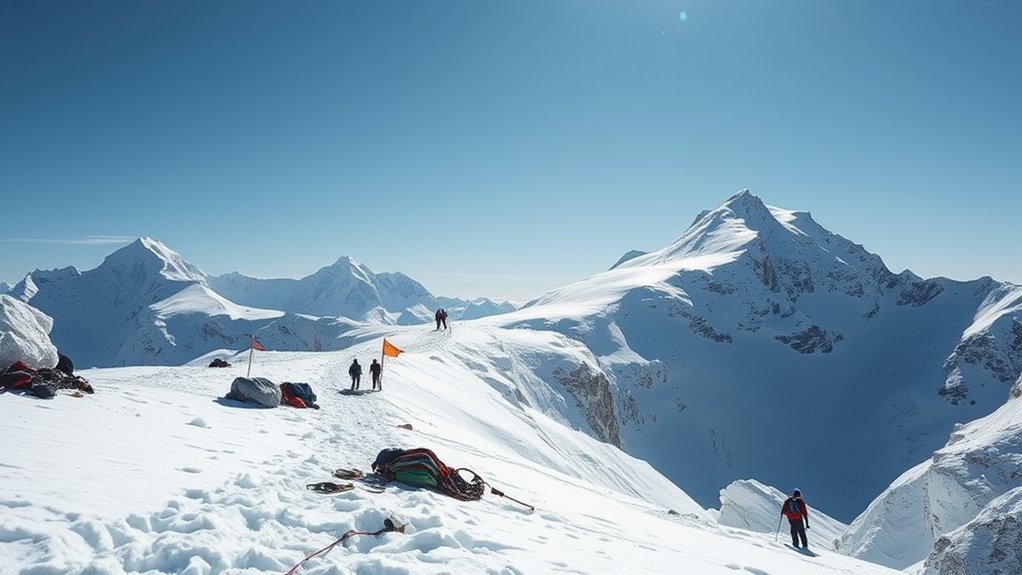
3 Key Facts About How Many People Have Died Climbing Mt Everest
You should know that over 340 climbers have died on Mount Everest since 1922, making it one of the deadliest mountains in the world. Climbing Mt Everest is incredibly challenging and dangerous, and many don’t make it back.
Most deaths happen from altitude sickness, falls, avalanches, and extreme cold. These hazards make every climb risky, even for experienced mountaineers.
Recovering bodies is often impossible because of the harsh terrain and risk involved, leaving many unsalvaged.
Understanding these facts helps you grasp just how dangerous Everest is—and there’s a lot more to uncover about why it claims so many lives. So, if you’re curious about the risks of climbing Mt Everest, keep reading to learn more about the dangers and the stories behind them.
Total Number of Fatalities on Mount Everest
Although climbing Mount Everest draws adventurers worldwide, you should know that at least 346 people have died attempting it since 1922. Everest’s extreme high altitude and challenging conditions make mountaineering here perilous.
Of the recorded deaths, around 339 were climbers, and many bodies remain unrecovered due to the mountain’s harsh environment. In fact, over 200 bodies still lie on Everest, often serving as grim landmarks and warnings to others.
The difficulty of body recovery at such elevations contributes to the persistent death toll. On average, about 5 to 6 climbers die on Everest each year, solidifying its reputation as the deadliest mountain on Earth.
If you plan to climb, understanding this harsh reality is vital before facing Everest’s unforgiving slopes. It’s definitely not something to take lightly.
Primary Causes of Death Among Climbers
Understanding why climbers lose their lives on Mount Everest helps you grasp the mountain’s true dangers beyond just the numbers. The primary causes of death include altitude sickness—both HAPE and HACE—which impair your judgment and physical ability, increasing risk of climbing accidents.
Falls and slips on icy terrain, especially during descent, cause many fatalities. Avalanches, often triggered by natural shifts or serac collapse, pose deadly threats too.
When you push beyond your limits in the death zone, low oxygen levels and extreme cold expose you to hypothermia and exhaustion. Exposure to these harsh conditions weakens your body, making survival difficult.
Knowing these risks shows that it’s not just the climb but the environment itself that challenges every adventurer on Everest.
Challenges of Recovering Bodies on Everest
Because of the extreme cold, high altitude, and dangerous terrain, recovering bodies on Everest is often impossible. The death zone’s extreme conditions cause frozen bodies to remain where climbers fall, making body removal incredibly challenging.
High-altitude rescue missions are risky and costly, so teams rarely attempt body recovery. As a result, about 200 bodies on Everest have been left on the mountain for decades. These bodies sometimes become grim landmarks, like the famous “Green Boots” site, warning others of climbing dangers.
You should understand that the combination of harsh weather, difficult terrain, and limited resources means rescue missions prioritize living climbers’ safety over body removal. This reality forces many bodies to stay on Everest permanently, underscoring the mountain’s deadly reputation.
Conclusion
Climbing Mount Everest is no small feat, and you should know the risks before you take on the world’s tallest peak. Thousands have lost their lives due to avalanches, falls, and altitude sickness, making it one of the deadliest adventures on Earth.
Recovering bodies is so difficult it’s like searching for a needle in a snowstorm. If you’re serious about this climb, respect the mountain—it demands more than just courage; it demands your utmost caution.
When you think about how many people have died climbing Mt Everest, it really puts things into perspective. This isn’t just an adventure; it’s a life-threatening challenge. So, if you plan to summit, be prepared, stay vigilant, and never underestimate the power of Everest.