
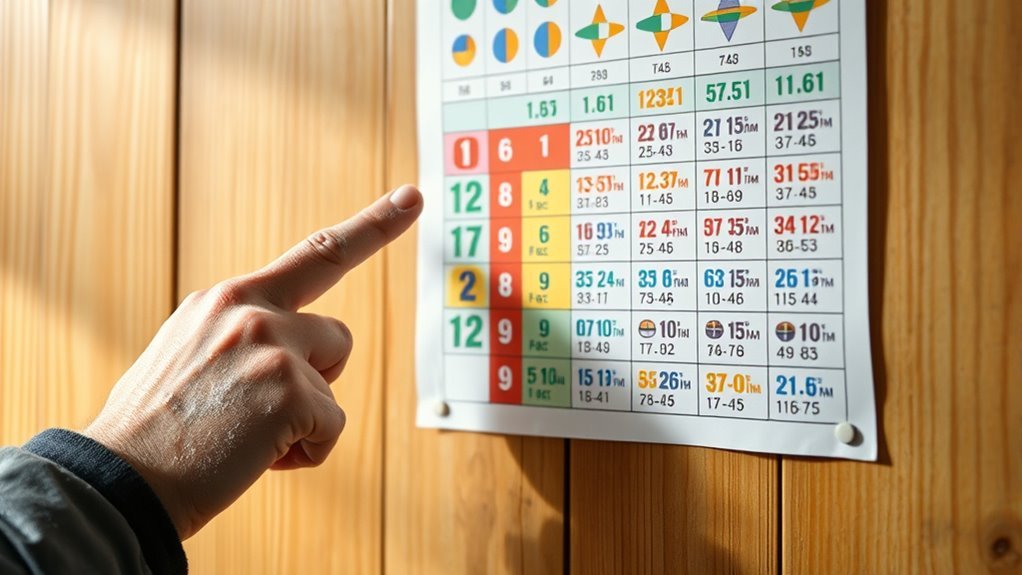
How to Read Climbing Route Grade System Charts
You can read climbing route grade charts by first recognizing common systems like YDS, French, or V-scale, which use numbers and letters to show difficulty.
These grading systems are essential for understanding how challenging a route might be before you start climbing.
Pay attention to modifiers like + or – that fine-tune these ratings and give you a clearer picture of the climb’s difficulty.
Remember, conditions and personal technique also affect how hard a climb feels.
Charts help you compare routes worldwide and pick the right challenge for your skill level.
Keep exploring, and you’ll understand how these elements all combine to reveal a route’s true demands.
Key Takeaways
- Identify the grading system used, such as YDS, French, V-scale, or aid grades. This helps you understand the type of difficulty the grade is indicating.
- Look for modifiers like +, -, or letters (a, d). These refine the base difficulty within each grading system and give you a clearer picture.
- Use conversion charts to compare ratings across different regional or style-specific grading systems. This way, you can get a more accurate sense of how they match up.
- Also, consider environmental and contextual factors. These might influence how the grade actually reflects the difficulty you’ll face while climbing.
- Remember, your personal skill and familiarity with climbing techniques play a big role too. A route’s grade might not tell the whole story about how challenging it feels for you.
How to Identify and Understand Common Climbing Grade Systems
When you start reading climbing grade system charts, it’s important to recognize the different rating systems like YDS, French, V-scale, and aid grades. Each one uses unique numbers or letters to show difficulty.
These grading systems reflect various climbing styles—sport, bouldering, aid, or ice—and help you classify routes based on climbing difficulty. Pay close attention to rating symbols and modifiers like + or -, which refine the difficulty rating.
Grading systems cover diverse climbing styles and use symbols to fine-tune difficulty ratings for precise route classification.
Conversion charts assist you in comparing these ratings across regional variations and climbing environments. This way, you can interpret route classification accurately regardless of location.
Understanding these elements lets you gauge a climb’s challenge better. Plus, it prepares you for the demands of the specific climbing style you’re tackling.
How Modifiers and Context Influence Climbing Grade Difficulty
Understanding the basic grading systems is only part of the picture; modifiers and context play a big role in how you experience a climb’s difficulty. Modifiers like plus (+) or letter grades (a, d) add nuance, showing subtle variation within a grade.
Context matters too—route conditions, weather, and beta can shift your perceived difficulty. Keep these in mind:
- Modifiers refine difficulty within grading standards, helping you gauge subtle changes.
- Variable route conditions may lead to regrading, affecting the climb’s challenge.
- Regional differences influence how grades are assigned, so a route’s difficulty can vary by location.
- Your familiarity with specific techniques impacts how challenging a climb feels despite its assigned grade or modifiers.
Frequently Asked Questions
How to Read a Climbing Route Grade System?
You read a climbing route grade system by identifying the difficulty rating, comparing it to your skill level, and noting any symbols or colors indicating specific challenges or hazards. This helps you choose routes suited for you.
What Is a 5.9 Climbing Grade Equivalent To?
A 5.9 climbing grade is roughly equivalent to a French 6a or 6a+. You’ll find moderate technical moves and small holds, perfect for progressing beyond beginner levels and tackling intermediate climbs with some exposure.
Is 9c or 9a Harder?
9c is definitely harder than 9a. You’ll face more complex moves, greater endurance demands, and tougher technical challenges on a 9c route, pushing your climbing skills to the absolute limit compared to 9a.
What Grade Is 7c in Climbing?
You’re tackling a 7c route, which challenges only about 5% of climbers worldwide. It’s a tough grade requiring serious strength and technique, roughly matching 5.13b/c in the US, perfect for advanced climbers like you.
Conclusion
Now that you know how to read climbing grade system charts, you’ll better gauge route difficulty and plan your climbs confidently.
You might think the variety of grading systems is confusing, but once you understand their context and modifiers, it actually gives you a clearer picture of what to expect.
So don’t shy away from unfamiliar grades—embrace them as tools that help you climb smarter and push your limits safely.
Understanding climbing grade systems not only boosts your confidence but also enhances your overall climbing experience. By learning how to interpret these charts, you can choose routes that match your skills and gradually challenge yourself. This knowledge helps you avoid surprises and ensures you’re prepared for each climb. Remember, climbing grade systems are there to guide you, making your adventure more enjoyable and safe. So keep exploring different grading styles, and let them be your roadmap to better climbs and personal growth in the sport.