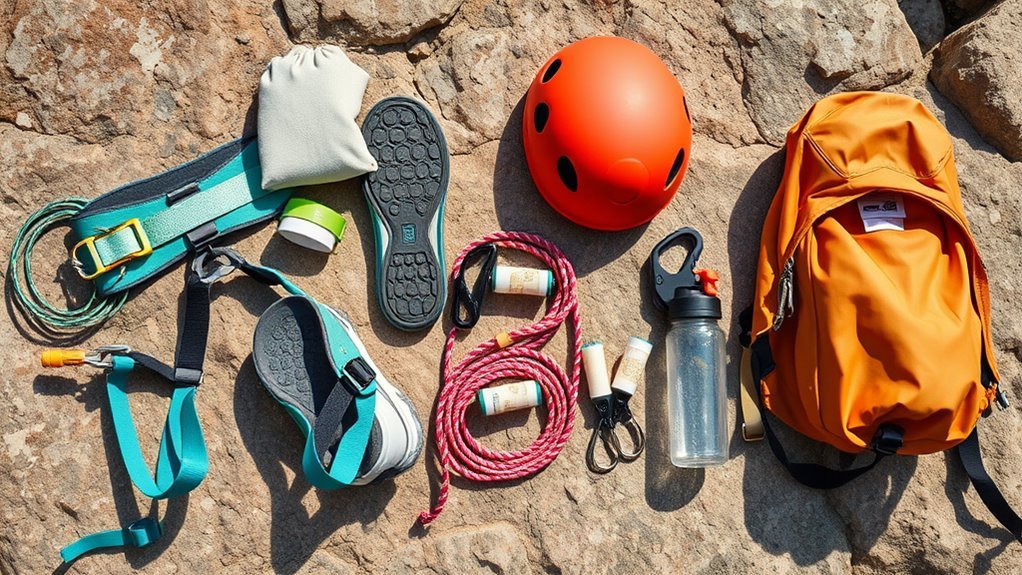
10 Essentials to Wear for Rock Climbing
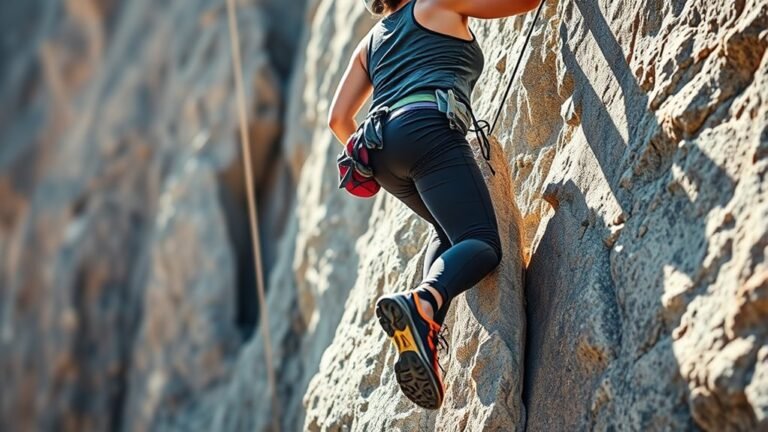
For rock climbing, it’s crucial to wear comfortable, flexible clothing that supports your movement. Opt for moisture-wicking fabrics like polyester or merino wool to keep you dry and comfortable throughout your climb.
Stretchy pants or shorts are a great choice because they allow full freedom of movement without restriction.
Make sure you use properly fitted climbing shoes. These should fit snugly to give you the best grip and support. Pair them with thin, breathable socks to maintain hygiene and keep your feet comfortable.
Avoid baggy clothes since they can snag on rocks or gear, which is both annoying and dangerous.
Don’t forget to secure long hair, and remove any jewelry to prevent accidents while climbing.
Chalk and a chalk bag are essentials for keeping your grip strong and reliable.
Want to master your gear choices and truly boost your climbing experience? Keep exploring the essentials to climb smarter and safer!
Comfortable and Flexible Clothing
When you’re gearing up for rock climbing, choosing comfortable and flexible clothing matters because it directly affects your movement and safety. Pick climbing clothes made from lightweight, breathable materials that let your skin stay dry and comfortable throughout your climb.
Comfortable, flexible clothing is key for movement and safety in rock climbing—choose lightweight, breathable fabrics to stay dry.
You’ll want snug-fitting tops and tapered pants that won’t snag on gear or block your view of holds. Avoid baggy or overly loose clothing since it can get caught and interfere with your balance.
Test your outfit by doing high steps to ensure your clothes move with you and don’t restrict your flexibility or reach. Opt for moisture-wicking fabrics that help manage sweat without weighing you down.
This way, you’ll stay comfortable while maintaining full range of motion on the wall.
Moisture-Wicking Fabrics
You’ll want to choose moisture-wicking fabrics like polyester, nylon, or merino wool to keep sweat off your skin and stay dry. These materials help regulate your body temperature by promoting airflow and evaporation.
This is especially important during intense climbs. Whether you’re climbing indoors or outdoors, wearing the right moisture-wicking gear boosts your comfort and performance.
Trust me, staying dry makes a huge difference when you’re pushing yourself on the wall!
Benefits of Moisture-Wicking
Although rock climbing demands intense physical effort, moisture-wicking fabrics keep you dry by drawing sweat away from your skin, ensuring comfort throughout your climb. When you wear clothing made from synthetic materials like polyester or nylon, you benefit from their superior moisture management.
These fabrics dry faster than cotton, helping you stay lightweight and agile on the wall. By reducing sweat buildup, moisture-wicking fabrics also prevent skin irritation and chafing, letting you focus on your moves without distraction.
Plus, keeping your hands dry lowers the risk of slipping on holds, boosting your safety. Overall, moisture-wicking apparel helps regulate your body temperature and cuts down fatigue, so you can climb longer and perform better every time.
Best Fabric Materials
Choosing the best fabric materials is essential for staying comfortable and dry during your climb. Moisture-wicking fabrics like polyester, nylon, and merino wool pull sweat away from your skin, keeping you dry and preventing discomfort.
Synthetic materials such as polyester and nylon are lightweight, durable, and quick-drying. That makes them perfect for climbing activities.
Merino wool adds extra benefits by regulating temperature naturally and resisting odors, which helps during longer climbs. It’s a great choice if you want something that works hard without smelling bad.
Avoid cotton, as it soaks up moisture and dries slowly. This can increase the risk of chafing, which nobody wants when they’re climbing.
Many high-performance climbing clothes blend moisture-wicking fabrics to boost breathability and moisture management. By choosing gear made from these materials, you’ll stay comfortable, dry, and focused on your climb without distractions caused by sweat or damp clothing.
Indoor Climbing Comfort
When you climb indoors, wearing moisture-wicking fabrics makes a big difference in comfort. These materials, like synthetic blends or lightweight merino wool, pull sweat away from your skin, keeping you dry and preventing chafing.
Unlike cotton, which traps moisture and feels heavy, moisture-wicking clothes help you stay focused and comfortable while wearing your climbing shoes. Many brands such as prAna, Arc’teryx, and REI offer gear designed for this purpose.
| Fabric Type | Benefits | Recommended Brands |
|---|---|---|
| Synthetic Blends | Quick drying, lightweight | prAna, Arc’teryx |
| Merino Wool | Soft, natural odor control | Icebreaker, REI |
| Cotton | Retains moisture | Avoid for indoor climbing |
Choose wisely for ultimate indoor climbing comfort.
Pants or Shorts With Mobility
You’ll want stretchy, flexible pants or shorts that let you move freely without restriction. Consider longer shorts or pants that protect your knees during high steps and scrambles.
Make sure your gear passes a high step test so nothing holds you back on the climb. It’s all about staying comfortable and mobile out there.
Stretchy, Flexible Bottoms
Because climbing demands a full range of motion, your bottoms should be made from stretchy, breathable fabrics like spandex or athletic nylon that move with you. Choose climbing pants or shorts with elastic waistbands that won’t restrict your hips or legs.
For indoor climbs, fitted leggings or joggers work great, providing flexibility without bulk. Avoid stiff materials like denim that limit agility. Test your bottoms by doing a high step or lunge to ensure comfort and mobility.
| Bottom Type | Material | Best Use |
|---|---|---|
| Fitted Leggings | Spandex/Nylon | Indoor climbing |
| Joggers | Athletic nylon | Versatile |
| Climbing Pants | Stretch fabric | Outdoor & indoor |
| Knee-length Shorts | Breathable mix | Dynamic moves |
| Denim Pants | Cotton/rigid | Not recommended |
Knee Protection Importance
Choosing bottoms with good mobility doesn’t just enhance your movement—it also plays a key role in protecting your knees. When you wear pants or shorts that stretch and flex, you can easily perform high steps and dynamic moves without restriction.
Pants that cover your knees provide essential knee protection, shielding you from scrapes, rips, and impact injuries during climbs or falls. Avoid tight, non-stretchy fabrics that limit your range of motion and could lead to discomfort or even injury.
Proper knee coverage combined with flexible pants reduces abrasion and helps you climb longer without distraction. Prioritizing knee protection in your climbing bottoms ensures you stay comfortable and safe on the wall, letting you focus fully on your next move.
Shorts Length Considerations
Although shorter shorts might feel cooler, mid-thigh or longer lengths offer better protection during high steps and overhang climbs.
You want shorts that provide a full range of motion without risking chafing from your harness or climbing gear.
Avoid baggy shorts—they can restrict your movement and snag on holds.
Opt for stretchy, fitted shorts or pants for the best balance of mobility and safety.
| Shorts Length | Comfort Level |
|---|---|
| Super short | Risk of chafing |
| Mid-thigh | Good protection |
| Longer shorts | Better knee guard |
| Athletic leggings | Maximum mobility |
Choosing the right shorts length guarantees you stay comfortable and agile on the wall.
Properly Fitted Climbing Shoes
When you put on climbing shoes, they should fit snugly without causing pain, ensuring your toes have no extra space to maximize grip. Snug-fitting climbing shoes keep your foot secure, allowing your toes to curl slightly, which improves traction on holds.
Avoid shoes that are too loose, as slipping inside reduces control and safety. Since climbing shoes are designed to be worn without socks, you’ll feel the best connection to the rock or wall.
If you’re buying your own pair, try several sizes to find the most precise, comfortable fit. Properly fitted climbing shoes enhance performance and confidence, making your climbs smoother and safer.
Wearing Socks With Rental Shoes
Since rental climbing shoes are used by many climbers, you should always wear thin, breathable socks to keep your feet clean and prevent odor. Wearing socks helps protect your feet from bacteria and fungi that might be lurking in shared shoes.
Opt for socks that are thin and breathable to maintain a snug fit and avoid slipping inside the climbing shoes. Thick or bulky socks can make the shoes too tight and reduce your sensitivity on holds, which you want to avoid.
Unless the climbing gym specifically allows barefoot climbing, never remove your socks when using rental shoes. By wearing socks, you not only keep your feet hygienic but also enhance your overall climbing experience without compromising comfort or performance.
Layering for Temperature Control
To stay comfortable during your climbs, you’ll want to layer clothing that manages sweat and adapts easily to temperature changes. Start with moisture-wicking base layers like synthetic shirts or lightweight wool to keep sweat off your skin and stay dry. Avoid cotton since it holds moisture and causes discomfort.
On top, add lightweight, breathable layers such as sweatshirts or jackets that you can quickly shed or put back on as the indoor temperature shifts. This layering approach lets you regulate your body heat effectively, preventing overheating or chilling during long climbs.
Avoiding Restrictive or Loose Clothing
You want to wear clothing that moves with you, not against you, so skip tight jeans or stiff fabrics that limit your range of motion.
At the same time, avoid overly loose clothes that can snag on holds or your harness, creating hazards.
Choosing the right fit keeps you safe and helps you climb more efficiently.
Restrictive Clothing Limits Mobility
While climbing demands flexibility and freedom of movement, wearing restrictive clothing like tight jeans or non-stretchy pants can seriously limit your range of motion. Restrictive clothing reduces your mobility, making it harder to perform essential climbing moves such as high steps or lunges.
When your clothing doesn’t stretch, you’ll find yourself struggling to reach holds or shift positions comfortably. This not only decreases your climbing efficiency but also affects your safety by limiting how well you can respond on the wall.
Additionally, tight or non-breathable fabrics can cause discomfort by restricting airflow during strenuous climbs. To maintain ideal mobility and comfort, choose climbing-specific apparel that stretches and fits well.
That way, your gear works with your body—not against it.
Loose Clothing Causes Hazards
Just as overly tight clothing can restrict your movement, wearing loose garments introduces its own set of risks on the climbing wall. Loose clothing creates hazards that can jeopardize your safety and performance.
For example, baggy shirts or pants might block your view of crucial footholds or handholds. Plus, loose fabric can snag on holds or equipment, causing falls or injuries. It can also interfere with your harness fit, reducing both comfort and security.
Keep in mind these hazards of loose clothing:
- Snagging or tearing during dynamic moves
- Obstructed view of holds
- Compromised harness fit
- Increased risk of falls due to caught fabric
Choose well-fitted gear to stay safe and move freely on every climb.
Securing Long Hair and Avoiding Jewelry
Because loose hair can easily fall into your face and obstruct your vision, securing it with a hair tie or headband is essential before you start climbing. If you have long hair, tie it back tightly or use clips that won’t damage your strands.
Keeping your hair contained helps reduce distractions and lets you focus, especially on overhangs or tricky routes. Avoid wearing jewelry like rings, necklaces, or dangly earrings because they can snag on holds or gear, creating safety hazards.
Removing all jewelry before climbing prevents accidents, such as tearing your clothing or injuring yourself or others. Store your jewelry safely away, and choose hair accessories designed for active use.
These simple steps ensure your focus stays on the climb, not on unexpected snags or distractions.
Using Chalk and Chalk Bags
After securing your hair and removing jewelry to prevent distractions, it’s important to focus on maintaining a strong grip during your climb.
Using chalk is key to absorbing sweat and reducing slips on holds. While gyms often provide chalk, many climbers prefer chalk bags for convenience and hygiene.
These bags clip to your harness or clothing, giving you easy access as you climb.
Keep these tips in mind when using chalk and chalk bags:
- Use chalk sparingly to avoid excessive dust and keep the environment clean.
- Choose magnesium carbonate chalk for its superior absorbency.
- Position your chalk bag where you can quickly reach it without interrupting your flow.
- Reapply chalk only when necessary to maintain grip without overdoing it.
Proper use of chalk and chalk bags will boost your confidence and performance on the rock.
Minimal and Practical Accessories
While climbing demands focus and agility, bringing along minimal and practical accessories can enhance your comfort and performance without weighing you down. Choose climbing gear and clothes that work in harmony with simple, effective items.
A small chalk bag clipped to your harness keeps your grip secure, while a breathable hat or headband manages sweat and keeps hair out of your face. Avoid bulky accessories; stick to minimal jewelry to prevent snagging.
Carry a compact towel and a slim water bottle to stay refreshed without hindering movement.
| Accessory | Purpose |
|---|---|
| Chalk Bag | Improves grip |
| Headband or Hat | Manages sweat and hair |
| Compact Towel | Wipes sweat for better grip |
Conclusion
When you gear up for rock climbing, comfort and practicality are your best friends. Wearing flexible, moisture-wicking clothes and properly fitted shoes keeps you moving smoothly, like a cat on the prowl.
Avoid anything restrictive or loose. Secure your hair, and keep accessories minimal to stay focused. Don’t forget chalk to maintain your grip.
With the right essentials, you’ll climb confidently and enjoy every challenge the wall throws your way. Rock climbing gear like breathable clothes, climbing shoes, and chalk can make all the difference between a good climb and a great one. So, make sure you have these 10 essentials to wear for rock climbing to stay comfortable, safe, and ready for action every time you hit the wall.