5 Tips to Choose Climbing Shoes
To choose climbing shoes, start by matching the shape to your climbing style. Flat shoes work well for slabs, downturned shoes are great for overhangs, and neutral shapes offer comfort for longer climbs. Picking the right shoe shape is key to performance and comfort.
Next, consider the closure system. Laces provide a snug, adjustable fit, velcro straps are convenient for quick on and off, and slip-ons give you great sensitivity. It’s all about finding what works best for you.
Make sure the fit is tight but not painful. Your toes should just touch the toe box, and your heels need to feel secure without slipping. This balance helps you climb efficiently without discomfort.
Think about stiffness too. Stiffer shoes offer more support on tough climbs, while flexible shoes are more comfortable for longer sessions. If you’re new to climbing, start with beginner-friendly models to get used to the feel.
Keep exploring different options and styles as you gain experience. Over time, you’ll fine-tune your choice to perfectly match your climbing needs and preferences.
Understand Different Shoe Shapes and Designs
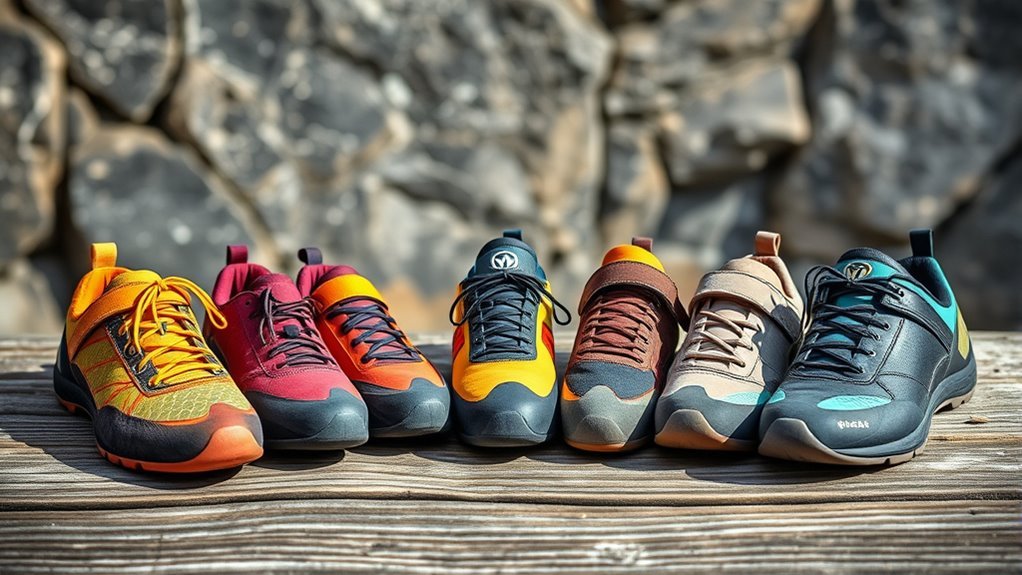
When choosing climbing shoes, understanding the different shapes and designs can make all the difference in your performance and comfort. Flat shoes feature a horizontal sole, offering comfort and support. They’re perfect for slabs and vertical walls.
Choosing the right climbing shoe shape boosts both performance and comfort on various terrain.
Downturned shoes have a bird-beak shape that focuses power on your big toe. This makes them ideal for steep and overhanging terrain.
Aggressive shoes usually showcase an asymmetrical design that skews medially, increasing pressure on your big toe. This helps with precise footwork on small holds.
Neutral shoes, or flat shoes, prioritize comfort. Meanwhile, all-around shoes blend features of both aggressive and neutral styles. They give you versatile performance footwear.
Ensuring the right shoe fit combined with the appropriate shoe shape is essential. This will help you maximize your climbing experience and tackle various routes confidently.
Choose the Right Closure System for Your Needs
Selecting the right shoe shape is just one part of finding climbing shoes that work for you; the closure system also plays a vital role in fit and performance. Laces offer the most adjustable fit, letting you customize tightness across your foot for maximum snug fit and comfort.
Velcro straps provide quick on/off convenience, making them perfect if you need to switch shoes frequently or take rest breaks. Slip-on shoes maximize sensitivity and speed, ideal for bouldering or steep indoor routes where feel is essential.
Some climbers even prefer combination closure systems, like laced shoes with velcro straps, to balance fit customization and ease. Choosing the right closure system ensures your shoes stay secure without sacrificing comfort. This directly enhances your climbing experience and overall performance.
Prioritize Proper Fit and Sizing
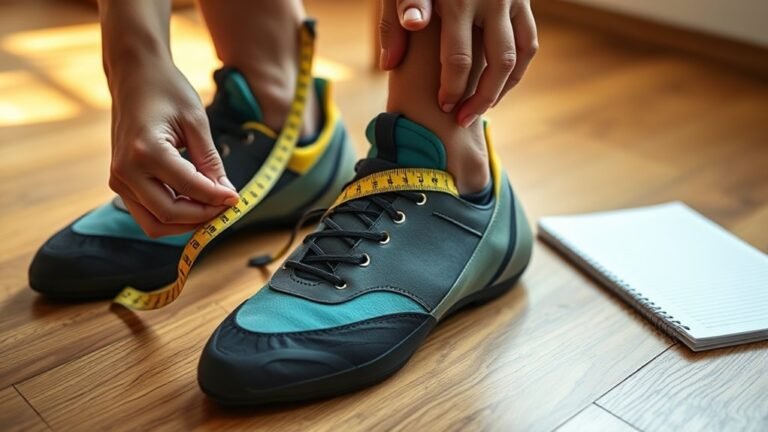
Although climbing shoes should feel snug, you don’t want them to cause pain or numbness. Achieving the proper fit means your toes make firm contact with the end of the toebox without cramping.
Pay close attention to shoe sizing—your climbing shoes will be tighter than street shoes, but discomfort or pins and needles signal a poor fit. Leather shoes stretch about half a size during the break-in period, so size accordingly to maintain comfort later.
Climbing shoes should be snug but never painful; leather stretches half a size, so size wisely for comfort.
Heel fit is essential; the heel should feel snug without pinching the Achilles tendon or causing heel lift during movement. Don’t forget to assess shoe tension and overall comfort by trying on multiple sizes and brands in person.
Prioritizing proper fit and sizing guarantees better performance and injury prevention. It’s definitely worth taking the time to get it right!
Consider Shoe Stiffness and Flexibility
Once you’ve nailed the right fit, the shoe’s stiffness and flexibility become key factors to contemplate. The stiffness, largely determined by the midsole’s material and thickness, influences support and edging ability.
Stiff climbing shoes excel on technical routes and overhangs, offering precise foot placement and enhanced performance. On the other hand, flexibility provides greater comfort and sensitivity, allowing your feet to adapt to irregular surfaces and slab techniques.
Beginners often favor softer shoes for comfort and ease, while advanced climbers may prefer stiffer options to tackle demanding climbs. Balancing stiffness and flexibility based on your climbing style and foot shape ensures your climbing shoes deliver both comfort and efficiency.
This balance helps you maintain control and improve technique on varied terrain. So, think about what suits your climbing needs best!
Select Beginner-Friendly Models for Versatility
When you’re just starting out, choosing beginner-friendly climbing shoes like the La Sportiva Tarantulace or Black Diamond Momentum can make a big difference. These climbing shoes offer versatility with moderate stiffness and an adjustable fit, ensuring comfort for both indoor climbing and outdoor climbing.
Plus, they’re budget-friendly, typically priced between $70 and $130, making them ideal for new climbers. Their flat or slightly downturned shape helps you develop proper footwork while accommodating different foot shapes.
| Feature | La Sportiva Tarantulace | Black Diamond Momentum |
|---|---|---|
| Fit Type | Adjustable laces | Velcro straps |
| Stiffness | Moderate | Moderate |
| Best For | Indoor & outdoor climbing | Indoor & outdoor climbing |
Conclusion
Picture yourself gripping the rock with confidence, your climbing shoes perfectly hugging every curve of your foot. By understanding shoe shapes, picking the right closures, and ensuring a snug fit, you’ll feel secure on every hold.
Balancing stiffness and flexibility lets you move smoothly, while starting with beginner-friendly models keeps your journey enjoyable.
With these tips, you’re ready to conquer climbs. Feel the rock beneath you like an extension of yourself, equipped with climbing shoes that fit like a second skin. Choosing the right climbing shoes is key to improving your technique and ensuring comfort on every route. So, take your time, try different styles, and remember—well-fitted climbing shoes can make all the difference in your climbing adventure!