What Is a Quickdraw Used for in Climbing?
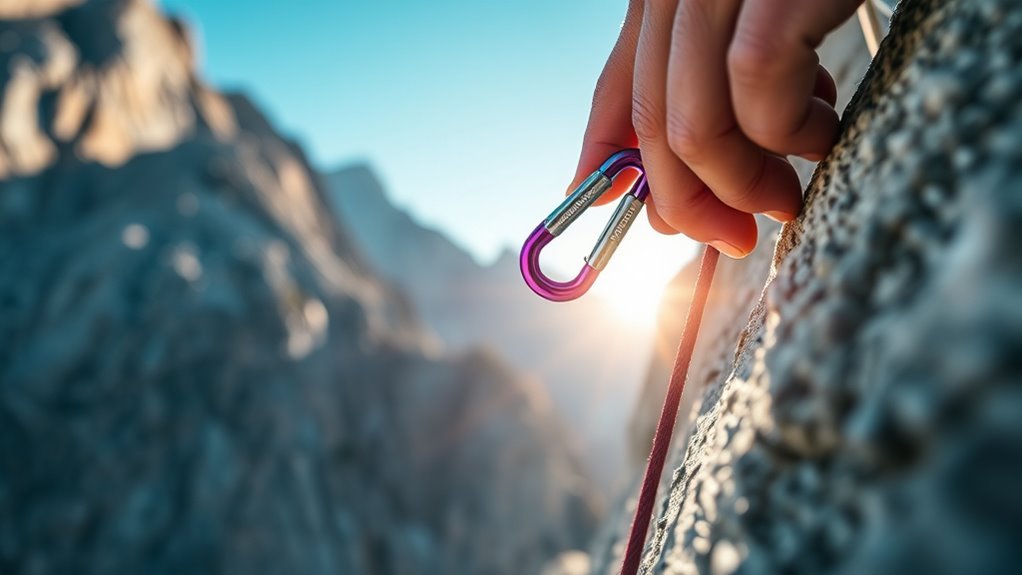
A quickdraw is an essential piece of climbing gear that helps you securely connect your climbing rope to protection points like anchors or bolts. This connection keeps you safe as you ascend, giving you peace of mind while you focus on your climb.
Quickdraws are designed to be strong and reliable, making them a must-have for any climber.
A quickdraw consists of two carabiners linked by a semi-rigid sling. This design keeps the carabiners’ gates facing outward and properly aligned, which helps prevent accidental unclipping.
Using quickdraws correctly also reduces rope drag, so your rope moves smoothly and efficiently.
Want to master proper clipping techniques and improve your climbing safety? Keep reading—there’s plenty of helpful info ahead to boost your confidence on the wall!
Key Takeaways
- Quickdraws connect the climbing rope to protection points securely on the route. They make sure the climber stays safe by preventing falls from unprotected sections.
- They also help the rope run smoothly through anchors, which cuts down on rope drag. This makes climbing feel a bit easier.
- Plus, quickdraws let you clip in quickly and efficiently during climbs. That saves you time and energy when you’re on the wall.
- Using them properly keeps your connections secure and lowers the chance of accidentally unclipping. So, it’s really important to get it right.
How Quickdraws Secure Your Rope to Protection Points
When you clip your rope into a quickdraw, you create a secure link between your rope and the protection points on the route. Quickdraws consist of two carabiners connected by a semi-rigid sling. This design helps keep the carabiners properly aligned for smooth clipping.
You clip the rope into the rope-end carabiner, which is fixed so the gate faces away from your direction of travel. This setup ensures secure rope protection. The protection-end carabiner attaches to the anchor or bolt with its gate facing outward, which reduces the risk of accidental unclipping.
Having the gates oriented correctly and positioned right helps the rope run smoothly through the quickdraws. This minimizes rope drag and keeps you safe throughout your climbing experience.
Quickdraw Clipping Techniques for Safer, Easier Climbing
Clipping your rope into quickdraws isn’t just about securing it—it’s also about doing so efficiently to save energy and maintain safety on the wall. Mastering quickdraw clipping techniques improves your climbing flow and reduces the risk of accidental unclipping.
Always make certain the carabiner gate faces away from your route and movement to prevent the rope from slipping out. Use the pinch clip technique by holding the carabiner’s spine with your thumb and forefinger, then smoothly push the rope through the gate.
For larger carabiners, stabilize the gate with a finger before clipping to enhance control. Practicing these techniques helps you clip quickly and securely, keeping your rope safely connected to protection points throughout your climb.
Frequently Asked Questions
What Is the Use of Quickdraw in Climbing?
You use a quickdraw to connect your rope to protection points, letting you climb smoothly and safely. It reduces rope drag, prevents twisting, and guarantees you can clip and unclip efficiently while minimizing fall risks.
Do You Need Quickdraws for Sport Climbing?
Yes, you need quickdraws for sport climbing because they let you clip the rope to bolts securely and quickly. Without them, you’d struggle to protect yourself and move efficiently on the route.
Do You Put Quickdraw or Carabiner on a Cam?
You clip a carabiner directly onto a cam, not a quickdraw. Quickdraws connect the rope to bolts or anchors, while cams have built-in carabiners for you to clip your rope into securely during trad climbing.
Why Are They Called Quickdraws?
They’re called quickdraws because you can quickly and easily clip your rope to protection points. Their design lets you save time while climbing, making clipping and unclipping faster than using traditional gear like webbing loops.
Conclusion
So, next time you clip your quickdraw, remember—it’s not just a fancy piece of gear dangling from your harness. It’s your rope’s best friend, quietly preventing you from turning into a human pancake.
Without it, you’d be hugging the ground a lot more than the rock. So, clip smart, climb smart, and let that little metal duo do the heavy lifting—because falling is way less fun than it sounds.
Quickdraws are essential in climbing because they connect your rope to the protection on the wall, reducing rope drag and keeping you safe. Using your quickdraw correctly means better rope management and a safer climb overall. So always trust your quickdraws—they’re key to making your climbing experience not only safer but way more enjoyable.