How to Choose Between the Two Types of Climbing Rope
You choose between single and double climbing ropes by considering your climbing style and terrain. Picking the right climbing rope is key to staying safe and comfortable on your climb.
If you mostly tackle straightforward routes like sport or trad climbing, single ropes with a thicker diameter work well and are easier to handle.
For more complex, wandering, or multi-pitch climbs, double or half ropes offer better protection and reduce rope drag. They’re safer for tricky terrain and come with higher safety ratings.
Keep these factors in mind, and you’ll be better prepared to select the right rope for your climb’s challenges.
Key Takeaways
- Choose single ropes for straightforward sport or trad climbing with direct routes and simpler handling. They’re easy to manage and great for most standard climbs.
- Opt for double or half ropes if you’re tackling complex, wandering routes. These help reduce rope drag and can boost your safety on tricky paths.
- Think about rope diameter too: single ropes tend to be thicker, usually between 8.9 and 10.5 mm. Double or half ropes are a bit thinner, around 7.5 to 9 mm.
- Always check safety ratings and water resistance based on where you’re climbing and how serious the fall potential is. It’s super important to match your rope to the conditions.
- Match the rope type to your climbing style as well. Dynamic ropes are best for lead climbing because they stretch under load. Static ropes, on the other hand, are better for hauling or rescue work since they don’t stretch as much.
Single vs Double/Half Climbing Ropes: Key Differences Explained
When you choose between single and double (or half) climbing ropes, understanding their key differences can really boost both your safety and climbing experience.
Single ropes have a thicker diameter, usually between 8.9 and 10.5 mm, and are meant to be used alone. This makes handling the rope straightforward, which is great for sport and trad climbing.
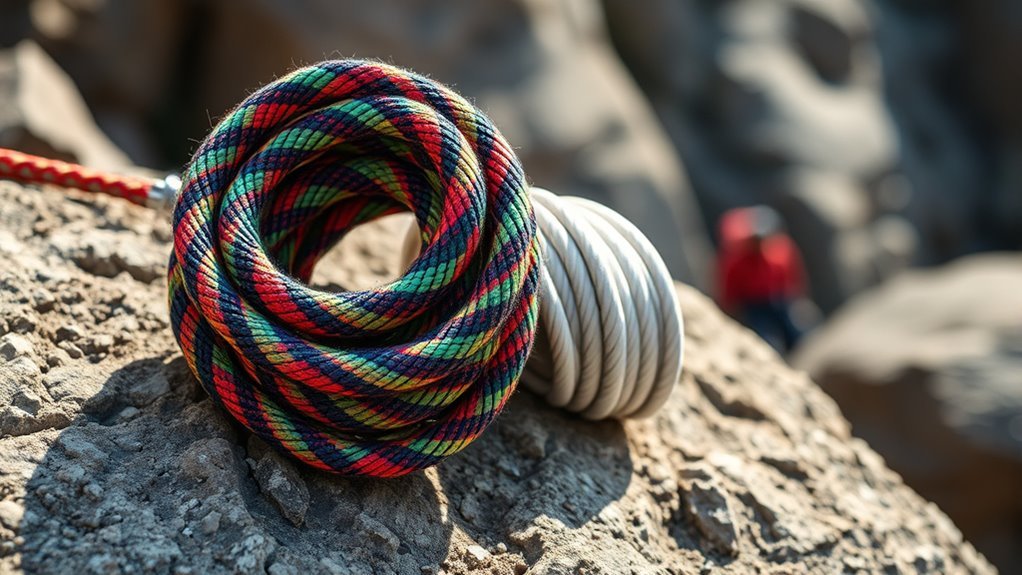
Double ropes and half ropes are thinner, around 7.5 to 9 mm each, and come in pairs. You clip them alternately to cut down on rope drag and get better protection on wandering or complex routes.
Their construction also supports safer multi-pitch climbs thanks to redundancy and higher safety ratings. While single ropes work well for more direct climbs with simpler handling, double and half ropes give you more versatility when the terrain gets tricky.
These are the key differences in climbing ropes you should know for effective protection and performance.
How to Choose the Right Climbing Rope for Your Style and Safety Needs
Choosing the right climbing rope depends largely on your climbing style and safety requirements. If you lead climb, dynamic ropes with a diameter between 8.9 and 10.5 mm absorb fall impact effectively, while static ropes suit hauling or rescue with minimal stretch.
Selecting a climbing rope hinges on your style—dynamic for lead climbing, static for hauling or rescue tasks.
Match rope diameter and type—single ropes for sport or trad, half ropes for multi-pitch, and twin ropes for alpine routes—to your route length and environment. Check safety ratings like UIAA fall and impact force standards to guarantee the rope handles your fall potential.
Also, consider water resistance and durability, especially in wet conditions. Features like middle and end markings improve handling and safety.
Tailoring your choice to these factors ensures the best protection and performance for your specific climbing style. It’s all about picking what fits your needs and keeps you safe out there.
Frequently Asked Questions
What Type of Climbing Rope Should I Get?
You should get a dynamic rope for lead climbing since it absorbs falls. If you’re doing rescue or hauling, choose a static rope. Always match rope type to your activity and gear for safety and performance.
Should I Get a 60 or 70M Rope?
Think of your rope like your climbing soundtrack: a 70m rope hits all the high notes with versatility for longer routes, while a 60m keeps it light and simple for shorter climbs. Choose based on your rhythm.
What Are the Two Types of Climbing Ropes?
You’ll find two types of climbing ropes: dynamic ropes that stretch to absorb falls, perfect for lead climbing, and static ropes that barely stretch, ideal for rappelling, rescue, or hauling where minimal elongation is essential.
Which Is Better, Sisal or Manila Rope?
You’ll find Manila rope better because it’s stronger, smoother, and more resistant to moisture and rot. Sisal is rougher and less durable, so if you want reliability and longevity, Manila’s the smarter choice.
Conclusion
So, you want to pick a climbing rope? Easy—just toss a coin between single and double ropes while dangling off a cliff. Or, you know, consider your climbing style, safety needs, and terrain instead.
Single ropes are straightforward, double ropes offer versatility, and half ropes add that extra security flair. Each type has its perks depending on what kind of climbing you’re into.
But hey, if you prefer chaos over caution, go wild. Otherwise, choose wisely and keep your limbs intact—climbing’s hard enough without questionable rope choices. Remember, selecting the right climbing rope is crucial for safety and performance. Whether you’re tackling sport routes or trad climbs, understanding the differences between single, double, and half ropes helps you stay secure and confident on the rock. So, take your time, know your options, and pick the rope that fits your climbing style and terrain best.