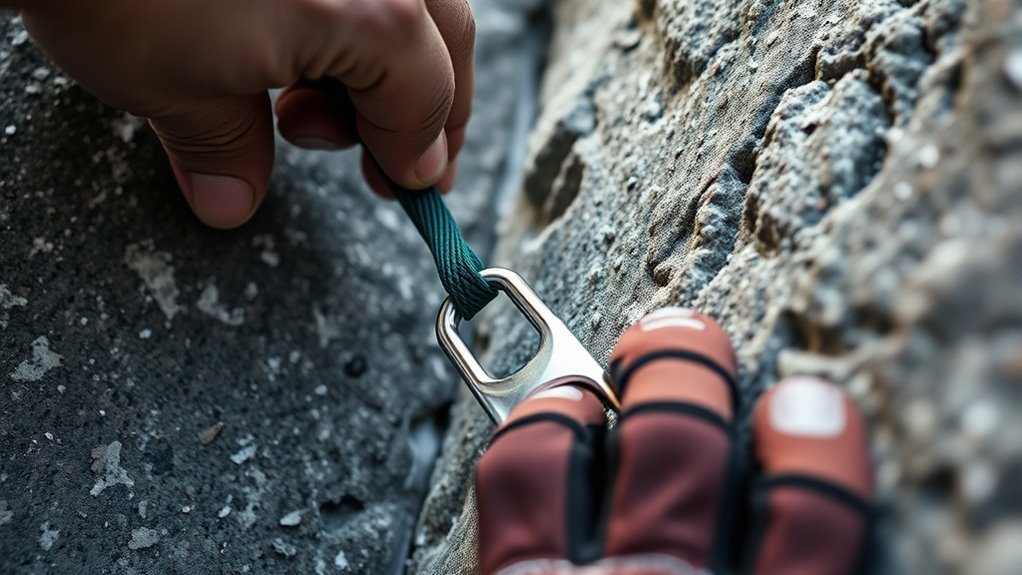
What Are Climbing Runners Used for?
You use climbing runners to extend protection points and reduce rope drag, making your ascent smoother and safer. These essential climbing tools help you manage your rope better, preventing unnecessary friction that can slow you down or cause wear. Plus, they’re great for creating strong, reliable anchors.
They help build strong, multi-point anchors that distribute loads effectively and add essential redundancy to your gear setup. Having multiple attachment points means if one fails, others can hold, which is a big safety win. Different runners come in various lengths and materials, so you can choose the right one for quick extensions or solid anchor building.
Mastering their safe use and correct gear selection will elevate your climbing safety and efficiency. Once you get the hang of how and when to use runners, your climbs will feel more controlled and confident. It’s all about picking the right gear for the right moment.
Key Takeaways
- Climbing runners extend protection points to reduce rope drag and improve climbing efficiency. They make your climb smoother by allowing flexible gear placement on different types of terrain.
- Plus, runners help build multi-point anchors. This spreads out the load better and boosts your safety while climbing.
- They also add redundancy to anchor systems, which means your climb is more secure overall. On top of that, runners help you keep your gear organized during tricky routes, making it easier to manage and access quickly.
What Climbing Runners Do and Why They Matter
Although climbing runners might seem like simple gear, they play an essential role in keeping you safe on the wall. Climbing runners extend protection points, reducing rope drag and making your ascent smoother.
In trad climbing, they’re vital for building multi-point anchors, which improve load distribution and add redundancy to your anchor systems. You can adjust the length of safety links easily with runners, adapting to different terrain or routes.
Beyond that, they help with gear organization, keeping your climbing gear manageable in complex or multi-pitch climbs. By connecting multiple protection points, climbing runners create secure, flexible anchor systems that enhance your safety and efficiency.
Understanding their role helps you climb smarter and safer every time.
When to Use Different Types of Climbing Runners and How to Use Them Safely
When choosing climbing runners, you’ll want to match their length and material to the task at hand to maximize safety and efficiency. Use shorter climbing slings or regular slings (around 60 cm) for quick extensions and your personal anchor system.
Longer sewn slings (120 cm or more) are better for building anchors and minimizing rope drag. Always inspect your climbing equipment for signs of wear or damage, and retire runners after about 10 years.
When tying webbing into an anchor, verify your knot—often a double fishermans—is properly dressed and secure. Avoid dynamic loading to prevent weakening the webbing.
Check that carabiners are correctly clipped into runners to prevent cross-loading or overloading. Using the right gear and maintaining it well keeps your climbs safe and reliable.
Frequently Asked Questions
What Are Runners Used for in Climbing?
Runners help you extend anchor points, reducing rope drag and improving safety. You use them to link gear, build secure anchors, and distribute force evenly across protection, making your climbing smoother and more secure on tricky routes.
Is Climbing Good for Osteoarthritis?
About 60% of people with osteoarthritis find moderate climbing improves joint function. You can boost muscle strength and flexibility, but you’ll want to consult your doctor and avoid high-impact climbs to protect your joints effectively.
Does Rock Climbing Help With Osteoporosis?
Yes, rock climbing helps with osteoporosis by increasing bone density and strengthening your bones. It stimulates bone growth and improves balance, coordination, and muscle strength, reducing your risk of fractures and falls when you climb safely.
Is Rock Climbing Good for Dyspraxia?
Yes, rock climbing helps you improve coordination, build body awareness, and enhance problem-solving skills. It challenges your motor planning, boosts confidence, and offers a fun, structured way to practice movements if you have dyspraxia.
Conclusion
When you clip a climbing runner into a crack or seam, you’re not just placing gear—you’re weaving a lifeline between you and the rock. These flexible protectors absorb your fall, giving you confidence to push higher.
Knowing when and how to use them safely turns jagged cliffs into playgrounds. So next time you gear up, imagine each runner as a trusted partner, ready to catch you when the climb gets tough.
Climbing runners are essential for safety, acting as your safeguard against unexpected falls. They provide security and peace of mind, helping climbers focus on the challenge ahead. Using climbing runners correctly is key to enjoying the climb with confidence and control.