
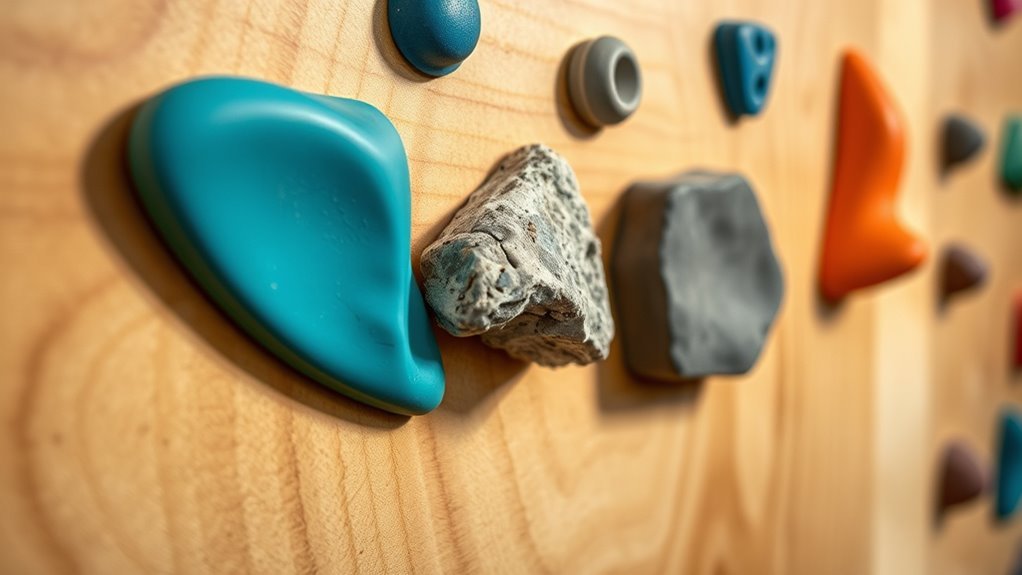
What Are Climbing Holds Made Of and How to Use Different Materials
Climbing holds are mostly made from polyurethane, resin, and wood, each offering unique benefits that can really affect your climbing experience.
Polyurethane holds are super popular because they’re durable, lightweight, and impact-resistant. This makes them perfect for heavy use and long-lasting performance.
Resin holds, on the other hand, tend to chip and degrade faster, so you don’t see them as much these days. They were common before but now are less favored.
Then there are wooden holds, which give a natural feel and varied textures. They’re great if you want something a bit different, but they do need extra care to keep them in good shape.
Choosing the right material can make a big difference in grip, safety, and how long your holds last. Understanding these differences helps you pick the best holds for your climbing needs.
Key Takeaways
- Climbing holds are commonly made from polyurethane, urethane, resin, and wood, each offering distinct durability and tactile properties.
- Polyurethane holds are lightweight, durable, impact-resistant, and ideal for frequent use on climbing walls. They really stand up well to heavy use.
- Resin-based holds are heavier, prone to chipping, and less durable, making them less suitable for high-traffic climbing gyms. So, they’re not the best choice if you want something long-lasting.
- Wooden holds provide a natural feel and texture but require maintenance and have lower wear resistance. They’re great if you like a more organic grip, but you’ll need to take care of them.
- Choosing climbing hold materials affects grip quality, safety, longevity, and overall climbing performance. Picking the right material can make a big difference in your climbing experience.
Common Climbing Hold Materials
Although climbing holds have evolved over time, you’ll still find many made from materials like polyurethane and urethane today, thanks to their light weight and flexibility. Polyurethane dominates the manufacturing of modern climbing holds because it offers excellent durability and impact resistance without adding unnecessary weight to your climbing wall.
Historically, resin-based holds were common, but they tended to chip and crack more easily. Some wooden holds remain popular, especially among climbers who appreciate natural materials and different tactile sensations.
These wooden holds add variety to your climbing experience but require careful maintenance. When choosing materials used for your climbing wall, consider how polyurethane and resin provide a balance of strength and lightweight design, while natural materials like wood offer unique aesthetics and feel.
How Climbing Hold Materials Affect Performance and Durability
When you choose climbing holds, the material directly impacts both performance and durability. Different climbing hold materials offer unique benefits in wear resistance, impact resistance, and material longevity.
For instance, polyurethane holds are lighter and flexible, providing superior durability and impact resistance compared to traditional resin-based holds. Those resin-based holds tend to be heavier and prone to chipping.
Wooden holds give a natural feel but require careful handling as they wear faster and risk splintering. Advances in hold manufacturing now include composites and eco-friendly resins designed to enhance performance while extending lifespan.
- Polyurethane holds excel in wear resistance and impact resistance.
- Resin-based holds may degrade faster due to chipping and cracking.
- Wooden holds offer natural grip but sacrifice durability.
Frequently Asked Questions
What Materials Are Climbing Holds Made Of?
Climbing holds are mainly made of polyurethane, giving you lightweight, durable grips. You’ll also find polyester resin, wood, fiberglass, and sometimes natural rock, each offering unique textures and challenges to enhance your climbing experience indoors or outdoors.
What Is the Best Material for Climbing Holds?
When it comes to climbing holds, polyurethane steals the show. You’ll get lightweight durability and excellent grip, making your training and climbs smoother than ever. It’s the whole package, so don’t settle for less!
What Are the Different Types of Holds in Climbing?
You’ll find jugs, slopers, pockets, edges, and pinches. Each demands different grips: jugs are easy, slopers need open hands, pockets fit fingers, edges require precision, and pinches challenge your finger and hand strength.
What Are Climbing Holds Used For?
You might think climbing holds are just grips, but they actually shape your entire route. They’re used to challenge your skills, build strength, and mimic real rock formations, making your climb both fun and effective.
Conclusion
Now that you know what climbing holds are made of, you might wonder which material suits your style best. Each type offers unique grip, texture, and durability that can change your climbing experience dramatically.
But here’s the twist: the perfect hold isn’t just about the material—it’s about how you use it. Different materials like resin, polyurethane, and wood each bring something special to the wall.
So, are you ready to test your limits and find the hold that reveals your true potential? The climb awaits, and choosing the right climbing holds can make all the difference in your performance and enjoyment. Whether you prefer the feel of smooth wood or the rugged texture of polyurethane, mastering these materials will elevate your skills to new heights.