How Does Slab Climbing Differ From Other Styles?
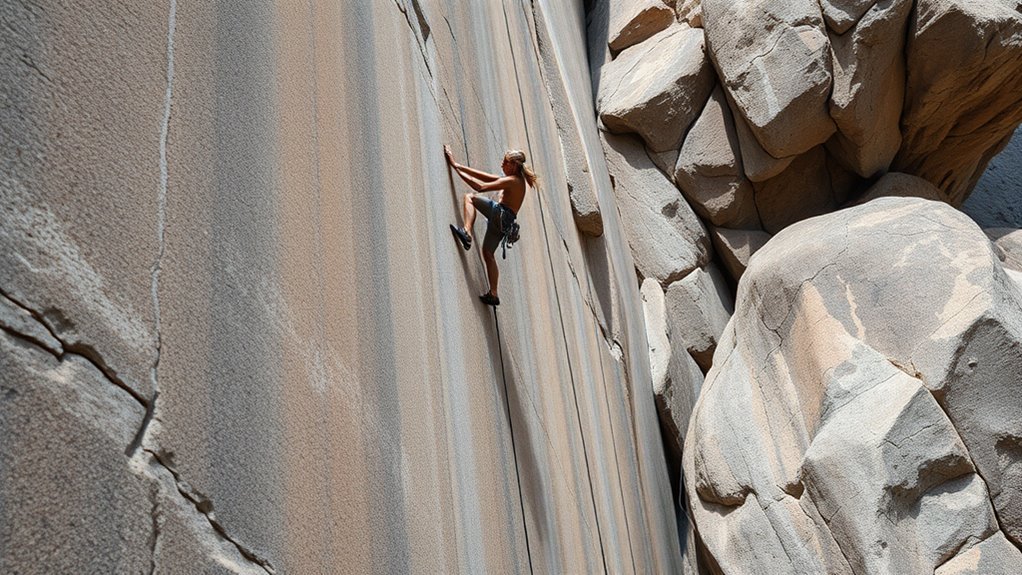
Slab climbing is a unique style that really tests your balance and footwork on smooth, angled rock surfaces. Unlike other climbing styles where you might rely on brute strength or big pulls, slab climbing is all about precision and finesse.
You’ll find yourself focusing on delicate edging and body positioning, using mental control to trust tiny footholds and keep fear in check.
It demands patience, calmness, and a steady core more than explosive power. You won’t be making big moves here; it’s about subtle shifts and staying composed.
If you want to dive deeper into the mental and physical nuances that set slab climbing apart, there’s definitely more to explore. It’s a style that challenges both your mind and body in a really special way.
Key Characteristics of Slab Climbing
What makes slab climbing unique? It’s all about finesse over power. In slab climbing, you’ll find yourself on off-vertical surfaces with minimal overhang, where raw strength won’t get you far.
Instead, you rely on precise movement, focusing on delicate footwork and perfect body positioning. The holds are usually small and smooth, demanding you trust your feet and master subtle weight shifts to maintain balance.
Your technique must be flawless; every step requires careful edging or smearing. Unlike more vertical climbs, slab climbing challenges you to engage your mind as much as your body.
It emphasizes trust in your foot placements and smooth progression. Your success hinges on combining balance, technique, and precise movement to glide upward with control and confidence.
Mental and Physical Demands Unique to Slab Climbing
Although slab climbing may seem less physically demanding than overhanging routes, it requires exceptional mental focus and balance. You have to master precise foot placement on minimal holds, relying on flexible ankles and strong core stability to maintain body control on slippery, off-angle surfaces.
Trust in your footing is essential; hesitation or doubt can trigger slips. So, mental discipline and calmness really help you overcome the fear of falling.
Unlike power-based styles, slab climbing demands patience and deliberate, controlled movements. Your success hinges on balancing physical finesse with steady mental focus, making every step a calculated effort.
This unique combination of physical and psychological demands sets slab climbing apart. It challenges you to refine subtle movements while managing exposure and fear with unwavering trust in your skills.
Conclusion
When you step onto a slab, you’re dancing on a delicate canvas where balance whispers louder than brute strength. Unlike other climbs that demand raw power, slab climbing asks you to read the subtle poetry of friction and foot placement.
It’s a mental chess game, where patience and precision paint each move. So, as you glide up the smooth face, remember: here, your mind leads, and your body follows the gentle rhythm of the rock.
Slab climbing differs from other styles by emphasizing finesse over force. It challenges you to trust your feet and feel the texture beneath them. The key is mastering balance and delicate movements rather than relying on upper body strength.
In essence, slab climbing is as much a mental challenge as it is a physical one. It’s about understanding the rock’s subtle cues and moving gracefully. When you embrace this style, you develop a deeper connection with the rock, making every climb a unique dance of balance and precision.