7 Tips to Get Better at Rock Climbing Fast
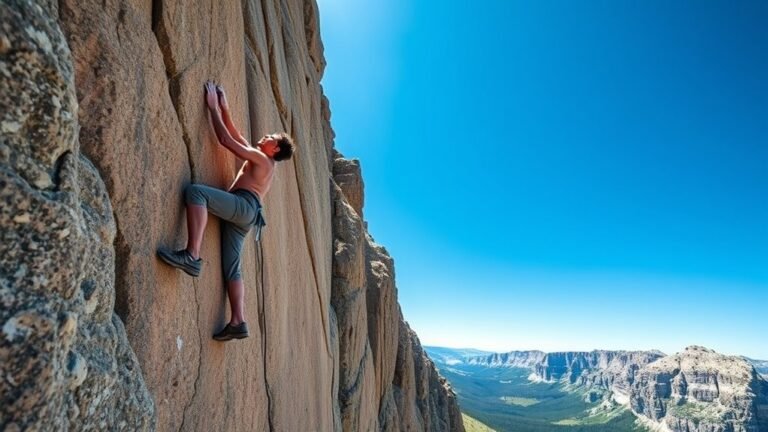
To get better at rock climbing fast, climb consistently—about 2-3 times a week—to build both your technique and strength. Focusing on precise footwork and body positioning can save energy and give you more control on the wall. These basics are key to improving quickly.
Also, try incorporating projecting into your routine. That means repeating tricky moves over several sessions to master them. Don’t forget to warm up properly with movement-based exercises to get your muscles ready. It really helps prevent injuries and boosts performance.
Balance your strength training with mobility work so you stay flexible and strong. And remember, rest days are just as important—they let your body recover and get stronger.
Learning to remember beta effectively can make a huge difference, too.
Lastly, stay motivated by climbing with friends or joining a social climbing group. When you keep exploring new techniques and challenges, you’ll find plenty of ways to improve swiftly and enjoy the process even more.
Climb Consistently to Build Technique and Strength
Although it can be tempting to climb only occasionally, sticking to a consistent schedule of 2-3 sessions per week will help you build muscle memory and improve your technique much faster.
Climbing consistently lets you practice movements and routes repeatedly, reinforcing efficient technique and strengthening your body. With regular practice, you’ll develop the strength and endurance needed to handle tougher challenges with ease.
This steady routine prevents skill regressions, keeping your progression on track and turning climbing into a solid habit rather than a sporadic activity. As you climb consistently, you’ll notice faster adaptation and improvement, both physically and technically.
Focus on Footwork and Body Positioning
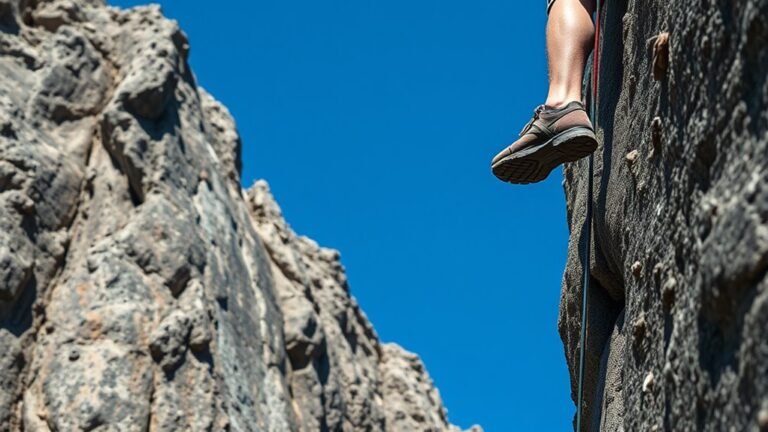
Building strength and technique through consistent climbing sets a strong foundation, but refining your footwork and body positioning takes your skills to the next level. Focus on precise foot placement by using the right part of your shoe—toe, inside edge, outside edge, or heel—for each hold.
This improves control and stability, letting you move efficiently and conserve energy. Practice traverses and footwork drills regularly to develop silent, deliberate placements, reinforcing solid body positioning.
Place your entire foot on holds to prevent slipping and maintain balance. It might feel tricky at first, but with time, it becomes second nature.
| Emotion | Impact on Climbing |
|---|---|
| Confidence | Better control |
| Calmness | Improved stability |
| Focus | Precise foot placement |
Incorporate Projecting and Repetition in Training
You’ll improve fastest by structuring your project attempts over multiple sessions, focusing on one route at a time.
Repeating moves precisely helps you build muscle memory and spot technical flaws. Keep rest intervals short to maintain quality and transfer skills effectively.
Try to visualize your moves before you start each attempt. Projecting the sequence in your mind can make your practice more intentional and productive.
Plus, going over the same moves multiple times really locks in the technique. It’s like training your body and brain to work together smoothly.
Structured Project Attempts
When you repeatedly attempt your project with minimal rest, you develop muscle memory and improve your movement efficiency. Structured project attempts focus on consistency and technique, breaking the route into sections to master each move.
This method guarantees steady progression and builds climbing efficiency. Climbing the same problem multiple times per session helps you refine your beta and smooth shifts.
Even when tired, controlled attempts simulate fatigue, enhancing endurance. Tracking your progress over sessions reveals patterns and helps you adjust strategies to climb with fewer moves.
| Session | Focus Area | Goal |
|---|---|---|
| 1 | Beta Refinement | Master individual moves |
| 2 | Consistency | Repeat moves smoothly |
| 3 | Endurance | Controlled attempts tired |
| 4 | Progression | Reduce moves needed |
Repetition Builds Muscle Memory
Structured project attempts set the stage for muscle memory by encouraging repeated practice of specific moves. When you make multiple attempts on a challenging route, especially with short rest intervals, your body adapts by ingraining the correct beta.
This repetition helps make each movement more automatic, improving your technique and reducing wasted energy. Even when you’re tired, pushing through attempts solidifies the movement patterns in your muscles.
Regularly projecting and re-climbing difficult problems accelerates your progress by reinforcing these patterns. Focus on executing each move smoothly and precisely during repetition; this sharpens your technique and builds confidence.
Over time, this consistent practice transforms your climbing, making difficult moves feel natural and efficient, ultimately boosting your overall performance.
Use Movement-Based Warm-ups to Enhance Coordination
Although it might seem like a simple step, starting your climbing session with movement-based warm-ups can considerably boost your coordination. Dynamic stretches and easy traverses activate your neuromuscular pathways, priming your body for precise technique.
Try incorporating exercises like toe hooks, heel hooks, and drop knees during warm-ups to sharpen your proprioception and body awareness. Spending just 5 to 10 minutes focusing on movement helps develop fluidity and timing, which translates to smoother, more coordinated climbs.
Practicing these drills on easy terrain or without a rope reduces pump and prepares your muscles and joints for complex sequences. Over time, consistent movement-based warm-ups cultivate a natural, dance-like rhythm in your climbing, enhancing your overall coordination and technical execution.
Balance Strength Training With Mobility and Recovery
To climb stronger, you need to balance your strength workouts with mobility exercises like hip openers and shoulder rotations.
Make sure to schedule rest days so your muscles can recover and prevent injuries.
Integrate Mobility Work
When you balance strength training with mobility and recovery, you’ll move more efficiently and reduce your injury risk on the wall. Integrate mobility exercises like hip openers and shoulder circles to boost flexibility and facilitate dynamic movement.
These drills prepare your muscles and joints for high steps and heel hooks while preventing tightness that compromises technique. Incorporate yoga and stretching regularly to maintain tissue health and minimize injury.
Use foam rolling and light mobility work on active recovery days to support healing. It’s a simple way to keep your body feeling fresh and ready for your next session.
| Mobility Exercise | Benefit |
|---|---|
| Hip Openers | Improve high step range |
| Shoulder Circles | Enhance shoulder flexibility |
| Hamstring Stretch | Support heel hooks |
| Dynamic Warm-ups | Prepare joints for movement |
Prioritize Rest Periods
How often do you give your body the rest it truly needs? Prioritizing rest days is vital to prevent overuse injuries and manage fatigue.
Try to schedule at least one full rest day weekly, especially after intense climbing or strength sessions. This helps your muscles and tendons recover properly.
During rest periods, you can still do active recovery like light stretching or some low-intensity mobility work. It boosts blood flow and speeds up repair.
Also, avoid back-to-back high-intensity climbing days since they increase fatigue and the risk of burnout. Listen closely to your body—if you feel persistent soreness or pain, take immediate rest.
This way, you ensure long-term progress. Balancing rest with mobility and recovery will keep you climbing stronger and reduce injury setbacks.
Balance Strength Exercises
Although strength training builds the power you need for climbing, balancing it with mobility work and proper recovery is essential to avoid injuries and improve performance.
Try to incorporate mobility exercises like stretching and yoga into your routine. They help enhance flexibility and reduce tightness.
Focus on functional exercises such as planks and stability drills. These engage multiple muscle groups and boost your core strength, which is crucial for maintaining balance on the wall.
Always prioritize proper technique during strength workouts. This maximizes your gains and protects your joints and tendons.
Don’t skip recovery days—they allow your muscles to repair and prevent overuse injuries. Listen to your body, monitor fatigue, and adjust intensity accordingly.
This balanced approach will help you climb stronger, safer, and more efficiently.
Learn to Read and Remember Beta Effectively
Mastering the skill to read and remember beta effectively can transform your climbing performance by allowing you to anticipate moves and conserve energy. To build strong beta memory, focus on visualization and chunking techniques.
Mentally picture each move before climbing and break routes into smaller sections for easier recall. Repetition on easier climbs helps encode sequences deeply, so practice often and gradually increase difficulty.
Watching experienced climbers and memorizing their beta through slow, deliberate attempts sharpens your ability to recall under pressure. Stay fully focused by avoiding distractions like your phone during climbs.
- Visualize each move before executing it
- Break routes into chunks of three moves
- Repeat sequences on easier routes to deepen memory
- Observe and mimic experienced climbers’ beta
- Eliminate distractions to improve focus and recall
Maintain Motivation Through Social Climbing and Rest
When you climb with friends or join a community, your motivation naturally rises because you share goals and support each other. Social support from fellow climbers boosts your enthusiasm and keeps training fun.
Participating in group climbs or competitions strengthens this sense of camaraderie, encouraging you to stay consistent. It’s way easier to stick with it when you know others are counting on you.
However, balancing social climbing with regular rest days is essential. Rest not only prevents burnout but also plays a key role in injury prevention, allowing your body to recover and improve steadily.
Conclusion
If you want to get better at rock climbing fast, consistency is key—you’ve got to climb regularly to build both strength and technique. Focusing on footwork and body positioning might feel awkward at first, but trust me, it pays off.
Remember, balancing strength with mobility and proper rest helps prevent burnout. And don’t underestimate the power of social climbing; it keeps motivation high.
Like they say, practice doesn’t make perfect, but it sure makes progress. Keep climbing! If you stick to these tips and stay consistent, you’ll see your rock climbing skills improve faster than you thought possible. So, get out there, focus on your technique, rest well, and climb with friends—your progress will thank you!