How to Start Rock Climbing in 5 Essential Steps
To start rock climbing, first learn the different types like bouldering and top-rope climbing to find what suits you best. Understanding these styles helps you get a feel for the sport and decide where to focus your energy. Visiting a climbing gym is a great way to try climbing firsthand and build confidence on easy routes.
Next, master basic skills such as tying knots and belaying, which are essential for staying safe while climbing. Don’t forget to get the right gear, including climbing shoes and a harness, so you’re properly equipped.
As you train regularly and improve your technique, you’ll become more skilled and ready to tackle tougher challenges.
Keep exploring new climbing routes and techniques. This will help you grow as a climber and enjoy the sport even more!
Understand the Different Types of Climbing
Before you start climbing, it’s important to understand the different types of rock climbing. Each one demands specific techniques and gear.
Top-rope climbing features a rope anchored at the route’s top. A belayer manages slack to keep you safe during your ascent and descent.
Bouldering is all about short, challenging routes without ropes. Instead, you rely on crash pads and spotters to keep things safe.
Sport climbing uses pre-installed bolts, whether you’re indoors or outdoors. You clip quickdraws as you go up the route.
Trad climbing is a bit different because you place your own protection gear, like cams and nuts, into rock cracks. It takes precise techniques and skill to stay safe.
Knowing these types helps you pick the right gear and get ready for either indoor or outdoor climbing adventures.
Experience Climbing Firsthand
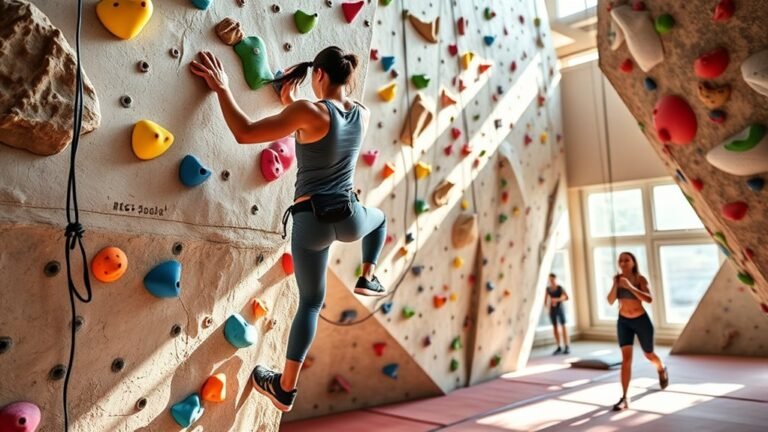
Understanding the different types of climbing gives you a solid foundation, but nothing beats getting on the wall yourself. Head to a local indoor climbing gym to climb firsthand and immerse yourself in the environment.
Knowing climbing types is helpful, but climbing yourself at a gym truly immerses you in the sport.
As a beginner climber, join introductory classes or guided sessions to learn essential climbing techniques, safety protocols, and how to use climbing equipment properly. Practice on easy routes rated 5.1–5.5 to develop your climbing skills, build muscle memory, and gain confidence.
Climbing under supervision ensures you stay safe while honing your abilities. Regular indoor climbing sessions help you improve strength and comfort with various holds and movements.
Embracing firsthand climbing experience is key to becoming a confident, skilled climber and enjoying the thrill of the sport. So, get out there and climb!
Master Basic Skills and Safety Procedures
While gaining climbing experience is important, mastering basic skills and safety procedures is what keeps you secure and confident on the wall. Start by learning essential knots like the Figure-8 Follow Through to attach your harness properly.
Always perform a belay check, inspecting harness, knots, and belay device before climbing. Practice belaying techniques under supervision to control rope slack and catch falls safely.
Communication is crucial—use clear commands like “On belay” and “Climb.” Develop movement skills focusing on foot placement and body positioning to climb efficiently.
| Skill | Purpose | Key Tips |
|---|---|---|
| Knots | Secure harness attachment | Learn Figure-8 Follow Through |
| Belay Check | Confirm equipment readiness | Double-check harness & knots |
| Belaying Techniques | Control rope, catch falls | Manage slack, stay attentive |
| Communication | Ensure partner coordination | Use clear commands |
Gather Essential Climbing Gear
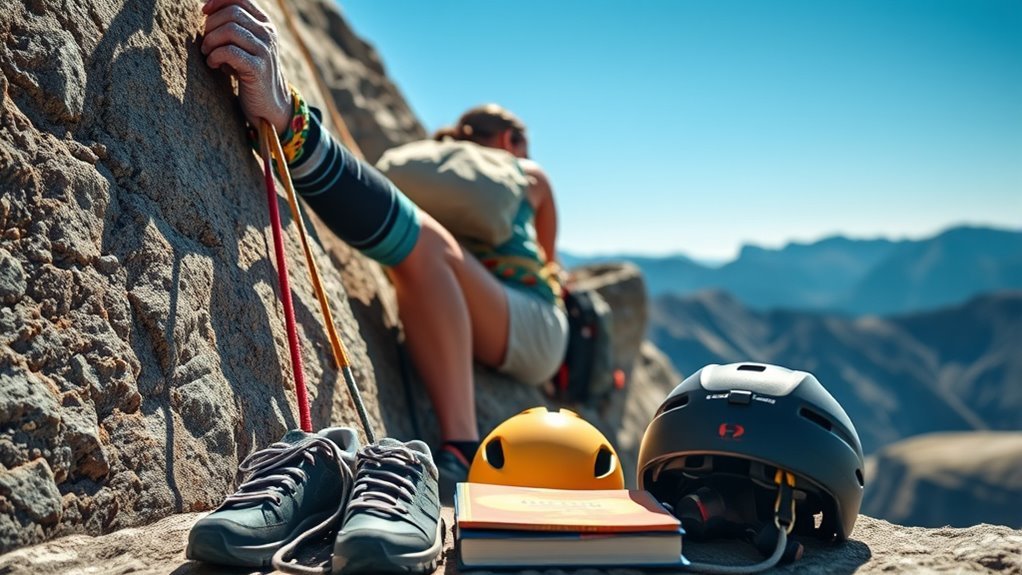
Since having the right gear directly impacts your safety and performance, you’ll want to gather essential climbing equipment like climbing shoes, a harness, chalk bag, and helmet—items you can often rent at gyms or outdoor stores to start.
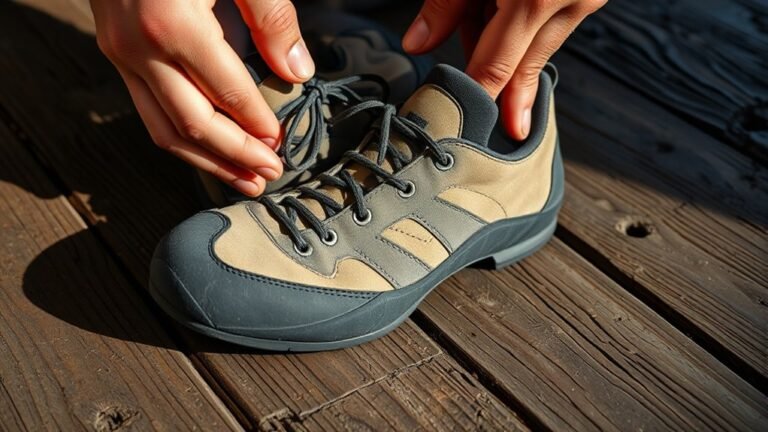
Choose climbing shoes that fit snugly without discomfort to boost grip and control. Your harness should be comfortable and secure.
Always inspect gear before use, checking for wear and tear on harnesses, ropes, and hardware like carabiners to guarantee safety. A chalk bag helps keep your hands dry for a better grip.
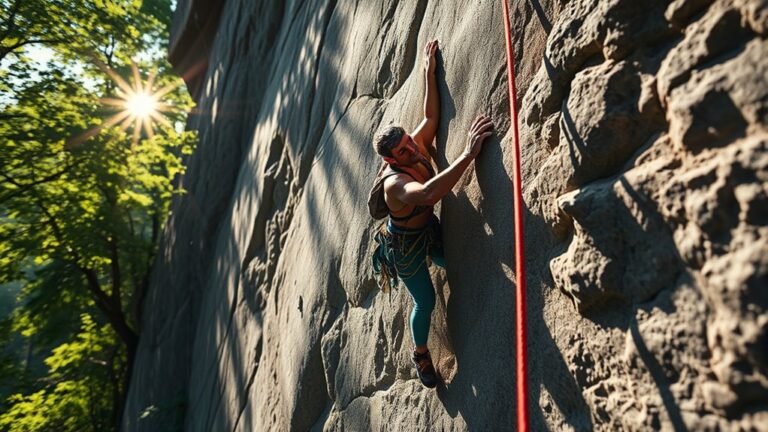
When climbing outdoors, you might need extra protection such as anchors and specialized hardware depending on your route. Regularly inspecting and maintaining your climbing gear is key to staying safe and confident on the rock.
Develop Your Skills and Progress
As you start climbing more often, focus on practicing essential skills like knot tying, belaying, and proper movement techniques to build your confidence and safety on the wall. Consistent training helps you develop climbing skills and refine your technique.
Gradually increase route difficulty to challenge your strength and problem-solving abilities, ensuring steady training progression. Take beginner courses or supervised climbs to learn advanced methods and safety procedures.
Seek feedback from experienced climbers or instructors to identify weaknesses and sharpen your skills. Don’t hesitate to try different styles, like shifting from indoor bouldering to outdoor climbing or lead climbing, to keep your progress going.
Conclusion
Starting rock climbing is an exciting journey, and you’re already on the right path by learning the essentials. Did you know that indoor climbing gyms have grown by over 50% in the last decade? This growth makes it easier than ever to get started.
By understanding the different climbing types, practicing essential skills, and gearing up properly, you’ll build confidence quickly. Keep pushing your limits and challenging yourself.
With the right approach, you’ll be reaching new heights before you know it! Rock climbing is not just a sport—it’s a great way to improve your strength, focus, and problem-solving skills. So get ready to embrace the adventure and enjoy every step of your climbing journey!