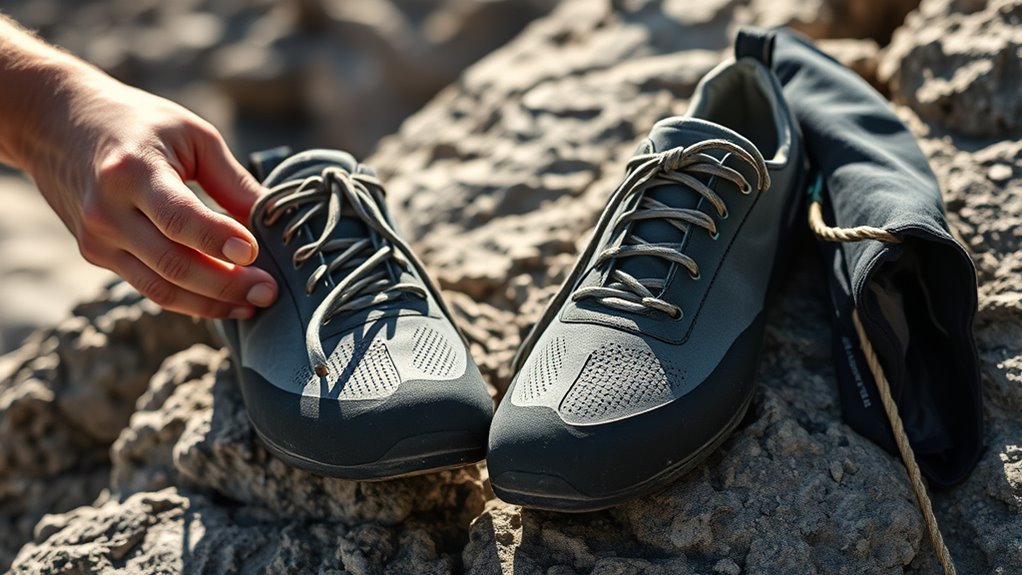
7 Tips on How to Choose Climbing Shoes
When choosing climbing shoes, it’s all about finding that perfect snug fit without any pain. Your toes should just touch the front of the shoe, but they definitely shouldn’t be cramping or curled uncomfortably. This fit is key because it helps you climb better and stay comfortable on the wall.
Next, think about the type of climbing you do most. Flat shoes work great for slab climbing, while downturned shoes are perfect for overhangs. If you’re all about edging, go for stiff shoes, but if you want more sensitivity, softer shoes are the way to go.
Also, pay attention to the closure system. Velcro straps are super convenient for quick on-and-off sessions, while laces give you that precise fit. Starting with entry-level shoes is smart—they’re comfy and let you get a feel for what you like before upgrading.
One last thing—avoid common mistakes like ignoring the fit or buying shoes that are way too aggressive. Keep trying different styles and fits to find what works best for you. Happy climbing!
Key Takeaways
– Choose climbing shoes that match your climbing style and terrain, like flat shoes for slabs or downturned ones for steep routes.
This way, you get the right support for what you’re tackling.
– Make sure they fit snugly but don’t hurt. Your toes should touch the front without being crammed, and there should be minimal heel lift.
Comfort is key here.
– Pick a closure system that suits you, whether it’s lace-up, Velcro, or slip-on.
Think about what feels convenient and gives you the support you need.
– It’s smart to start with entry-level shoes for comfort and durability.
Then, as your skills improve and you need more technical features, you can upgrade to performance shoes.
– Try to avoid overly aggressive shoes.
Focus on comfort because it helps with better footwork and reduces the chance of injuries.
Choosing the Right Climbing Shoe Type
When choosing the right climbing shoe type, you’ll want to match your shoe to the terrain and your climbing style. Flat shoes work great for slab and vertical climbs, offering comfort and support on tiny edges during long routes.
Downturned shoes, ranging from slight to aggressive, focus power into your toes. They’re perfect for steep or overhanging terrain.
Stiff shoes provide precision and support for edging, while soft shoes boost sensitivity and mold better to holds.
Asymmetrical shoes angle your foot to increase toe pressure. You’ll often find these in aggressive shoes designed for advanced performance.
Neutral shoes give comfort and versatility for beginners or all-day climbs. Picking the right climbing shoe type really depends on whether you prioritize comfort, power, or precision based on the routes you tackle.
Why Fit Is More Important Than Brand or Price
Choosing the right type of climbing shoe sets the foundation, but the fit is what truly makes or breaks your experience. You’ll find that shoes come in various styles and prices, but focusing on proper fit over brand or price guarantees you get a comfortable shoe that supports your climbing goals.
A snug fit is essential—not too tight to cause pain, nor too loose to cause heel lift or blisters. When your shoes conform to your foot, they enhance your performance by allowing precise footwork and better body positioning.
Ill-fitting shoes can hinder your technique and even cause injuries. Prioritizing fit means you’ll have the support needed for extended climbs and avoid long-term problems.
In the end, it’s all about making your climbing safer and more enjoyable.
Comparing Flat, Downturned, Stiff, and Soft Climbing Shoes
You’ll want to understand how shoe shapes like flat and downturned affect your performance on different terrain. Stiffness plays a big role too—stiff shoes offer support on small edges, while soft shoes give you more sensitivity for technical moves.
Knowing these differences will help you pick the right shoe for your climbing style and the routes you tackle. It’s all about matching your gear to what you need out there.
Shoe Shapes Explained
Although climbing shoes come in various shapes and stiffness levels, understanding their differences helps you pick the right pair for your climbing style.
Shoe shapes like flat last, downturned shoes, stiff shoes, and soft shoes each offer distinct benefits. Flat shoes have a neutral shape with little curvature, which is perfect for precise edging on slab climbs.
Downturned shoes channel power through their curved toe, making them ideal for steep routes. Stiff shoes provide support on small holds, while soft shoes increase sensitivity and flexibility for technical footwork.
| Shoe Shape | Curvature | Best Use |
|---|---|---|
| Flat last | Neutral shape | Slab, vertical climbing |
| Downturned | Pronounced curve | Overhangs, steep terrain |
| Stiff & Soft | Varies | Support vs sensitivity |
Stiffness And Sensitivity
Understanding shoe shapes gives you a solid foundation, but the stiffness and sensitivity of climbing shoes play an equally important role in how they perform. Stiff shoes, often with thicker midsoles, provide excellent support and edging power, making them ideal for precise toe placement on technical routes.
Flat shoes usually feature more stiffness and sole thickness, prioritizing support and comfort. In contrast, downturned shoes tend to be softer and more flexible, enhancing sensitivity for delicate footwork on steep terrain.
While aggressive shoes with downturned shapes channel power into your toes, they’re generally less stiff to maximize sensitivity. Choosing between stiffness and softness comes down to your climbing style—stiff shoes boost edging and support, whereas soft shoes improve flexibility and toe precision, letting you feel the rock better for smearing and subtle foot adjustments.
Terrain Suitability Differences
Because different climbing terrains demand distinct footwork techniques, choosing the right shoe shape and stiffness is vital for your performance. Flat climbing shoes excel on slab and vertical terrain, offering comfort and solid support for edging on tiny holds.
If you tackle overhanging routes, downturned shoes channel power into your toes, maximizing grip and precision. Stiff shoes provide extra support for technical edging and crack climbing, making them perfect for long multi-pitch climbs.
On the other hand, soft shoes increase sensitivity and conformability, which helps with smearing and technical foot placements on slabs. Matching your shoe’s terrain suitability to the difficulty and style of your climb guarantees you get the best performance and comfort every time you hit the rock.
Climbing Shoe Closure Systems for Beginners and Pros
Choosing the right closure system can make a big difference in your climbing performance and comfort. Lace-ups offer precise fit adjustments, which is great if you want that custom feel.
Velcro closures provide quick on-and-off convenience, perfect for when you’re switching routes or taking breaks. Slip-ons deliver maximum sensitivity but may sacrifice some support. So, think about what suits your climbing style and skill level best.
Closure Types Overview
Three main closure types dominate climbing shoe designs, each offering unique benefits depending on your climbing style and skill level. Lace-up shoes provide the most customizable fit, letting you adjust tightness precisely and accommodate foot swelling. This enhances support during long climbs.
Velcro closures are popular for their quick, easy fastening and removal. They’re perfect if you want convenience without sacrificing a snug fit—ideal for gym sessions or bouldering.
Slip-on shoes rely on a tight, elastic fit, giving you maximum sensitivity and minimal bulk. This benefits steep bouldering and crack climbing.
Your closure system directly affects how your shoe supports your foot and performs on different routes. Beginners often choose Velcro for simplicity, while advanced climbers prefer lace-ups to fine-tune their fit for technical climbs.
Performance Impact Differences
Understanding how different closure systems impact your climbing performance helps you pick the right shoe for your skill level and climbing style. Closure systems affect support, fit stability, and ease of use. These factors directly influence your climbing success.
Beginners often choose Velcro or slip-on shoes because they offer convenience and a snug fit. On the other hand, pros prefer laces for precise adjustments and enhanced support during technical climbs.
| Closure System | Performance Impact |
|---|---|
| Laces | Most supportive, precise fit |
| Velcro | Quick, convenient, stable |
| Slip-on | Maximum sensitivity, snug |
| Beginners | Favor comfort and ease |
| Pros | Choose performance oriented |
How to Size Your Climbing Shoes for Comfort and Performance
Although climbing shoes should fit snugly, you don’t want them to cause pain or cut off circulation. When sizing your shoes, aim for a snug but not painfully tight fit.
You should be able to fit your index finger between your heel and the shoe comfortably, ensuring a secure heel fit without slipping. Your toes should touch the end of the toebox without cramming or curling excessively.
Try shoes on in the afternoon when your feet are slightly swollen to get a more accurate size and fit. Walk or climb briefly in them to detect any hotspots or pinching that could affect comfort and performance.
Budgeting: When to Buy Entry-Level vs. Performance Shoes
When you’re just starting out, choosing entry-level climbing shoes can save you money while providing the comfort and durability needed to build your skills. As a beginner climber, investing in affordable climbing shoes between $89 and $130 helps you focus on learning footwork without worrying about high costs or shoe durability.
These shoes offer a balanced initial investment that suits your budget and skill level. Once you gain confidence and encounter technical routes requiring aggressive shapes and stiffness, upgrading to performance shoes priced around $150 to $200 makes sense.
Performance shoes enhance precision for advanced techniques but aren’t necessary at the start. By budgeting wisely, you avoid overspending and get the right shoe for each stage of your climbing journey, ensuring comfort and progress.
Common Mistakes When Buying Your First Climbing Shoes
Budgeting smartly for your first climbing shoes sets a solid foundation, but choosing the right pair goes beyond price. Many beginners make the mistake of picking a shoe that’s painfully tight, thinking it means better performance.
Instead, make sure your first pair of climbing shoes fits snug but not painfully—comfort and performance go hand in hand. Avoid aggressive, specialized shoes; focus on finding the right balance to support good footwork.
Also, don’t buy without trying shoes on, as sizing varies widely between brands. Heel or toe pinching, heel lift, or cramping are red flags that hurt your climbing and cause blisters.
Frequently Asked Questions
How Often Should I Replace Worn-Out Climbing Shoes?
You should replace worn-out climbing shoes once the rubber sole is too thin or holes appear, usually after 6-12 months of regular use. Don’t wait too long, or your grip and foot support will suffer.
Can Climbing Shoes Be Resoled to Extend Their Life?
Absolutely, you can resole climbing shoes to extend their life. Like giving worn-out sneakers a fresh sole, resoling restores grip and comfort, saving you money and keeping your shoes climbing-ready instead of tossing them after every wear.
What Are the Best Climbing Shoes for Outdoor Versus Indoor Climbing?
For outdoor climbing, you’ll want durable shoes with stiff soles for rough terrain. Indoors, choose softer, more flexible shoes that offer better sensitivity and grip on gym holds. Always pick what fits your climbing style best.
How Do I Clean and Maintain My Climbing Shoes?
You clean your climbing shoes by wiping them with a damp cloth and letting them air dry. Avoid soaking them. To maintain, store them in a cool, dry place and use deodorizing sprays or powders to keep odors down.
Are There Climbing Shoes Designed Specifically for Women?
Just like Athena crafted armor for heroes, women’s climbing shoes are designed specifically to fit narrower heels and arches, giving you better comfort and performance tailored uniquely to your foot’s shape and climbing needs.
Conclusion
Choosing the right climbing shoes can make or break your experience. Did you know that 70% of climbers say properly fitted shoes boosted their performance considerably? So, focus on fit over flashy brands or price tags.
Remember, whether you pick flat, downturned, stiff, or soft shoes, comfort and fit come first. Avoid common mistakes, understand sizing, and choose closure systems that suit your style.
With these tips, you’ll climb smarter and climb better. Prioritizing fit ensures your climbing shoes support your feet perfectly, enhancing both comfort and performance. So next time you shop for climbing shoes, keep these key points in mind to find the perfect pair that matches your climbing needs and style.