What Is Edging in Climbing?
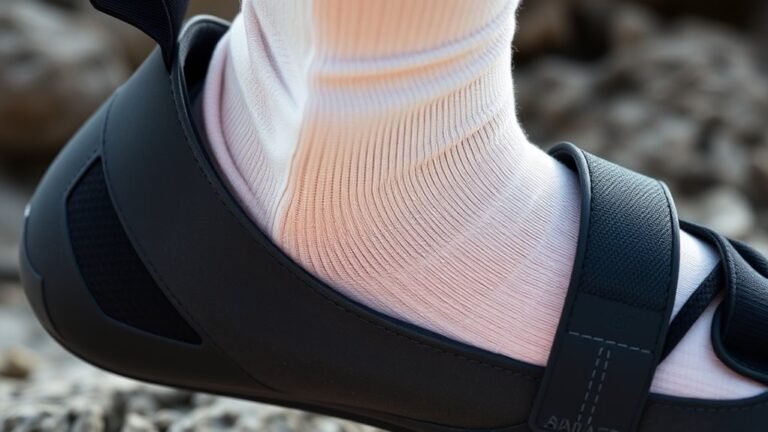
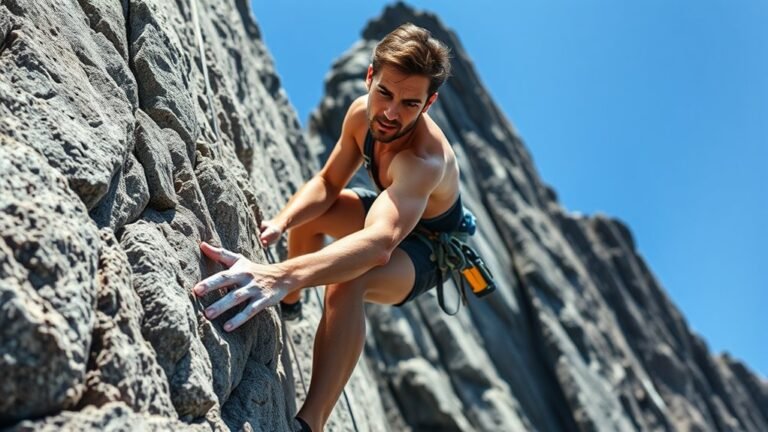
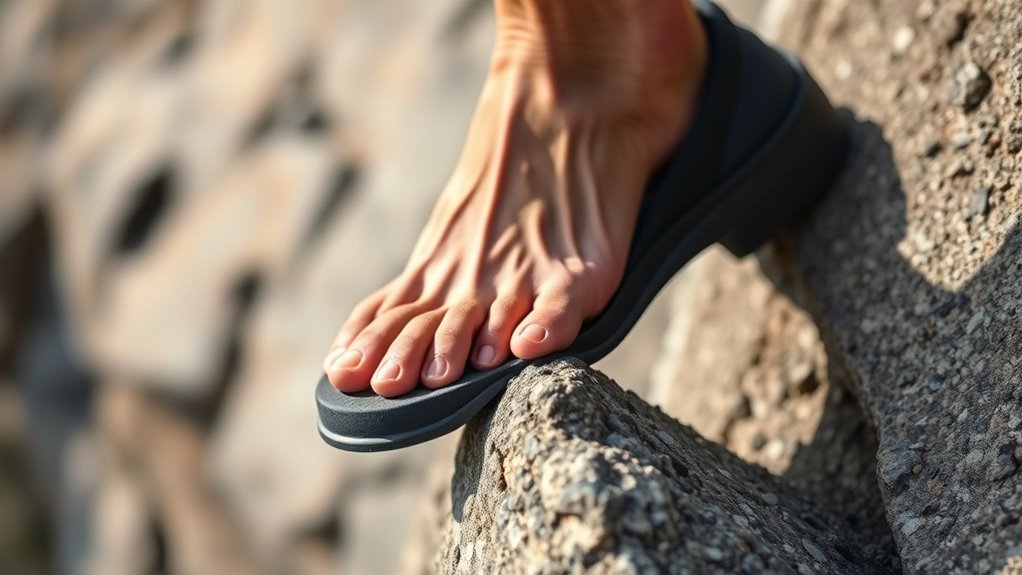
Edging in climbing means using the inside or outside edge of your shoe to stand on tiny footholds with precise contact. This technique is all about balance and control.
You’ll press down carefully, shifting your weight and keeping your heels low to maximize stability on challenging routes.
Using stiff shoes helps support your feet and improves your balance. Plus, strong body positioning reduces fatigue, making it easier to stay on the wall longer.
Mastering edging not only boosts your confidence but also makes your climbing more efficient.
As you explore further, you’ll discover techniques to refine this essential skill for tougher climbs. It’s a game-changer that can open up new possibilities on the rock.
Stick with it, and you’ll see your climbing improve step by step!
Understanding the Basics of Edging
How do climbers maintain balance on tiny footholds? It all starts with understanding edging basics. When you climb, your climbing shoe plays a vital role in secure foot placements.
You use different parts of your shoe—the tip of your shoe, inside edge, or outside edge—depending on the foothold to stand on. Because these holds often offer minimal surface area, keeping your heel low helps you maximize contact and stability.
Support midsoles in stiff climbing shoes prevent your foot from collapsing, allowing precise edges on small features. Your body position complements your footwork by shifting weight effectively over these tiny edges, making your foothold more reliable.
Mastering these fundamentals improves your balance and efficiency as you tackle challenging routes. It’s all about getting comfortable with the basics to climb smarter, not just harder.
Techniques and Tips for Effective Edging
Although edging can feel challenging at first, mastering a few key techniques will greatly improve your control and confidence on small footholds. Focus on precise foot placement by using the tip, inside edge, and outside edge of your climbing shoes to adapt to different holds.
Make sure the shoe’s edge makes full contact with the foothold for ideal grip and stability. Choose climbing shoes with stiff, full-length midsoles to provide the support needed on tiny edges.
Ensure your shoe’s edge fully contacts the foothold and opt for stiff midsoles for maximum support.
Keep your hips close to the wall and maintain strong body tension to reduce fatigue and improve edging efficiency. Practice deliberate edging drills, like small foot movements and silent climbing, to build precision and control.
These techniques will boost your stability and help you climb more confidently on technical routes. Give them a try, and you’ll notice the difference in no time!
Conclusion
Mastering edging isn’t just about balance—it’s about transforming every tiny foothold into your stepping stone to success. When you trust your feet and sharpen your technique, walls that once seemed impossible become your playground.
Remember, each edge you conquer brings you closer to climbing with confidence and grace. So, embrace the challenge and let your feet do the talking.
Because in climbing, every step counts, and every edge is an opportunity waiting to be seized. Edging in climbing is a crucial skill that helps you make the most of small holds, improving your stability and control. By focusing on precise foot placement and weight distribution, you can climb more efficiently and tackle tougher routes. So, keep practicing your edging technique—it’s the key to elevating your climbing game and reaching new heights with confidence.